
Trump Says U.S. Pausing Efforts to Guide Ships Through Strait Blocked by Iran
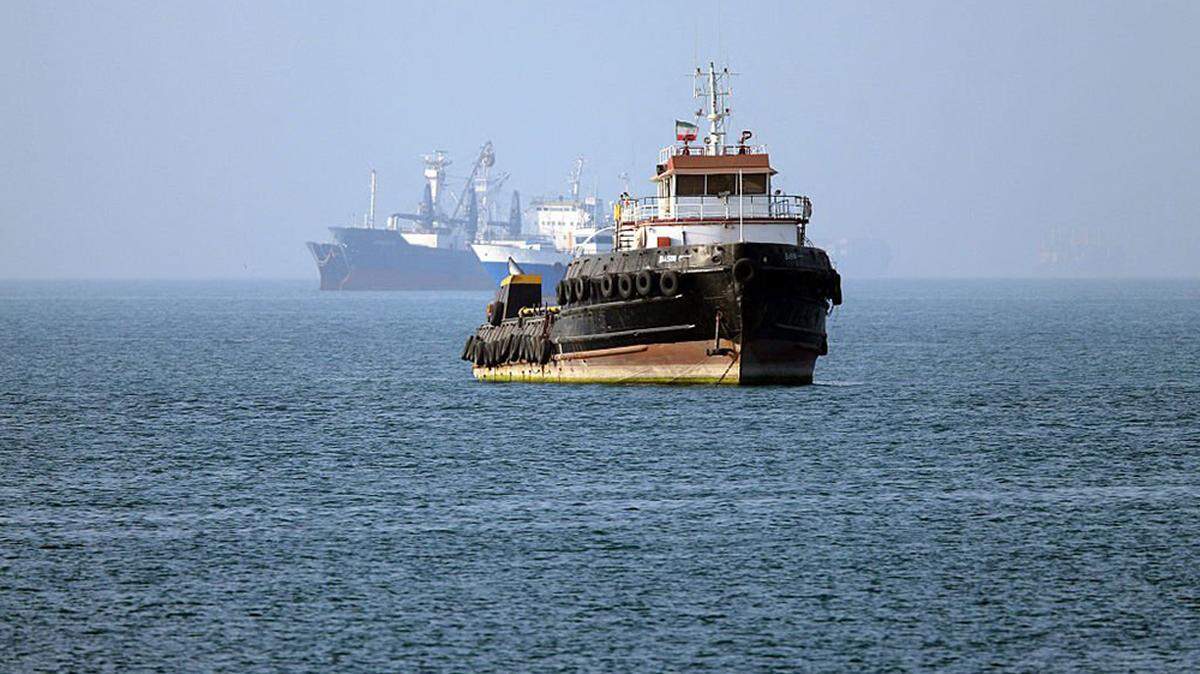
WASHINGTON -- President Donald Trump, in a sudden reversal, announced Tuesday evening that the United States was pausing "for a short period of time" efforts to help guide ships through the Strait of Hormuz, which Iran has effectively blocked to most commercial ships for weeks.
The president's announcement came one day after the effort began. He said in a social media post that the change was "based on the request of Pakistan and other countries," as well as the "tremendous military success" and "great progress" toward an agreement. Pakistan has hosted ceasefire talks between U.S. and Iranian negotiators.
Trump said, however, that a recently announced U.S. blockade would "remain in full force and effect" in the narrow waterway and that the pause was "to see whether or not the agreement can be finalized and signed."
It was the latest abrupt about-face that has signified much of Trump's handling of the war that began in late February with U.S. and Israeli strikes on Iranian targets. Throughout the war, Trump's positions have changed suddenly, sometimes in the same sentence.
He has called the conflict both a "war" and an "excursion." He has gone from saying that the United States had "won" the war in Iran to threatening to wipe out its civilization if the government in Tehran did not meet more demands. He has said that bombings would continue, only to announce an extension of the ceasefire at the last minute, the last of which he said had also been at the request of Pakistan.
Earlier Tuesday, before declaring "great progress" in talks, Trump said that he didn't like that Iranian officials "play games" by talking to him with "great respect" and then appearing on television to say they never did.
After the United States and Israel began strikes in Iran on Feb. 28, Iran claimed control of the vital oil shipping route off Iran's southern coast, through which about 20% of the world's oil and liquid natural gas had passed. In April, the United States announced its own blockade of the strait. Then the United States said it would "guide" trapped vessels through the waters there.
Only two ships were known to have passed through the waterway on Monday. None appear to have made the trip on Tuesday.
Trump's announcement came just hours after Secretary of State Marco Rubio defended the mission, declaring that "the Iranian regime cannot be allowed to dictate who uses this vital waterway," which he called a violation of international law.
"This is a criminal act, and someone needs to do something about it," Rubio told reporters. "Something needs to be done. It's completely illegal, completely illegitimate, and completely unacceptable. And that's why the United States military is guiding stranded commercial ships safely through the strait and is working to restore freedom of navigation and putting an end to these efforts to hold the global economy hostage."
Earlier Tuesday, Defense Secretary Pete Hegseth described the U.S. operation to open the strait, which began Monday, as defensive and temporary. "We're not looking for a fight," he told reporters at the Pentagon. He and Gen. Dan Caine, the chair of the Joint Chiefs of Staff, said the ceasefire remained in place, despite recent attacks.
Hegseth added that the U.S. was still working to free trapped vessels. "We're ensuring that we have control of that strait, which we do," he said. Two commercial vessels crossed the strait under U.S. military protection on Monday, he said, traveling through a sea lane cleared of mines by naval robots.
Iran's state broadcaster dismissed the U.S. effort as a failure and said Iranian control over the strait had "intensified."
About 1,600 ships remain stranded in dangerous conditions at the strait, and overall ship traffic is a trickle compared with the flow before the war, when around 130 vessels a day made the passage. Oil and gas prices have spiked as a result, driving up costs for consumers and businesses around the world.
Trump's announcement Tuesday night came after the United Arab Emirates said that for the second day in a row, it had come under attack from Iranian missiles and drones, which its air defense systems were intercepting. Iran denied that it was behind the attacks. It was not immediately clear if the strikes had caused any casualties or damage.
Earlier, speaking to reporters in the Oval Office on Tuesday, Trump would not specify what Iranian actions would amount to a violation of the ceasefire. The Iranians "know what to do," he said, and "they know what not to do, more importantly."
Trump and other top U.S. officials had also said that the shaky ceasefire with Iran was holding despite new attacks by both sides after the U.S. military launched the effort to reopen the strait.
Caine said Tuesday that Iran had attacked U.S. forces more than 10 times since the ceasefire took effect in early April, but that the attacks had been "all below the threshold of restarting major combat operations at this point."
On Monday, U.S. Central Command said U.S. forces had shot down Iranian cruise missiles and drones aimed at U.S. ships and commercial vessels the Navy was guiding through the Strait of Hormuz. The U.S. military said it had also destroyed six Iranian speedboats that had threatened the vessels.
Iranian state media reported that U.S. forces had attacked two small boats carrying cargo from Oman to Iran, killing five civilians on Monday.
Rubio said at a news briefing at the White House on Tuesday that the U.S. effort to reopen the strait was aimed at freeing more than 20,000 sailors from dozens of countries who have been trapped in the region since the war began. At least 10 civilian sailors have been killed in that time, he noted, using a figure that had also been cited by the United Nations.
Rubio said the U.S. military attack on Iran had ended, echoing arguments Trump made to Congress last week when he contended that he did not need to seek legislative approval for the war. Democrats and some legal experts have said that a Vietnam-era law requires Trump to seek congressional authorization to continue the military operation.
"The operation is over," Rubio said. "Epic Fury, as the president notified Congress, we're done with that stage of it. We're now on to this project of freedom." Operation Epic Fury is the Trump administration's name for the war on Iran. Project Freedom is the name for the effort to reopen the Strait of Hormuz, which Rubio said was defensive, not offensive.
Trump has predicted that reopening the strait would eventually lead to lower gas prices, which averaged $4.48 a gallon in the United States on Tuesday.
Despite the formidable array of U.S. firepower, most shipping companies may not feel safe enough to send their vessels through the strait, said Jack Kennedy, the head of Middle East and North Africa country risk at S&P Global Market Intelligence.
"Iran still retains capacity to deter most transit through the strait with its asymmetric military capabilities," Kennedy said.
At the center of the conflict is the fate of Iran's nuclear program, which has been the subject of fitful negotiations between Iranian and U.S. officials. The Trump administration says it wants to ensure that Iran can never obtain a nuclear weapon. But more than two months after starting the war, the administration has outlined no clear path to achieve that goal.
This article originally appeared in The New York Times.
Copyright 2026 The New York Times Company
This story was originally published May 6, 2026 at 12:23 AM.