
Ukraine's drones now strike 1,000 miles inside Russia
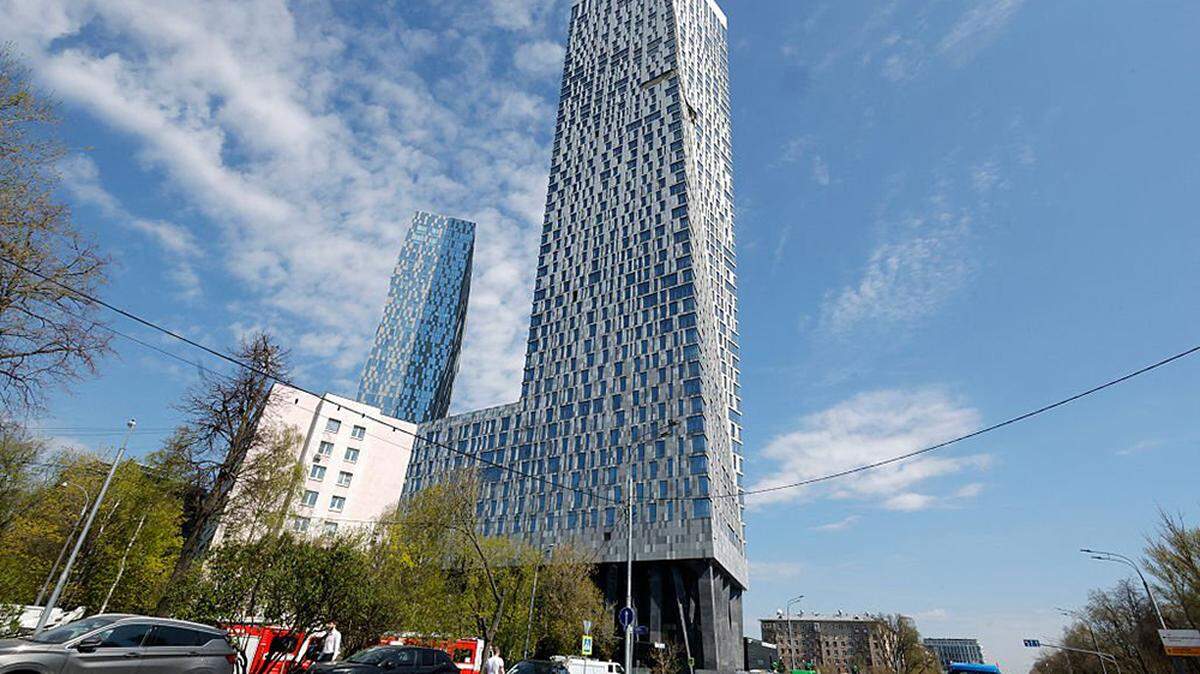
Ukrainian drones are regularly hitting targets deep inside Russia, reaching the Ural Mountains and communities where most people had seen the war as a distant problem.
A residential high-rise in Yekaterinburg, home to more than 1.5 million people, was struck on April 25, the first damage that city has suffered since the full-scale invasion of Ukraine in 2022. Since early April, authorities have temporarily suspended operations at the local airport on five separate days to respond to drone threats.
“This came as a shock,” said Vladimir, a 35-year-old businessman in Yekaterinburg, who declined to give his full name due to security concerns. “Even though no one was killed, people finally realized the city is no longer deep in the rear.”
The strike carries particular symbolism for Yekaterinburg, which was long seen as beyond the reach of war. The city, known as Sverdlovsk in Soviet times, lies on the eastern side of the Urals, roughly 1,700 kilometers (1,056 miles) from the Ukrainian border, and served as a rear base during World War II, when factories were moved there for safety because it was considered to be outside the range for attacks from Europe.
Until this year, Russia’s aviation watchdog Rosaviatsia hadn’t reported any drone incidents around the airport.
With the war along the front lines largely at a stalemate, drones are playing an increasingly central role. Both combatants now strike each other’s cities with hundreds of unmanned aerial vehicles daily.
Ukraine, in particular, is becoming more effective with its campaign, hitting Russian refineries, fertilizer plants and ports used to export energy, all of which cut into the Kremlin’s revenue and limit its ability to benefit from higher prices driven by the Middle East conflict.
Kyiv plans to expand long-range strikes, the country’s President Volodymyr Zelenskyy said in a social media post on April 29. Ukraine now has the ability to strike Russia at distances of more than 1,500 kilometers, he said.
That makes a quarter of Russian territory - where more than 70% of its population of 146 million live - reachable by Ukrainian drones.
Recent strikes suggest Kyiv is already putting that into practice. On the same day that drones hit Yekaterinburg, Ukraine struck several Sukhoi Su-57 and Su-34 aircraft at Russia’s Shagol air base in the Chelyabinsk region, Ukraine’s General Staff said earlier this month. Russia didn’t comment on the attack, while the local governor said that drones had targeted an “infrastructure facility.”
Chelyabinsk, in the southern Urals near the border with Kazakhstan, lies roughly 1,500-1,700 kilometers from Ukraine. The regional capital has a population of about 1.2 million people and, like Yekaterinburg, was a pillar of Soviet heavy industry during World War II, earning the nickname “Tankograd” after much of the Soviet tank industry was relocated there. It remains an important center for metallurgy, military and aerospace industries.
The city has become a regular target for Ukrainian drones since the beginning of April, according to data on flight suspensions at the local airport, reported by Rosaviatsia.
Last week, drones caused a fire and damaged a primary processing unit at Lukoil PJSC’s Permnefteorgsintez refinery in the Perm region, another area of the Urals, about 1,500 kilometers from the border. A day earlier, a pumping station near the facility was also hit. Parts of Perm were shrouded in black smoke, with residents reporting “black rain.”
Perm saw only a handful of drone incidents in 2025, but this year, authorities have already had to shut the city’s airport for several hours on about 15 days to repel drones. Seven of those disruptions have occurred since the start of April.
To be sure, Ukrainian drones have been regularly targeting the Orenburg region on the southern edge of the Urals for more than a year, but it’s closer to the Ukrainian border, even if still 1,200 kilometers away.
Last year, drones were also detected in the oil-rich Tyumen region of Siberia, roughly 2,000 kilometers from the border, but that appears to have been a one-off incident and remains the farthest known reach of a Ukrainian drone.
Ukraine has also used domestically developed and manufactured missiles to strike inside Russia.
Overnight, Kyiv targeted military-industrial facilities in Chebokasary using its F-5 Flamingo cruise missiles, Zelenskyy said on X Tuesday, adding the projectiles covered a distance of more than 1,500 kilometers. The facility produced navigation components and other equipment used by Russia’s military and defense industry, he said. The Russian Defense Ministry said it shot down six Flamingo rockets over the past day, according to the Interfax news service.
The Kremlin has so far had a muted reaction to the attacks in the Urals. Russian President Vladimir Putin regularly receives briefings, including on Kyiv’s attacks and the measures taken in response by Russian authorities, his spokesman Dmitry Peskov told reporters after drones hit a complex in Yekaterinburg.
Russia reportedly replaced the head of its Aerospace Forces, naming Colonel General Alexander Chaiko as the branch’s new chief, according to the RBC news outlet, which cited two people familiar with the move. The force includes air and missile defense.
Aside from the economic damage, longer-range strikes risk affecting public sentiment at a time when Russians are already feeling worn down by the war and its consequences. Authorities have responded to the drone attacks with measures that include temporarily shutting down mobile and, at times, landline internet in cities.
Drones reaching the Urals and internet restrictions are both adding to general fatigue, said Andrei Kolesnikov, a Moscow-based political analyst. “People adapt to everything, but, there is growing fatigue, turning into irritation.”
Dozens killed in Russian strikes on Ukraine hours before ceasefire
Russia appeared to ramp up its attacks on Ukraine on Tuesday, hours before a ceasefire declared by Kyiv was due to take effect, with dozens of people killed and scores injured in fresh strikes across the country.
At least 12 people were killed and more than a dozen injured in attacks on the southern city of Zaporizhzhya, Governor Ivan Fedorov said on Telegram.
Elsewhere, at least nine people were killed and 16 injured by three Russian bombs in the eastern frontline city of Kramatorsk, the civil protection agency said on Telegram.
Dozens of people received psychiatric care due to the strikes, which damaged a large number of residential buildings and cars, it said.
Kramatorsk, a former industrial hub in the embattled Donetsk region, is located only about 9 miles from the frontline.
On Tuesday evening, a fresh attack on the industrial hub of Dnipro killed four, according to Zelenskyy. Prosecutors said the city was targeted by missiles.
It comes after reports earlier on Tuesday that several people had been killed in central Ukraine, as Russian attacks appear to continue unabated despite both sides preparing for rival ceasefires later this week.
The governor of the Poltava region, Vitaliy Dyakivnych, said four people were killed and 37 injured in missile and drone strikes at two locations. An industrial plant and railway infrastructure were damaged.
Civil defense authorities said two emergency responders were among the dead. After an initial strike, Russian forces hit the site again in a so-called “double tap” attack targeting first responders. Another 23 rescue workers were among the injured.
Zelenskyy condemned the strikes, calling them “utter cynicism” to push for a ceasefire to stage “propaganda celebrations” while continuing attacks in the preceding days.
The escalation comes as both sides prepare for short-term ceasefires around Russia’s Victory Day on May 9. Moscow has announced a pause in fighting for Friday and Saturday, while Kyiv said it would begin its own ceasefire earlier, from midnight on Wednesday (2100 GMT Tuesday).
Russia traditionally marks the Soviet Union’s victory over Nazi Germany in World War II with a large military parade. This year’s commemorations are to be scaled back, which authorities said was due to the threat of Ukrainian drone attacks.
Russia’s Defense Ministry warned that any attempt to disrupt the celebrations would be met with missile strikes on Kyiv.
Zelenskyy said Russia could halt attacks at any time, arguing this would end both the war and Ukrainian counterstrikes. He also reported another fatality and four injuries in the Kharkiv region.
According to officials, two people were also injured in the Chernihiv region and three in the area around Kyiv.
Bloomberg News writer Alex Newman, along with dpa correspondents, contributed to this report.
Copyright 2026 Tribune Content Agency. All Rights Reserved.
This story was originally published May 5, 2026 at 11:24 AM.