Squirting creatures — found in scallop farms — are new species in China. See them
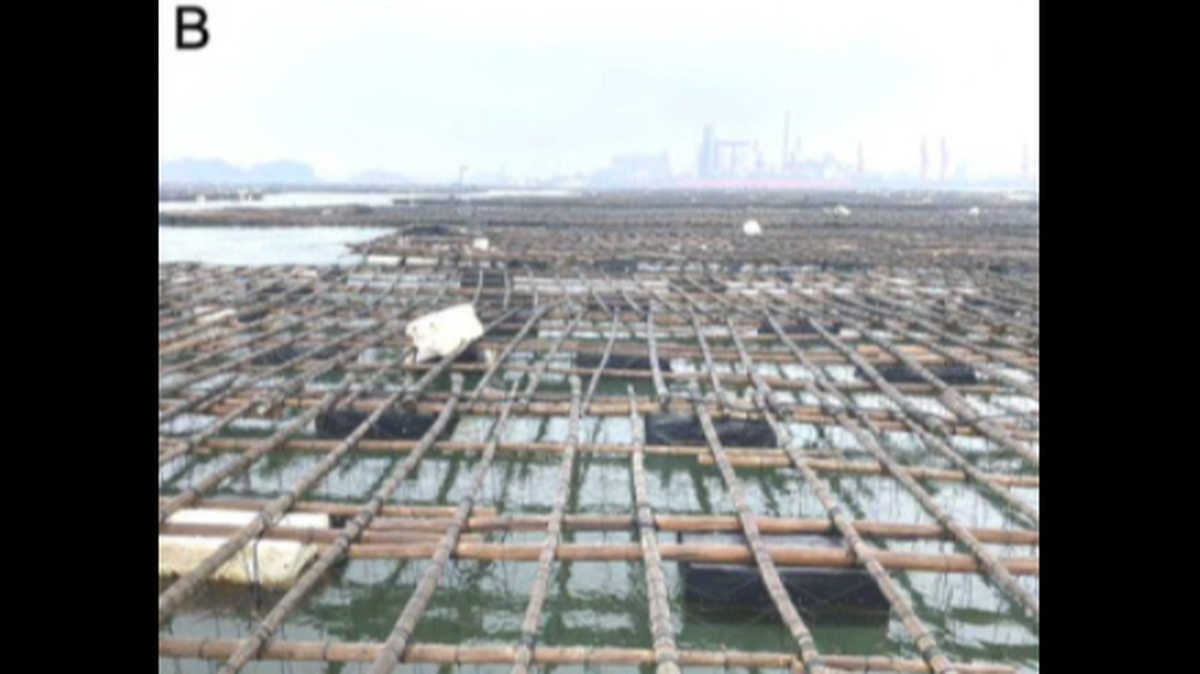
In the Beibu Gulf of the South China Sea, an expansive grid of tied wood sits floating on the surface.
From a distance, the structure may look like a boardwalk or decking, but in between each tethered corner is a hole straight into the water.
This is what the commercial scallop farms look like from above, and beneath the wooden grid are countless scallops growing to maturity.
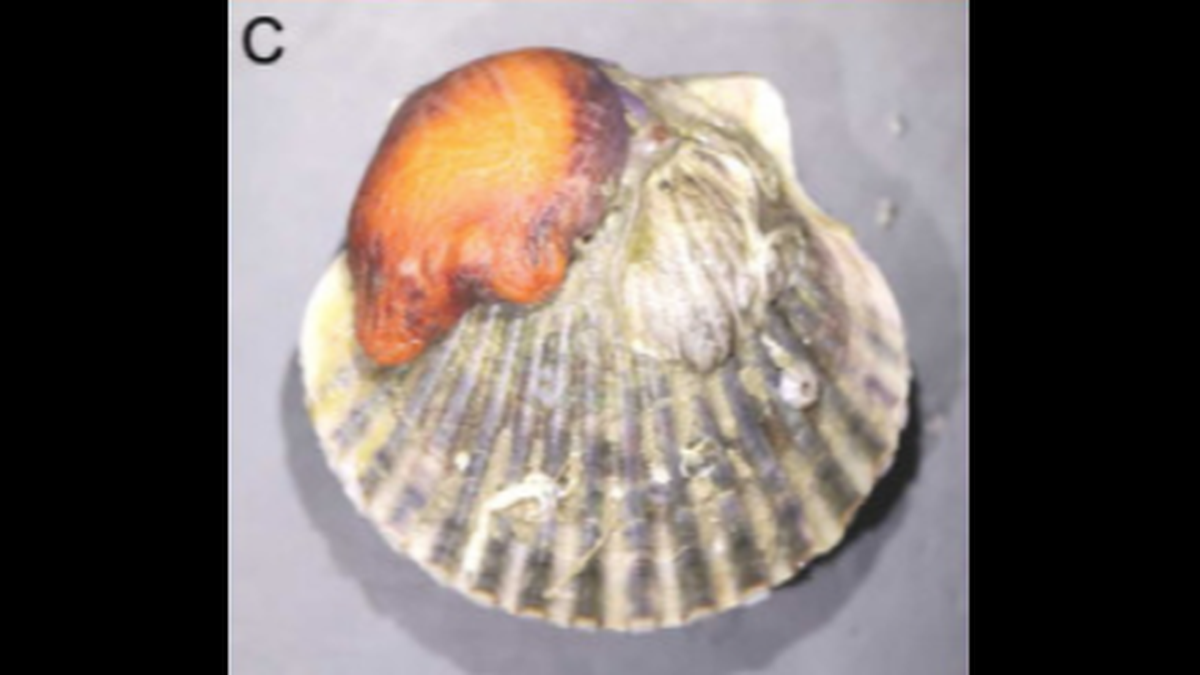
The scallop shells started to be dotted with squishy, brightly-colored creatures — a species new to science.
Dozens of sea squirts were collected from the expansive scallop farms in 2023, according to a study published Jan. 1 in the peer-reviewed journal Ecology and Evolution.
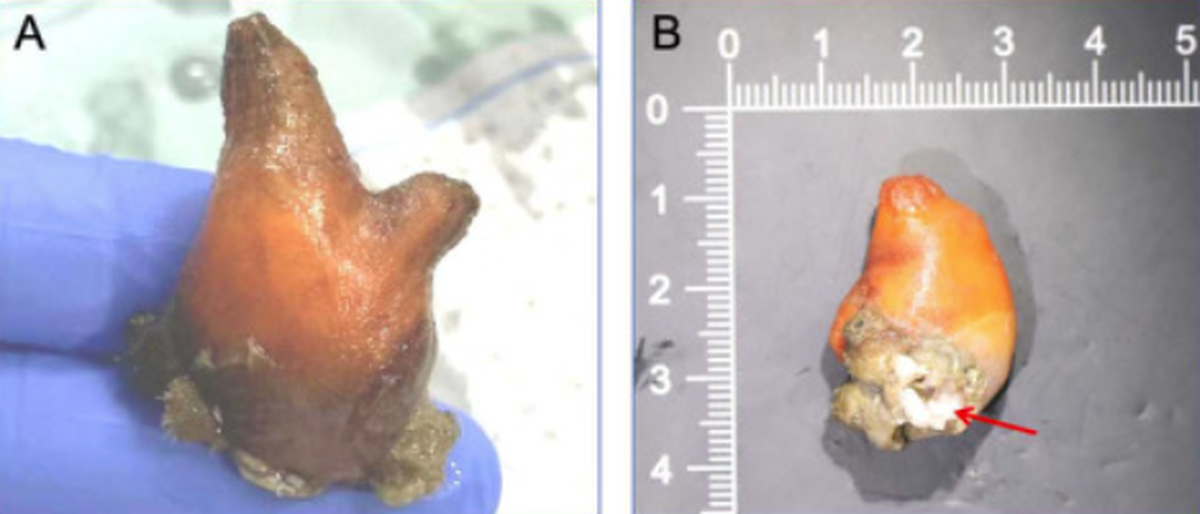
Their outer structure, or tunica, is “orange-red” and about 2.5 inches long, according to the study.
They attach themselves directly to the shell of the scallops, either by a single point at the base of the sea squirt, or by “pressing the entire body” against the shell on its side, researchers said.
Sea squirts earn their name from their habit of projecting water from their bodies when pulled from the ocean, and researchers said the new species “simultaneously expel(s) water” from both ends when “under external stimuli.”
The “potato-shaped” animal relies on seawater to keep its internal structure full, according to the study, and fills up with seawater to support its body.
“The intestine is curved with folds on the intestinal wall, and food particles can be clearly seen inside the intestine as they enter from the stomach and are absorbed by the intestine,” researchers said. “Unabsorbed food is also expelled through this route.”
All sea squirts, the new species included, are also hermaphroditic, meaning they have both male and female anatomy, researchers said. The animals have testicles packed together with eggs in close proximity.
Sea squirts start their lives as “tunicates,” spined sacs resembling tadpoles that then find a hard surface to attach to, according to the Woods Hole Oceanographic Institution. Then, they rearrange their organs and tail into the shape found on the hosts and become the sea squirts.
The new species is simply called YZ-2024 and was not given a traditional scientific name in the study.
Its identity as a new species was suspected because of its unique “smooth surface” and the color of its body, and this was confirmed with a DNA analysis, according to the study.
“Since there have been no reports on the molecular identification of sea squirts in the northern part of the South China Sea, this study represents the first,” researchers said. “In future studies, in order to enrich the biological information of YZ-2024, a search will be conducted for it in other sea areas of the South China Sea to determine its distribution range as well as its life history, reproductive habits, and identify the differences among the different sea squirts on the habitat types.”
The new species was found in the Beibu Gulf off the southern coast of China.
The research team includes Yichuan Zhang, Yuting Qin, Yueying Wu, Liping Liu, Wenguang Zhang, Ling Ding, Xiangpei Ya, Zhiting Wen, Kuaili Feng, Hong Wang and Yujun Wang.
This story was originally published January 8, 2025 at 3:06 PM with the headline "Squirting creatures — found in scallop farms — are new species in China. See them."