
Graveyard of WWII battle holds an ‘immense amount’ of unexploded bombs, team learns
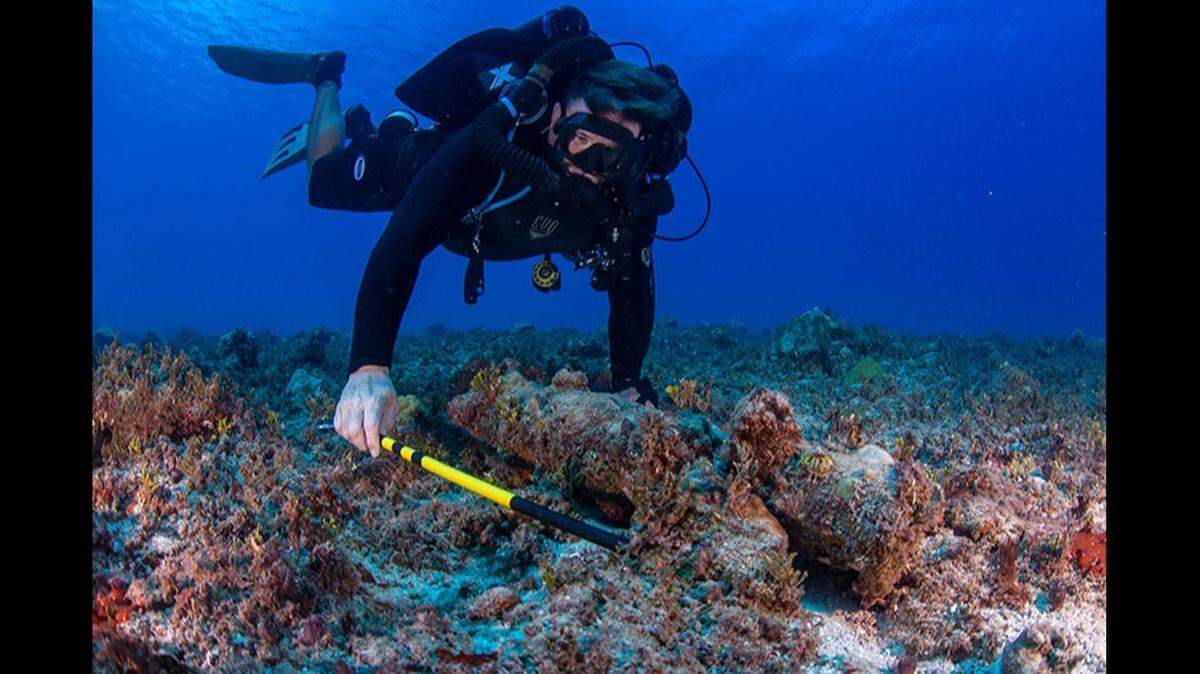
An “immense amount” of artifacts from World War II have been found by researchers scouring waters off the coast of Guam, but it’s recommended you not get too close.
The discovery is a scattered arsenal of unexploded mortar shells and artillery, remnants of battles tied to the Japanese invasion of the island in the western Pacific Ocean, according to researchers working with the National Park Service.
These echoes of the conflict include not only unexploded ordnance (UXO) unwisely “dumped” by the U.S. military, but bombs that missed their intended target.
“These are rounds fired from Navy ships and they didn’t make it to shore, or they were going in the opposite direction, as the Japanese fired shells at Marines as they were landing,” according to National Park Service archaeologist Annie Wright Nunn, a principal Investigator for the project.
“We found UXO all the way up to 200 feet, which was the maximum depth (investigated). It was on a slope and you could see it going as far as you can see,” Nunn told McClatchy News. “There’s tons of it.”
All count among the world’s most dangerous historic artifacts, never meant to be collected — or even touched.
Another surprise found
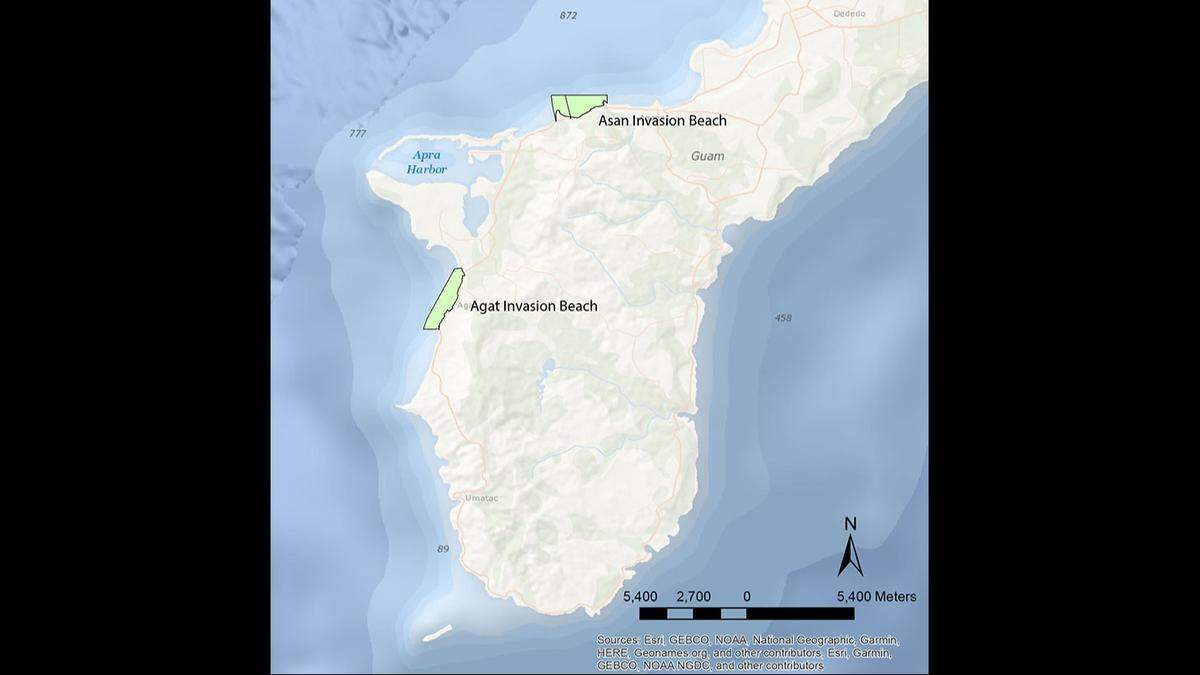
The bombs were documented during a National Park Service investigation into artifacts linked to the invasion of Guam in 1941. The landing beaches of Asan and Agat are today protected as part of the War in the Pacific National Historical Park, about 3,900 miles west of Hawaii.
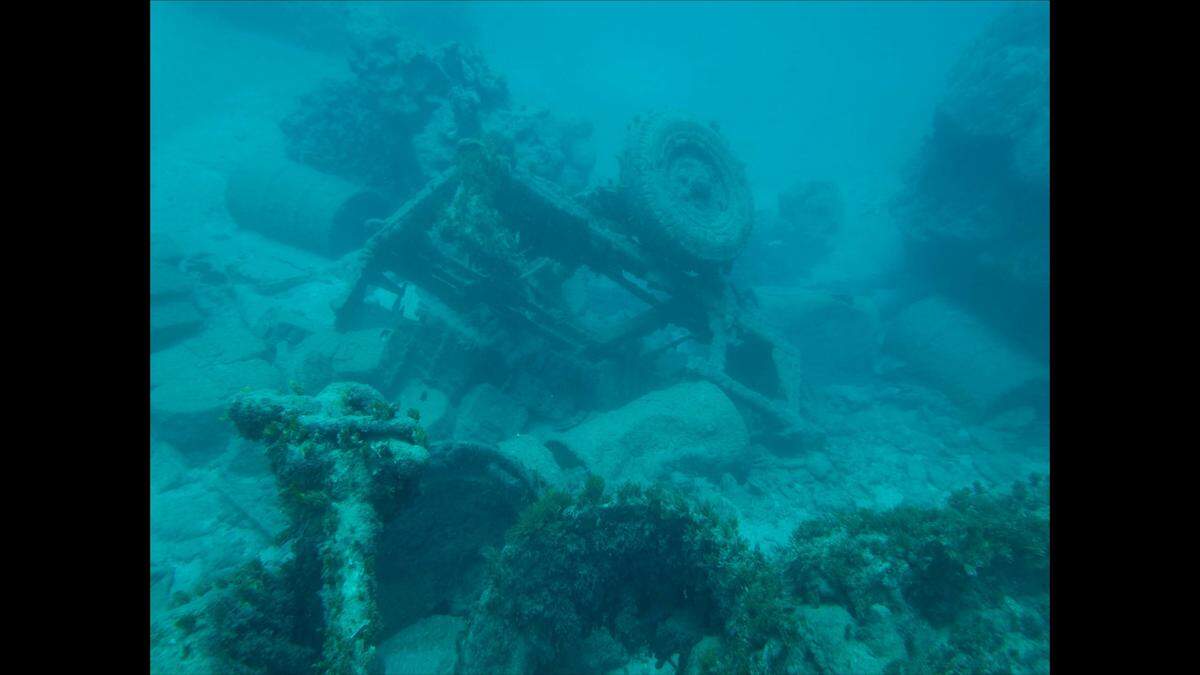
Among the strangest of the discoveries made by the team was a sunken Jeep trailer, fully loaded with equipment and weapons — including crates of unexploded ordnance.
It is suspected the valuable load slipped off a pontoon dock, sinking about 60 feet to its current murky resting place.
The National Park Service has long known there are explosives hiding in the water, with warning signs posted in some areas.
Experts believe there is little danger of them instantaneously exploding, “unless you are hitting (them) with a hammer,” Nunn says.
However, there is an ecological threat posed by TNT leaking from the bombs via corrosion. Once in the water, it can be absorbed by marine life.
National Park Service marine ecologist Monique LaFrance Bartley says divers counted 110 various types of UXO during the project, “but this is certainly an underestimate.”
“There were instances where it was difficult to count all of the UXO because waters depths were too deep, divers needed to return to the surface, and likely some UXO were buried,” she told McClatchy News.
The shifting nature of seafloor poses another challenge. Ordnance dumped off boats by the military was once thought to be confined to one spot, but storms and heavy currents have scattered the weapons over an area of about 80 acres, officials said.
The project, which was funded by NOAA Ocean Exploration, set out to locate and identify WWII artifacts that may be deteriorating more rapidly due to warming ocean temperatures.
Sonar found 274 “magnetometer anomalies” in the water. The team reached 161 sites, one of which proved to harbor a Japanese fishing boat.
The war’s Pacific front
Shortly after the Dec. 7, 1941, attack on Pearl Harbor, the Japanese invaded Guam and seized a small number of American forces “who were unprepared for the attack,” historians say. The island remained under Japanese control until 1944, with the Chamorro people of Guam bearing the brunt of the hardships.
“The United States didn’t have time to sufficiently mobilize its fleet and resources, as the island fell (in) just a week,” according to the U.S. Department of Defense.
“The U.S. was much more prepared by the time of the second battle, which took place July 21 to Aug. 10, 1944. ... Around 59,000 U.S. service members and a large number of native Chamorros faced about 18,000 Japanese. Fighting in the thick jungle and steep terrain was difficult for both sides, with about 3,000 U.S. troops killed and more than 18,000 Japanese dead when it was over.”
Even after the U.S. victory, as many as 7,500 Japanese soldiers remained hidden on the island, including one who held out until 1972, the department reports.
The fighting dramatically altered sites on and around the island and continues to have an ecological impact.
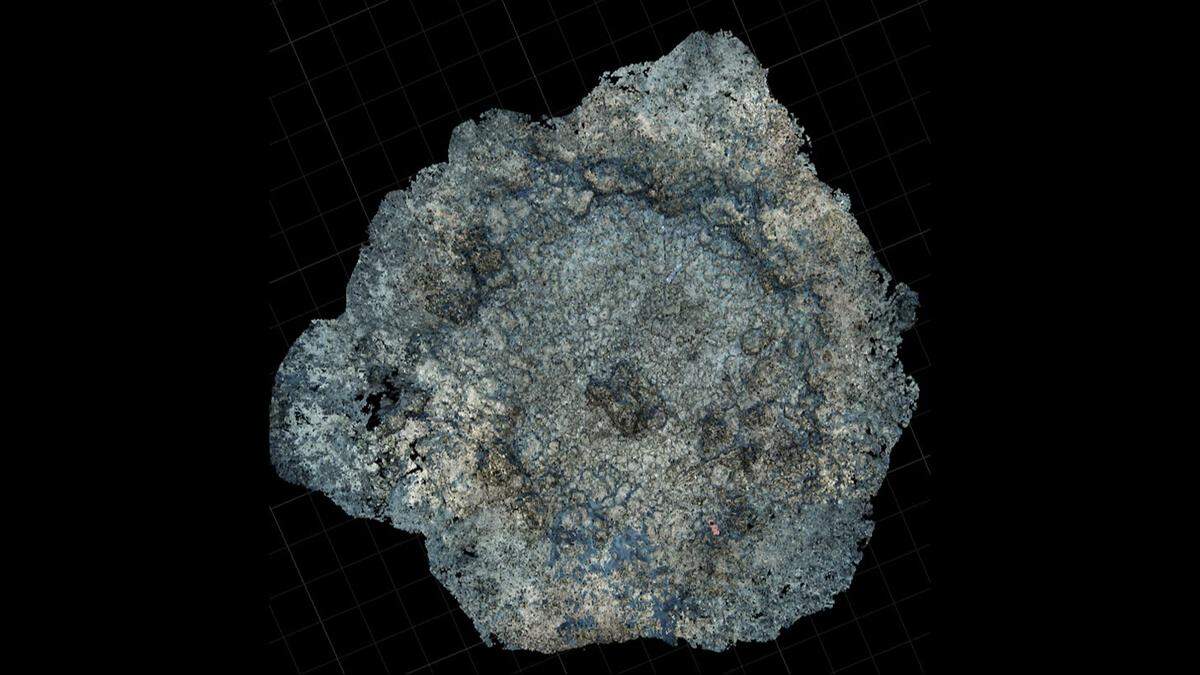
Among the examples found by the expedition were blast craters up to 200-feet wide, where U.S. underwater demolition teams used explosives to blow up obstacles created by the Japanese to prevent U.S. landing craft from reaching shore.
In one case, a crater has become like a huge dumpster, collecting modern-day trash on the seafloor, Bartley said.
This story was originally published September 22, 2023 at 11:20 AM with the headline "Graveyard of WWII battle holds an ‘immense amount’ of unexploded bombs, team learns."