
Hundreds of eyes stare back when researcher lowers himself into Tennessee pit cave
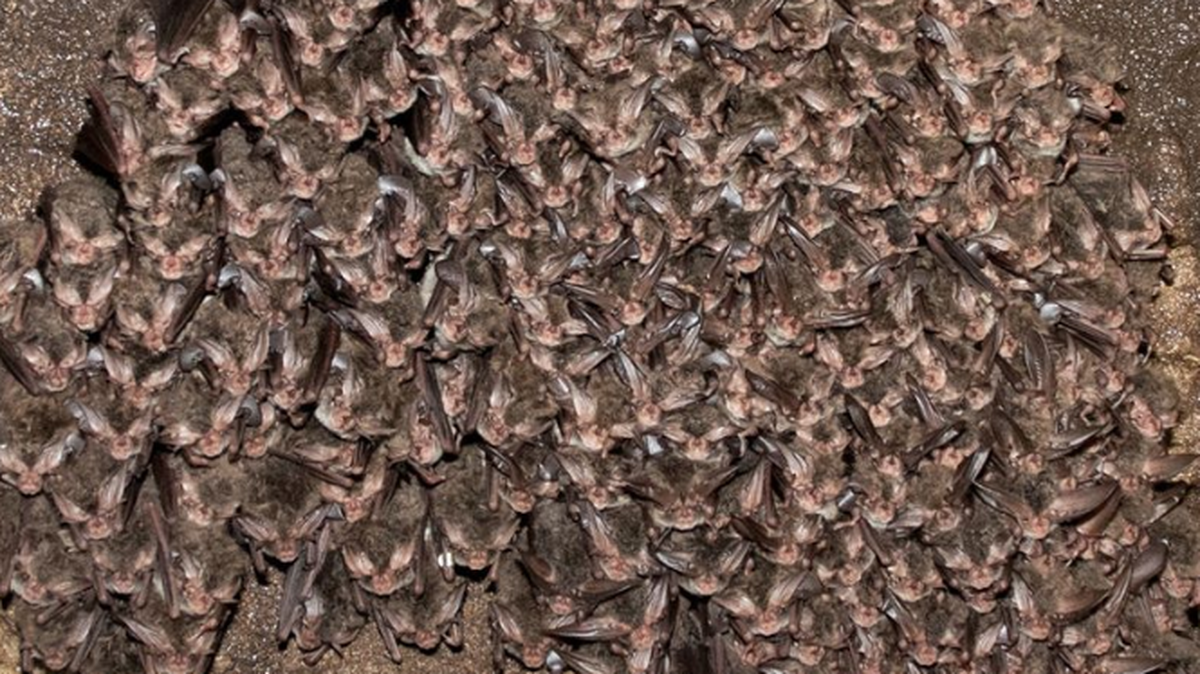
A scientist exploring the walls of a Tennessee “pit cave” came face to face this week with hundreds of bats piled on top of each other in the dark — a creepy sight he was hoping to find.
The exact location wasn’t revealed, but bat researcher Daniel Istvanko said the forbidding vertical cave is in Middle Tennessee, according to the Tennessee Wildlife Resources Agency.
“Hanging from a rope, he was able to snap a few pictures and leave without disturbing the sleeping colony,” the state agency posted on Facebook.
“Outside temps were in the teens, so these critters were fast asleep. The overall count of visible individuals resulted in a whopping 628 bats, although there were likely more hidden beneath the dense clusters.”
This species of big-eared bats are known to feed only at night, and they have a rather intimidating reaction to being disturbed, according to a state report.
“During hibernation, these bats fold and curl their large ears back like ram’s horns; if disturbed, the ears unfold and move in circles like antennae,” the report says, noting their ears are disproportionately large — “resembling rabbit ears.”
Researchers learned of the colony in 2018 and believe it is the state’s largest hiding place for Rafinesque’s big-eared bats, officials posted.
Pit caves are considered a perfect hiding place for them. The shafts range from spacious to claustrophobic and are tough to enter due to their steep vertical nature.
That alone won Istvanko admiration on social media.
“He is a brave man! No way I would go in a bat cave,” commented Amanda R Conrad on the agency’s Facebook page.
Furry Rafinesque’s big-eared bats grow to only about 4.5 inches long, but they are “swift nimble fliers,” according to a Tennessee wildlife report.
Researchers are closely monitoring the bats across the Southeast for deadly diseases like white-nose syndrome, which Tennessee officials call “the worst wildlife disease of our time,” according to the Facebook post.
“Scientists believe the disease has affected nearly 80 percent of bat populations in the U.S.,” the post said. “It takes a huge effort to complete even one survey.”
This story was originally published January 31, 2020 at 9:33 AM with the headline "Hundreds of eyes stare back when researcher lowers himself into Tennessee pit cave."