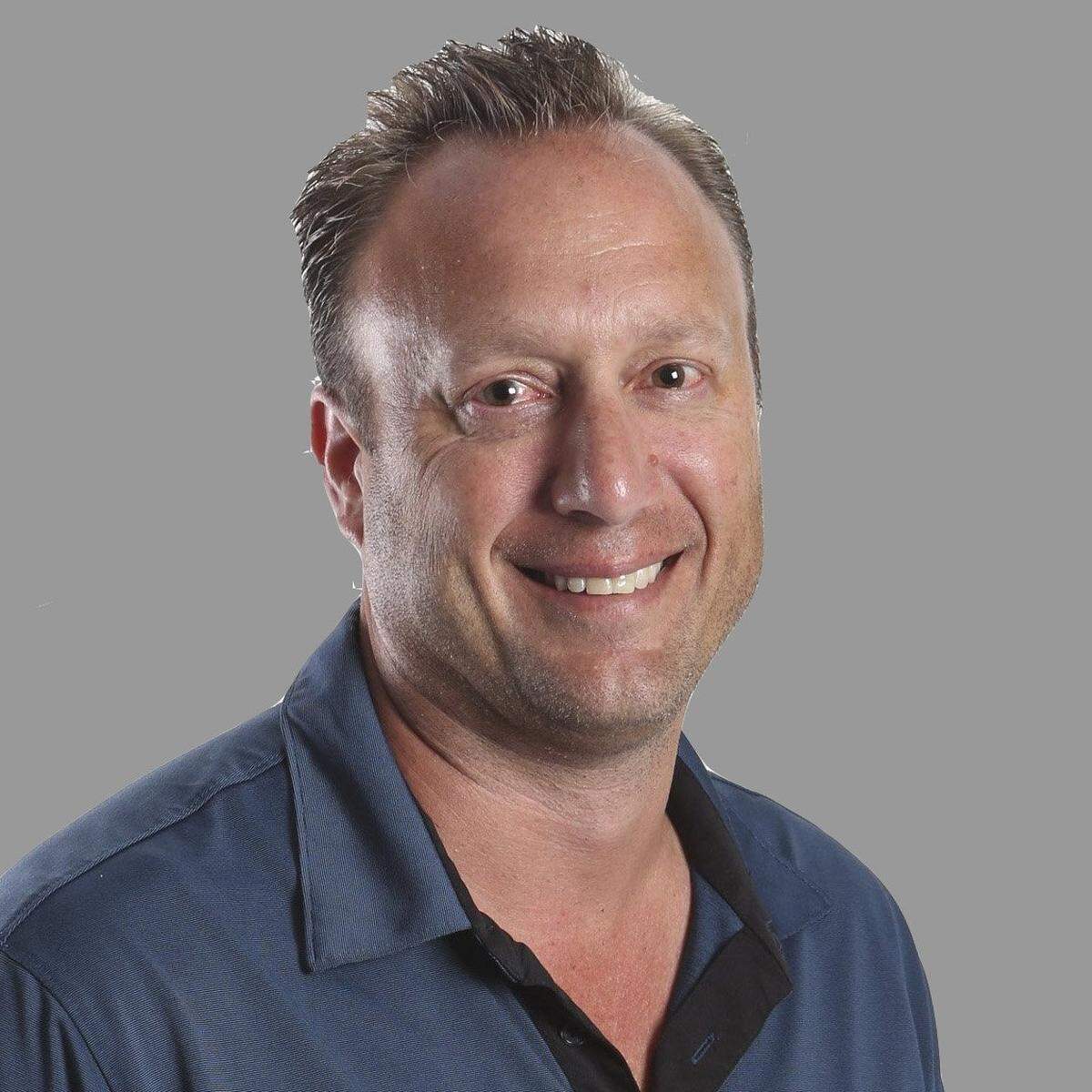
Here are the new Coastal Carolina president’s thoughts on the job in his own words
Incoming Coastal Carolina University president Michael T. Benson, whose hire was announced on Friday, sat down with The Sun News for an interview on Saturday on the CCU campus.
Among other things, Benson discussed why he wants to lead CCU and his plans to lobby state legislators and leaders for additional funding for the university, visit area high schools in an attempt to bolster CCU’s declining enrollment numbers, and support athletics.
Q: What interested you about the CCU job?
A: “I made public higher education my career over 25 years now, president at three different places. I took a little break to write a book, which is done now. I was a little salty toward Coastal Carolina for a while, actually you all beat us out for that spot in the Sun Belt in 2015. Now I’m part of the team. I’ve followed the university and its trajectory for quite some time. David DeCenzo is a friend and we were on an NCAA committee (NCAA Presidential Forum) together. When he told me he was preparing to retire, the timing worked out and it was a propitious moment for us and our family. And we’ve loved coming to South Carolina. This is a beautiful place with different topography and things to see and things to do, and we really like the people here. People are kind, they’re polite, the pace of life. I came down to campus to do my own intelligence gathering in July incognito to take a look at it, and it sold me. The setup, the layout, the way it’s kept, the facilities, all those things. I went home and told my wife this is something we should take a look at. I’m really grateful for the opportunity.” _ On being a finalist for the College of Charleston president job in 2018 and University of Mississippi chancellor position in 2019 while the president at Eastern Kentucky.
“If you look at my tenure at both Southern Utah and Eastern Kentucky they’re both 6 ½ years, which is above the average of the average university president. It’s not that we were that eager to leave but opportunities present themselves sometimes and I’m of the belief that you end up where you’re supposed to be. I enjoyed going through the experience both at Charleston and Ole Miss but this one just really felt right. The timing was right for our family and we hope that we can make a difference here?
Q: How beneficial will current president David DeCenzo remaining at the school for the rest of the school year be for your transition?
A: “No. 1, I really like Dave. I respect him a great deal. He has given a great portion of his career to this place and he loves it, so I respect that a great deal. No. 2, he knows a lot of players both locally and in Columbia, so I’m really excited about us going in tandem and meeting chosen committees, key legislators, key folks in the community and I want to lean on him to make those introductions. He’s been incredibly gracious to me and offered everything he can to assist us in the transition. I’m really thankful he’s going to stick around.”
Q: One of your great successes at previous stops is fundraising. Is that something you plan to focus on here and do you already have a plan for that?
A: “Fundraising broadly defined means anything that’s not generated on campus, whether it’s auxiliary revenue that you get through a residence hall or food service or your book store, but it also means state appropriation. So what are we doing in Columbia to make a case for the university and how can we do better.
“I get it. The state pie is this big, and there are encumbrances on that state pie and it’s getting more and more competitive. We have to make our case I think even more that higher education is an investment, it’s not a cost. You’re investing in people, people that in turn get good jobs and pay back. that’s one part of fundraising. The other part is of course the private donor. Those individuals willing to part with their disposable income or their means to support the institution. That’s something I really enjoy doing. It’s selling a place, it’s selling a vision, it’s selling education, which to me is the greatest investment a person can make in an individual’s life. I intend to spend a lot of time doing that and making a case for the university.”
Q: After years of growth the university’s enrollment has decreased in each of the past two years. Is that concerning and do you plan to try to rectify that?
A: “Singlehandedly I can’t rectify it. It has to be a team effort. Part of that I think a result or consequence of the ebb in the high school population in the state, but also as you know 50 percent of our students come from out of state. So if you look at those big feeder states whether it be New Jersey or Pennsylvania, New York, Connecticut, Maryland, what are the high school populations doing in those areas? Do we need to maybe focus on a state like Texas. Texas has a lot of universities but it also has a growing high school population.
“I will say this. We’re not going to take for granted our local student population. So I’m going to be out in high schools, I’ll go on recruiting trips to the schools here in Horry County and the surrounding counties. There are four counties in South Carolina where we get the majority of our in-state population so I’ll focus on that. Enrollment kind of comes and goes, but it you look at the average increase at Coastal it’s been on a pretty steady trajectory. What we’re facing, part of it is probably covid, it’s certainly is attributable to that, but students want to come back to campus . . . and I think we’re well poised to take advantage of covid getting behind us.”
Q: Do you have a first order of business here, and is there anything you want to change?
A: “It’s too early to say there’s anything I want to change. I would say my first order of business is getting out and listening to people and meeting as many people as I possibly can and making sure I’m visible and accessible, and we’ll go from there.”
Q: You have had a hands-on approach in athletics at your other stops. Do you have a great affinity for athletics and is that something you plan to be personally involved in here at the university?
A: “I was a student-athlete myself in college. I used to run a lot more than I do now. But participation in athletics is an amazing teaching tool. It’s a great experience for these young people, many of whom might not have a chance to go to college if it weren’t for that scholarship. So I will continue to support our coaches, our administrators, our staff, but first and foremost our student-athletes. They are students first, and athletes second. . . . Our job is to make sure they get an education. That’s what we’re about, we’re about education. Athletics are certainly a very important ancillary component to the university and an activity to participate in, but we are a university and that’s what we’re about.”
Q: Dr. DeCenzo was making $215,000 plus some additional supplemental payments to get him over $400,000. Can you disclose what your contract pays you?
A: “I can’t now because it hasn’t gone to the state commission. It’s a little different. I’ve never dealt with a package like this before in terms of some state funding and some from the foundation, but I can’t speak to it because it’s not finalized yet.”
Q: You have run some marathons, how many have you completed, and have you run in the Myrtle Beach Marathon?
A: “I’ve run four and my best time was 2:41. To put it in perspective somebody just broke the two-hour barrier, so I’m not nearly as fast as others. But it takes a lot of discipline to run a race that long, that is that demanding. But now I walk a lot of golf courses when I play with my son . . .so that’s kind of my pace right now. I never have [run in Myrtle Beach]. I did Boston when I was 19. That was a while ago, but we’ll see what we can do.”
This story was originally published October 3, 2020 at 7:29 PM.