
SC Supreme Court appoints new circuit judge to oversee new Murdaugh trial
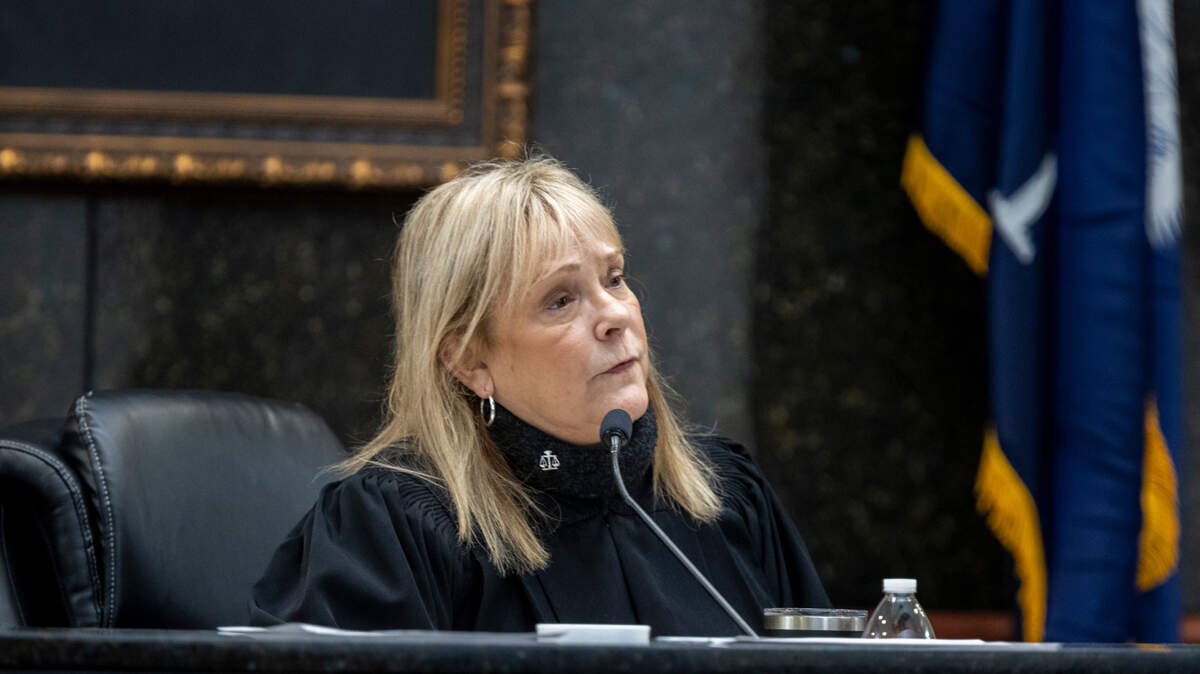
The S.C. Supreme Court has named a circuit court judge to oversee the retrial of Alex Murdaugh.
Judge Debra McCaslin, a former criminal defense attorney who practiced in the Midlands, will have the duties of overseeing what is expected to be one of the state’s highest profile trials.
In an ironic twist, McCaslin will preside over the trial of a former law school classmate.
She was a student at the University of South Carolina School of Law at the same time as Murdaugh. He was in the class of 1994. She was one year ahead, in the class of 1993, according to law school and state records.
Among McCaslin’s earliest decisions about the retrial of the 58-year-old Murdaugh is when it will start and where it will take place.
Unlike the prior Murdaugh judge, the now-retired Clifton Newman, McCaslin spent her entire career as a criminal defense attorney, much of the time in federal court.
Newman was an assistant prosecutor in Williamsburg County for 17 years before becoming a state judge.
Murdaugh, a disbarred attorney, is accused of killing his wife, Maggie, and son Paul in June 2021. Their bodies were found on the grounds of the Murdaugh 1,700-acre family estate in Colleton County. Maggie had been shot to death with an assault rifle; Paul, with a shotgun.
Murdaugh’s earlier trial, in early 2023, was called South Carolina’s “trial of the century” and was followed by people not just around South Carolina but the nation. It was a “whodunit” because Murdaugh contended he was innocent and there was no indisputable evidence, such as DNA or a video showing the killings. Murdaugh was a fourth-generation lawyer in a family dynasty prominent in law enforcement, political and social circles in the Lowcountry.
That trial lasted six weeks, and more than 70 witnesses testified. The jury was out less than three hours.
Supreme Court overturned Murdaugh verdict
Last month, the state Supreme Court overturned Murdaugh’s conviction in a unanimous 5-0 decision. In their decision, justices cited unlawful attempts by former clerk of court Becky Hill to influence the jury as their reason for overturning the verdict. The jury tampering denied Murdaugh his constitutional right to a fair trial, the high court ruled.
Justices also said too much information about Murdaugh’s financial fraud was allowed to go before the jury. That information — more than 12 hours of testimony about how Murdaugh preyed on weak and unsuspecting victims — was excessive and inflammatory, the high court ruled.
McCaslin will also have to decide how much, if any, financial fraud information will go before Murdaugh’s future jury. Some evidence is permissible, the high court ruled.
At the time of the trial, Murdaugh had not pleaded guilty to any of the numerous state and federal charges of stealing millions from clients and his law firm that were pending against him. Nonetheless, Judge Newman allowed prosecutors to present more than 12 hours of testimony about Murdaugh’s betrayals of his clients and legal partners.
It was only after the trial that Murdaugh plead guilty, first in federal court and then in state court, to stealing some $10 million from clients and his law firm.
For his financial crimes, Murdaugh is now serving a 27-year sentence in state prison concurrently with a 40-year sentence handed down in federal court.
In their 27-page opinion, justices said it will be up to a new judge — now McCaslin — to decide how much if any damning information about Murdaugh’s financial crimes to go before the jury.
“... If the trial court decides to admit evidence of Murdaugh’s financial crimes on retrial, the State must complete its introduction of that evidence efficiently without the lengthy presentation of inflammatory details with little to no probative value that was permitted in the first trial,” justices wrote in their opinion.
Judge is no fan of social media
Murdaugh’s retrial is expected to be attended by not just professional reporters but also numerous bloggers, podcasters and other people of varying experience in today’s hypercharged 24/7 media universe.
McCaslin in her most recent filing for reelection to a judgeship wrote, “I am not a big fan of social media and rarely look at it. It has not affected me in my judicial capacity.”
An order naming McCaslin as the new Murdaugh judge was published on the state Supreme Court internet site just before noon Monday. It was signed by Chief Judge John Kittredge.
The Supreme Court also issued what appear to be strict rules for media concerning McCaslin.
But the new rules aren’t much different from existing rules.
For example, the “new” rules say that McCaslin won’t be commenting on any aspect of the case and asks reporters not to contact McCaslin or her staff. But any professional reporter who covers courts knows that judges don’t comment on existing cases. Reporters covering courts traditionally get their stories largely from what happens in a public courtroom and from documents filed in the public index.
The rules published Monday also say:
- Neither Judge McCaslin nor any employee of the South Carolina Judicial Branch will speculate on the substance, timing, or outcome of any legal issues arising in this matter.
- Notice of date and time of all proceedings will be published by the office of the appropriate county clerk of court.
- All judicial rulings will occur in open court or addressed in published written orders, consistent with South Carolina law
A 1990 graduate of the College of Charleston, McCaslin got her law degree from the University of South Carolina Law School in 1993. She was in private practice as a defense attorney from 1995 to 2020, when she became a judge. She was recently elected for a second six-year term.
She has the “gravitas”
McCaslin is based in Lexington. She gets high marks by those who have known her over the years.
Veteran Columbia criminal defense attorney Jack Swerling said he has known McCaslin over the years first as an attorney and then as a judge.
“I’ve tried cases with her and probably five or six cases under her since she’s been a judge,” said Swerling. “This is a big case, a major case, and she’s being entrusted with it. It speaks well of her, her temperament, her legal ability, the way she runs a trial, her attention to detail and her fairness to both sides. She’s right down the middle.”
McCaslin won’t be fazed by all the media attention, Swerling predicted. “She’s been in the spotlight in many, many cases.”
Columbia attorney Pete Strom, for whom McCaslin worked as a clerk in the 1990s, said, “She had this charismatic way about her. All my clients just loved her.”
After McCaslin became an attorney, she gained a reputation as “probably the most successful female criminal defense lawyer in the state,” said Strom, who sat for many years on the quasi-legislative body that helps choose South Carolina’s judge.
“She will have the gravitas to control the courtroom,” Strom said.
McCaslin, who is approximately 66 years old, oversaw the closely watched 2023 trial of Mexican restaurant operator Greg Leon, who was found guilty by a Lexington County jury of murdering his wife’s lover on Valentine’s Day.
In her application papers running for reelection to a judge’s post in 2025, McCaslin said that while she was a criminal defense attorney, she handled approximately 125 cases a year and managed all aspects of her practice, including checking accounts and day-to-day operations.
In an interview in 2019 before the Judicial Merit Selection Commission, McCaslin said she was influenced by three great lawyers early in her legal career:
- Strom, who taught her how to manage finances in a lawyer’s office and a good work ethic;
- Leigh Leventis, “probably one of the kindest people I’ve ever met, and he taught me to be kind to people. He taught me to dot my I’s, cross my T’s; if I see an officer, I need to ask about his children. I get along with both sides”;
- Dick Harpootlian, “I can tell you he is a really great trial lawyer. So I took that with me also.”
Harpootlian is one of Murdaugh’s defense attorneys.
“I basically interacted with her over 30 years. ago. I’m flattered she would think I had trial skills that she admired,” Harpootlian said.
"I’ve appeared before her and she’s been extraordinarily fair to both me and the state in a criminal case I had before her,” Harpootlian said. “Every lawyer like me wants judges who call balls and strikes — she can do that very well. She’s fair and impartial.”
This story was originally published June 8, 2026 at 12:33 PM with the headline "SC Supreme Court appoints new circuit judge to oversee new Murdaugh trial."