Myrtle Beach spent nearly $1M on technology to curb violent crime. Is it working?
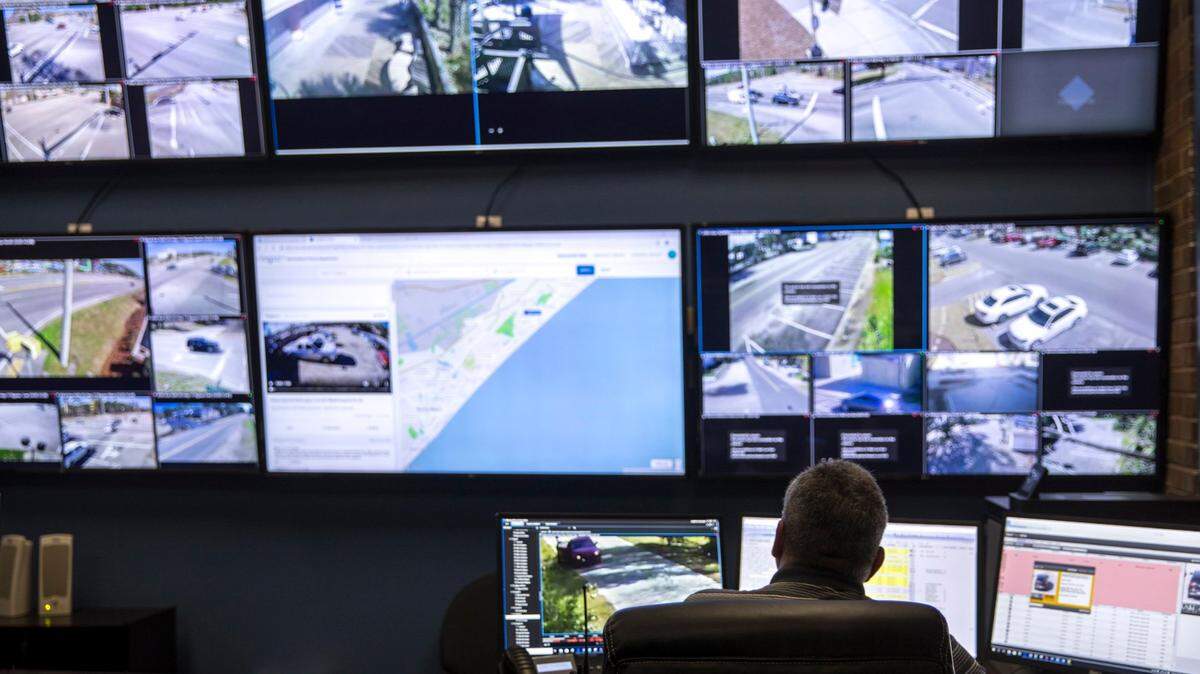
The Myrtle Beach Police Department budgeted nearly $1 million this year to combat crime with technology.
The department set aside the money to expand and upkeep its network of camera surveillance, gunshot detectors and license plate readers in an effort to combat and respond to crime in real time.
Even with this technology, the city was rocked by several high-profile violent crimes this summer.
The city credited its technology for speedy response times to a deadly mass shooting in April, but during this shooting and others, the impact of these devices can be hard to measure, as officers were already nearby when the violent crimes occurred.
In a recently launched web series by the department called “Fridays on the Front,” officers have highlighted cases where department technology has aided in solving crimes.
But have these tools been worth the cost by aiding in crime solving and prevention? Police and city officials say yes.
Tech tools of the trade
The primary tool used in the city is a camera network integrated with the Real-Time Crime Center that has more than 1,900 camera views, according to police department spokesperson Randolph Angotti.
Angotti said that these cameras are “strategically placed throughout the city to enhance situational awareness, assist investigations, and improve our ability to respond quickly to incidents” in an email to The Sun News. He said that information about where devices are stationed is unavailable for security reasons, but devices are focused on areas “where they are most effective based on crime trends, call volumes, and public safety needs.”
In the Fiscal Year 2025-2026 budget, the department allotted $150,000 for camera repairs and parts, and $150,000 for new camera phases, Angotti explained.
The department also uses fixed and mobile license plate readers, and acoustic detection devices that alert officers to potential gunfire in real time. The technology is helpful in speeding up response times, improving officer safety and aiding in locating evidence and identifying individuals involved in gun crimes, according to Angotti.
Additionally, the department has expanded its drone program, which is used for search operations, monitoring large events and recovering evidence, according to Angotti.
“In 2024, we implemented improved drone systems and deployment strategies to strengthen this capability,” he wrote.
In post-incident investigations, the Crime Scene and Traffic Units use a device called a FARO 3-D scanner, which creates “highly accurate documentation of crash and crime scenes,” Angotti said.
The department put $581,000 toward software maintenance agreements for these various technologies for the current fiscal year, according to Angotti. In the budget, $39,000 went toward license plate readers, $207,695 went toward computer aided dispatch, $113,636 went toward Milestone Cameras, $30,000 went toward automated vehicle location and $90,000 went to ShotSpotter gunshot detection.
“Costs for these technologies vary widely depending on vendor, system, and deployment scale,” Angotti said. “The department pursues investments that deliver the most value for public safety and works closely with the City of Myrtle Beach and partner agencies to ensure responsible stewardship of taxpayer resources.”
The department owns and operates most of its own systems, but also has partnerships with other city departments to help install and repair devices, as well as maximize their efficiency and coverage, Angotti said.
But despite all of these technological tools to help officers, the Myrtle Beach Police department remains understaffed. In April, Myrtle Beach Police Chief Amy Prock reported that the department was down 50 officers.
The role of police tech in recent downtown shootings
Despite the presence of this abundant crime technology, several shootings rattled the city’s heavily trafficked downtown Ocean Boulevard area in spring and summer — some turning deadly.
The most impactful shooting occurred the night of April 26, 2025, when 18-year-old Jerrius Davis of Bennettsville drew a firearm and shot it into a crowd on a sidewalk. He was pursued by a Myrtle Beach Police officer, who shot and killed him. Eleven people were injured in the incident.
Police department technology played a role in parsing out what happened in the incident, as shown in a report recently released by the South Carolina Law Enforcement Division.
Officers were responding to an unrelated call at a nearby restaurant when the shooting occurred, rather than being called to the scene by action detected on surveillance technologies, according to the report. However, city cameras and police bodycam footage were used to compile the report, which details the chaos that ensued that night.
The officer that pursued Davis fired his gun at him five times, but the ShotSpotter detected six gunshots.
The ShotSpotter detected 13 gunshots in total that night, with nine being shot between the shooter and the officer, and three determined as being part of an unrelated incident a block over, according to the report.
A city camera in front of the Gay Dolphinin at 916 N. Ocean Blvd. also captured the shooting, and was used alongside footage compiled from nearby businesses to paint a clearer picture of the incident.
Another shooting that occurred in the area on June 12, 2025, was also captured on city cameras and ShotSpotter, but again, the technology itself did not prevent the crime or draw officers to the scene. According to the incident report, a nearby officer was alerted to the incident by hearing the shots.
A shooting the night of June 27 inside the Peaches Corner restaurant left one person dead. The incident report for the shooting says that a Myrtle Beach Police officer alerted other officers to the incident, prompting the response. However, it is unclear whether the officer found out about the incident using this technology.
Angotti did not respond to a question of whether technology was involved in the officers’ response in time for publication.
It should also be noted that during the spring and summer months, the city’s busiest time, police patrols are increased along North Ocean Boulevard, with officers usually placed at nearly every corner.
The police department additionally has traffic flushing, and seeks help from other agencies. The additional costs of these patrols and resources is not known.
City claims crime decline. Did technology help?
Since 2015, the Myrtle Beach Police Department says it has has recorded a 47% decrease in Part 1 crime in the city — which refers to major crimes like murder, rape, arson, aggravated assault, motor vehicle theft and more, according to Angotti.
Angotti said that police technology is continuing to play a role in preventing crimes from happening, and solving those that do.
“Examples include drones assisting in locating suspects and recovering contraband, cameras providing crucial evidence in major investigations, and the FARO scanner ensuring accuracy in court presentations,” he said.
In 2024, the department’s Real Time Crime Unit reviewed 7,773 calls for service and processed 943 requests, which was a 20.3% increase in calls reviewed and a 29.5% increase in requests processed from 2023 numbers, according to Angotti.
It is hard to say whether the reported decline in certain kinds of crime can be directly attributed to investments in technology, and studies on the use of police department technology show mixed results.
The literature review in a study by the Urban Institute Justice Policy Center says that, though findings are mixed, studies show that cameras used by police departments can help in reducing property crimes and vehicle crimes in particular.
A 2024 study 2024 by the Northeastern University School of Criminology & Criminal Justice found that ShotSpotter technology does not reduce crime or shootings, though it can quicken police response times and provide additional information in an investigation.
In Myrtle Beach though, the police department feels that its technological tools have proven impactful, and continues to invest in crime detection and prevention technology.