
Want to scout for sea turtles? Here’s how you can volunteer to search beaches
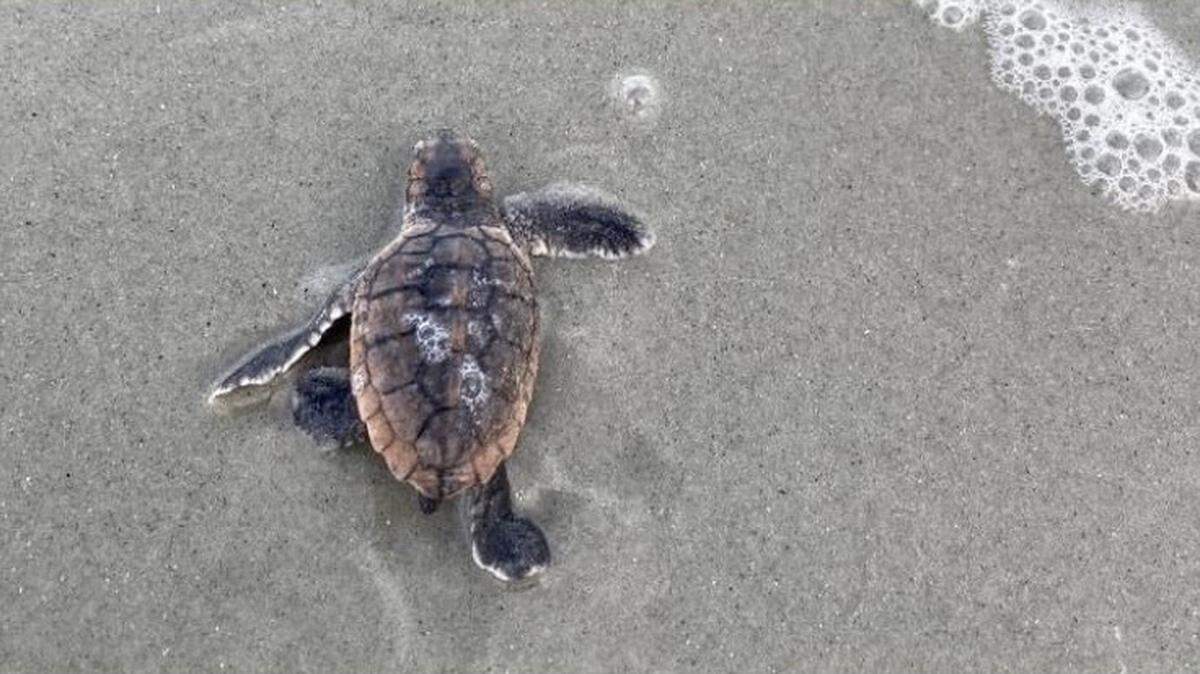
In less than two months, tiny tracks can be spotted in the early hours on the beach as turtle season begins May 1.
Local residents may still have time to sign up to be a South Carolina United Turtle Enthusiasts volunteer.
The SCUTE volunteer program oversees 13 beaches every sunrise until late October to look for signs of nesting and turtle crawls. Each beach has a leader trained and permitted by the South Carolina Department of Natural Resources to interview, teach and create a walking schedule for its volunteers.
Head of SCUTE Rick Scott emphasized interested volunteers must be able to commit to walking a section of the beach once a week, even in poor weather unless there is lightning. They try to be off the beach by 8 or 9 a.m. before high tide washes away the tracks or tourists get the chance to trample them.
Scott said volunteers walk in pairs, so if someone has to miss a morning walk, they have a list of substitute volunteers available.
Many of the slots are already full, but there are some vacancies to fill and opportunity to be on the substitute list. Scott asked volunteers to pick the beach nearest to them for convenience and contact its leader to be considered.
- Myrtle Beach State Park: Ranger Ann, awilson@scprt.com
- Garden City/Surfside: Terry, tanngraham@aol.com
- Huntington Beach State Park: Ranger Mike, mwalker@scprt.com
- North Litchfield: Phyliss, murrayphyllis@hotmail.com
- Litchfield By The Sea: Bonnie, pawleys77d@gmail.com
- South Litchfield: Cathy, cat.scott@hotmail.com
- Pawleys Island: Mary, maryschneider@sc.rr.com
- DeBordieu/Price George: Mark, fnadoc@mac.com
Will there be a busy turtle season?
Sea turtles return to lay eggs every two years, Scott said, so the turtles from 2024 are expected to be back this year. They have an internal GPS system called magnetic imprinting which leads them close to the same beaches where they were born and have continued to lay eggs.
In 2024, there were 4,818 turtle nests in South Carolina. Scott estimated a couple hundred to return to the Grand Strand beaches.
“But you know these silly turtles,” Scott said. “You think you’ve got it figured out, and then they’ll throw you a curveball.”
Huntington Beach State Park and Pawleys Island are the biggest beaches, so more nests are usually spotted there. SCUTE sees most nests laid in early- to mid-June, but they have been spotted as early as mid-April.
Eggs typically hatch 65 days after they are laid, and some nests don’t hatch until October. SCUTE hosts public inventories at some locations about 3 days after the hatchings as an educational event to count the eggs left in the nests. Each nest has about 110 eggs, Scott said.
How do SCUTE and SCDNR track sea turtle hatchings?
Only one in 1,000 sea turtles are estimated to survive each season, Scott said, but SCUTE and SCDNR conduct DNA testing in an effort to track some of the turtles that do survive.
Scott said they take one egg out of every nest to send for testing. The egg is taken to the water, the yolk is sacrificed, and the shell is put in a tube of alcohol and sent to Dr. Brian Shamblin from the University of Georgia. Everything is permitted by and under the guidance of SCDNR.
The testing offers insight to where specific sea turtles have laid their nests in the past or if it had a sister near that survived. It takes about 25 years for a turtle to mature and be able to lay eggs.
“Now we’ve been doing it for so long, we’re starting to see children turtles come in,” Scott said. “The DNA analysis is really, really exciting.”