
NC man convicted of Conway murders faces state charges. What to know ahead of hearing
A North Carolina man is set to appear in court in Horry County on Monday after state prosecutors announced in September they would be seeking the death penalty in his case.
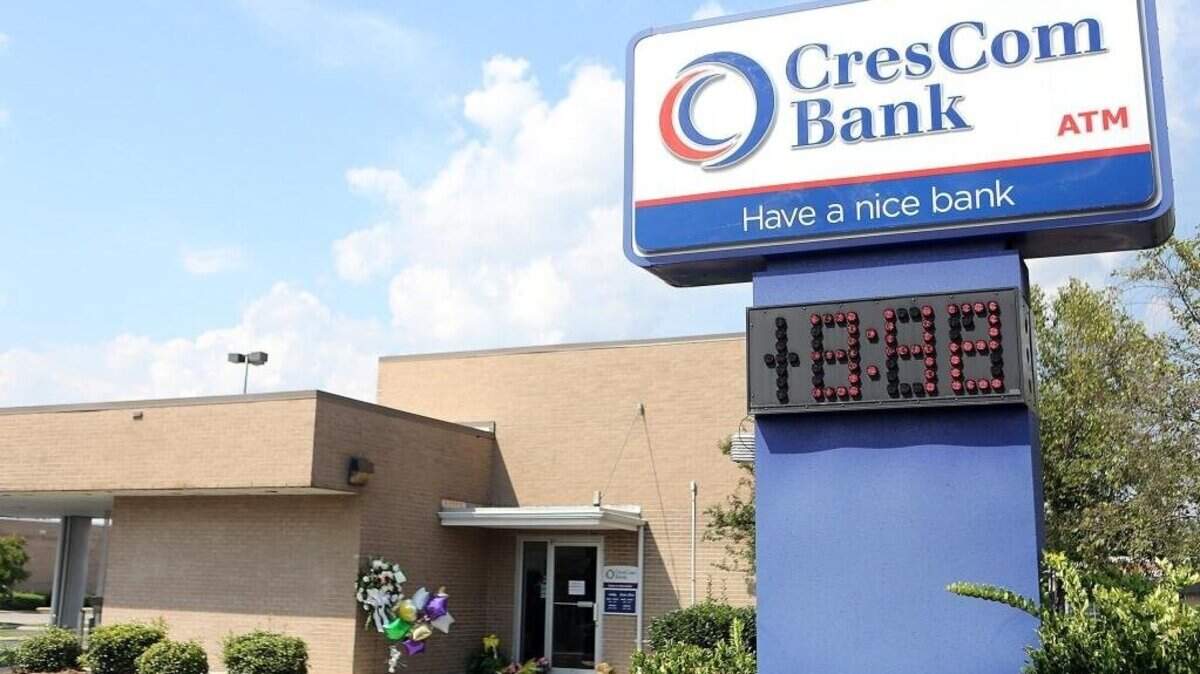
Brandon Council was convicted by a federal jury in 2019 of murdering two bank tellers at the CresCom Bank in Conway during a robbery. Council now faces state charges after he was taken off death row at the federal level.
Here’s what to know about the case ahead of the hearing.
Council’s initial arrest
- Police arrested 32-year-old Council in Greenville, North Carolina, a couple of days after he shot and killed two Horry County women during a robbery at CresCom Bank in Conway in August 2017.
- CresCom Bank employees Kathryn “Katie” Davis Skeen, 36, and Donna Major, 59, were killed at the branch on U.S. Highway 501 and 16th Avenue.
- Greenville Police conducted a traffic stop on Council near a Baymont Inn and Suites after they received a 911 tip about him being near a Red Lobster. Council attempted to run before he was quickly apprehended.
- Council was charged by the state with two counts of murder, one count of entering a bank with an intent to steal, grand larceny, armed robbery, possession of a weapon during a violent crime and felon in possession of a pistol. He also faced federal charges.
- A little more than a month before the robbery, Council was released from probation on July 31 after serving time for a felony larceny conviction.
Federal jury sentences Council to death
- A federal jury sentenced Council to death in October 2019 after he was convicted of murder and robbery charges during an almost three-week trial.
- Evidence presented in court showed that Council went to CresCom Bank on Aug. 21, 2017, and approached Major at the teller counter. He waited about 45 seconds before pulling a gun out and shooting Major twice. Council then shot and killed Skeen after he heard her screaming in a nearby office.
- Federal prosecutors said the killings were “intentional and senseless murders” and argued that Council’s crime should be considered worse than others. Council’s defense presented dozens of mitigating factors as to why he shouldn’t receive the death penalty, such as abuse he faced when he was younger and his willingness to plead guilty in exchange for life in prison.
- The jury found that Council showed little remorse in the killings and that they were part of an escalating criminal spree.
State drops charges
- The 15th Judicial Circuit Solicitor’s Office dropped state charges against Council a couple of weeks after the federal jury sentenced him to death.
- Prosecutors said the state charges could be brought back at a future date.
- Following his sentencing, Council was held at a federal short-term prison in Oklahoma City.
Biden commutes Council’s sentence
- Former President Joe Biden commuted Council’s death sentence to life in prison without parole in December 2024 — two days before Christmas.
- Council was one of 37 death row inmates whose sentences were reduced in the White House announcement.
- The White House said that Biden believed the federal death penalty “must stop” except for those convicted of terrorism or hate-motivated mass murder.
- Council was the first person sentenced to death after federal officials announced they resumed carrying out executions. He was held on death row in Indiana.
- At the time of the 2017 robbery, Council was on the run for other robberies in North Carolina.
State refiles charges, seeks death penalty
- Nearly a year after Biden’s commutation, state prosecutors announced they would once again seek the death penalty in Council’s case, sending it back to trial.
- Council waived his right to appear in the courtroom during the hearing in September 2024. His attorneys pleaded not guilty on his behalf.
- Horry County Solicitor Jimmy Richardson said he expected the trial to include a jury, which Council’s team requested. Council returned to federal prison in the meantime.
- Richardson said the state trial would be completely different than and separate from the federal trial.
- The state does not expect any plead deal to be entertained, Richardson said during the announcement. Council’s case was the “worst of the worst,” which is why the state decided to request the death penalty, he said.
Council returns to South Carolina ahead of hearing
- Council was transferred from federal prison and brought back to South Carolina ahead of his court appearance on Monday.
- Council was booked into the J. Reuben Detention Center on June 24, where he will be held until his court appearance.
- The hearing marks the next step in the state’s prosecutors charges against Council after they announced in September that they would seek the death penalty in his case.
The summary points above were compiled with the help of AI tools and edited by journalists. The source reporting referenced above was written and edited entirely by journalists.

Kate Robins
The Sun News