
Heading to Myrtle Beach for Independence Day? Know these beach warning flags
Fourth of July is one of the busiest beach days along the Grand Strand every year. With the influx of crowds, it’s essential to check for beach warning flags before heading to the water.
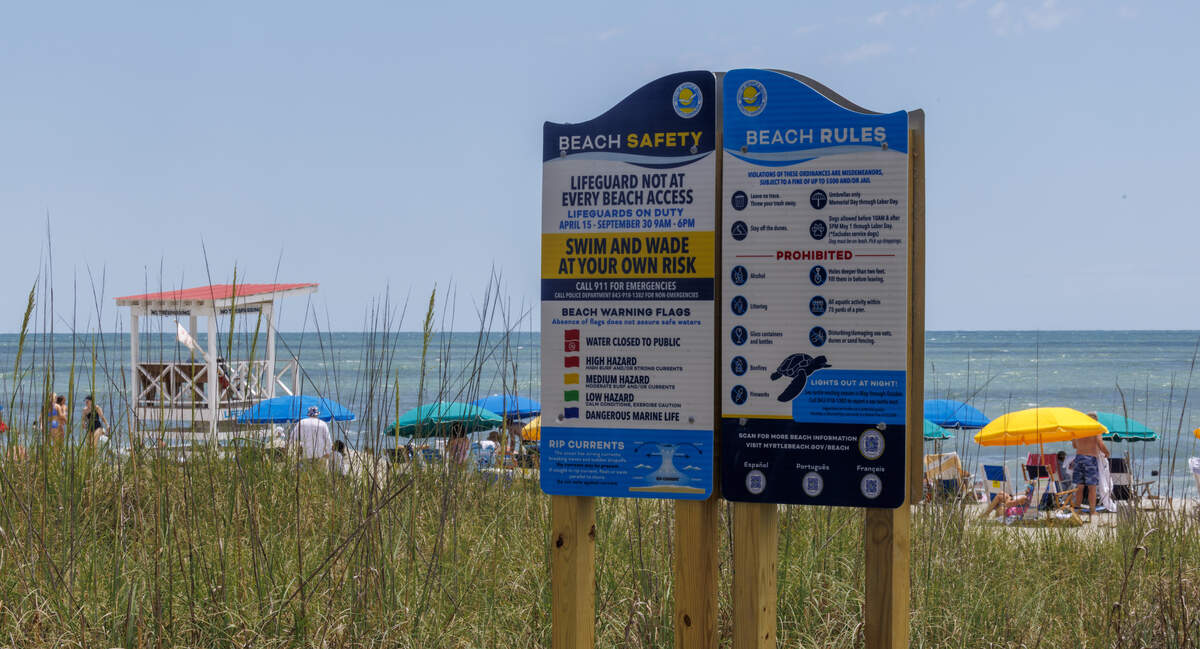
Beach flags fly at lifeguard stands, determining the risk of potential rip currents and dangerous marine life nearby.
Police and Fire Department personnel are on site during peak seasons, according to the City of Myrtle Beach, to assist with any water-related emergencies.
What do the flags indicate?
A green flag means there are low hazards for rip currents. Conditions are calm, but still exercise caution. A yellow flag means there are moderate risks for rip currents.
A red flag is flown when the surf becomes strong and there are hazardous conditions. A double red flag closes the water to the public, as conditions have become extremely unsafe.
Rip current advisories and beach hazard statements are often issued by the National Weather Service. Rip currents occur when incoming waves pile at the surf zone, forcing the retreating water to take a path of least resistance back through the surf, which is usually a sandbar.
Rip currents can take even a strong swimmer away from the shore quickly, and account for over 80% of rescues performed by surf beach lifeguards.
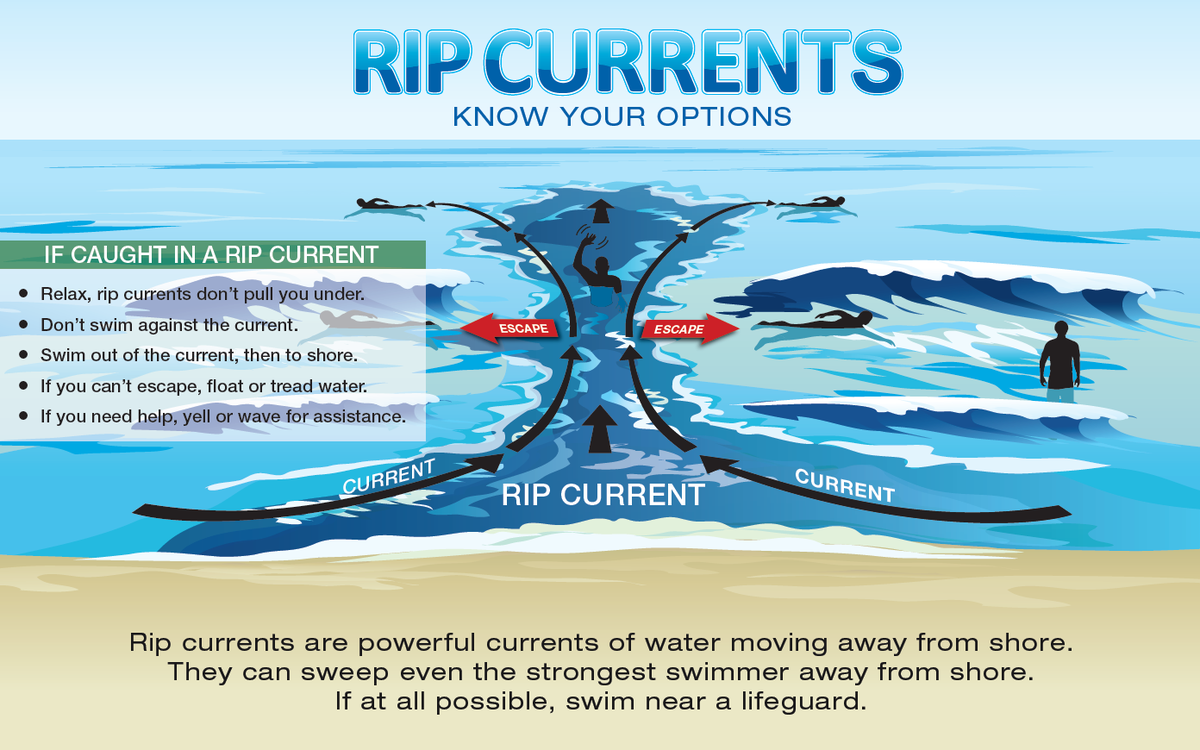
The National Weather Service advises these safety rules when caught in a rip current.
- Remain calm to conserve energy and think clearly.
- Never fight against the current.
- Think of it like a treadmill that cannot be turned off, which you need to step to the side of.
- Swim out of the current in a direction following the shoreline. When out of the current, swim at an angle--away from the current--towards shore.
- If you are unable to swim out of the rip current, float or calmly tread water. When out of the current, swim towards shore.
- If you are still unable to reach shore, draw attention to yourself by waving your arm and yelling for help.
A blue or purple flag indicated dangerous marine life nearby, like stingrays or jellyfish.
Last month, Myrtle Beach Police Department warned of Portuguese man o’ wars washing on the shore.
The animals recognized for their balloon-like appearance are often blue, violet or pink. The animals are not jellyfish, but a closely-related siphonophore with tentacles that grow to an average of 30 feet and can extend up to 100 feet, according to the National Oceanic and Atmospheric Administration. Stings are rarely deadly to humans but can produce painful welts on exposed skin, according to NOAA.
Police said to remove the tentacles and rinse with vinegar to deactivate the stinging cells if stung. Seek assistance from lifeguards, ocean rescue and medical personnel if needed.