
Myrtle Beach to offer beach wheelchairs again. Here’s why it took so long
When beaches shut down as COVID-19 cases surged in South Carolina, local municipalities temporarily shuttered programs that provided beach wheelchairs to residents and tourists.
Once beaches eventually reopened, most municipalities resumed offering beach wheelchairs — except the City of Myrtle Beach, which has not offered the free service since halting the program during the pandemic.
Six years later and after continued advocacy from locals and tourists, the City of Myrtle Beach has now allocated funding to bring back beach wheelchairs.
Myrtle Beach’s new plans for a beach wheelchair rental program mark the third time in the past decade that the city has tried to bring back beach wheelchairs after previously announcing they were taking them away.
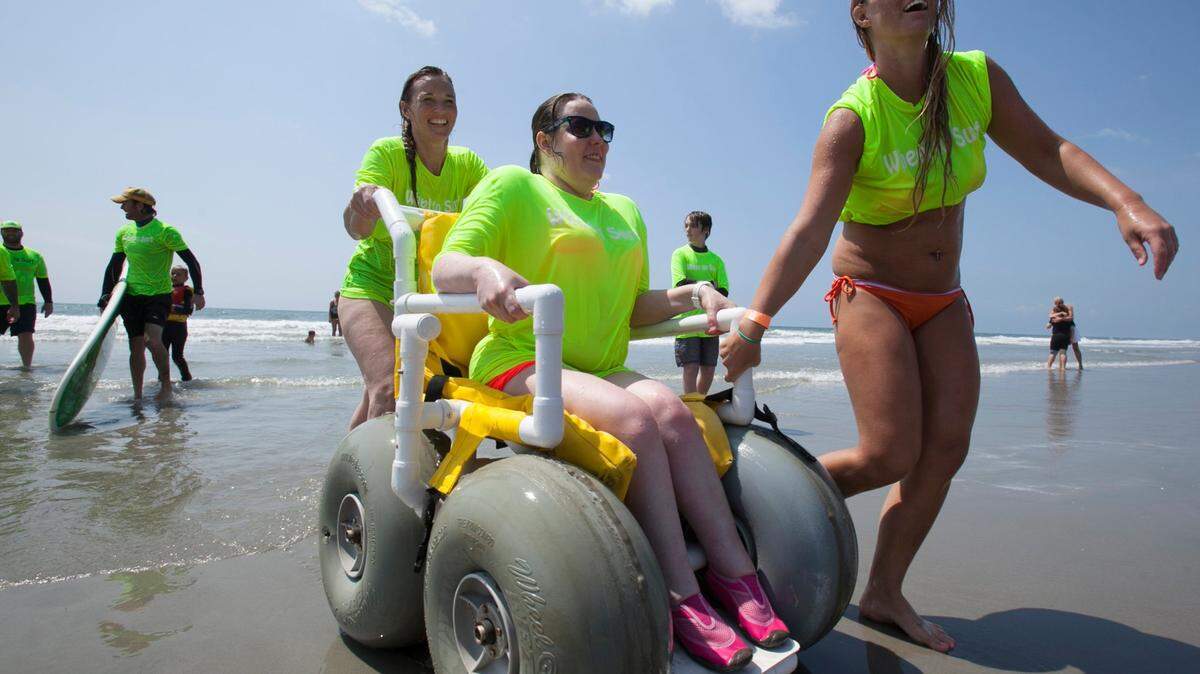
Beach wheelchairs are a specialized type of wheelchair designed to make navigating through sand easier. The larger, low-pressure wheels of beach wheelchairs allow them to glide over sandy terrain.
For wheelchair users, beach wheelchairs are one of few ways to access the beach, as standard wheelchairs tend to sink and get stuck in the sand.
A decade of accessibility concerns
Just before the height of the tourist season in 2016, the City of Myrtle Beach announced it would no longer provide beach wheelchairs. The city cited the poor condition of many wheelchairs and costly repairs, as well as police officers being needed to fully operate the program, as reasons for cutting the service .
After residents expressed concerns about the city no longer providing beach wheelchairs and impacts on beach accessibility, the city quickly reversed the decision just a few days after the initial announcement. The city began providing wheelchairs again shortly after and also ordered more wheelchairs.
The program continued to operate without interruption for several years, until COVID-19 caused beaches to shut down temporarily and paused beach wheelchair rental programs.
In the years following the program’s pause due to COVID-19, the City of Myrtle Beach never offered beach wheelchairs, even as every other local municipality restarted their beach wheelchair rental programs.
Shortly after The Sun News reported on the city’s quiet suspension of the program in 2023, the city announced they would be partnering with Adaptive Surf Project to bring back free beach wheelchairs.
The collaboration never came to fruition.
Adaptive Surf Project, a local nonprofit that aims to make surfing more accessible by providing adaptive equipment, had agreed in 2023 to donate beach wheelchairs, which they had received funding for from local businesses and organizations. The city, in turn, had agreed to provide lock-box kiosks where the beach wheelchairs would be stored and available.
At the time of the announcement of the collaboration, the nonprofit and the city were still going back and forth on the logistics of operation.
The contract for the collaboration required Adaptive Surf Project to purchase insurance for the beach wheelchairs, but despite the nonprofit’s efforts, it was not able to obtain the level of coverage requested by the city’s lawyers.
“There was no level of insurance that we could find that would work with the program, and it was pretty disappointing,” Luke Sharp, director of the Adaptive Surf Project, said.
After continued attempts to satisfy the insurance requirements, the planned partnership ultimately faded out, and the city has continued to go without a beach wheelchair program.
Bringing back beach wheelchairs
Since the suspension of the program during the COVID-19 pandemic, residents and tourists hoping to use a beach wheelchair have had to rely on private rentals or nonprofits like the Adaptive Surf Project to access the beach.
Despite past unsuccessful efforts to bring a beach wheelchair rental program back to the City of Myrtle Beach, residents continued to advocate for its return. When Mayor Mark Kruea was elected last year, Sharp saw the opportunity to push for a new program.
Sharp and Kruea discussed the local desire for the city to bring back beach wheelchairs, and city staff then worked to conceptualize the new program.
The Myrtle Beach City Council approved a budget amendment in June that allocates $125,000 from the hospitality tax fund for the initial investment in a beach wheelchair rental program.
There will be four kiosks across Myrtle Beach, each holding four beach wheelchairs, where residents and tourists can borrow beach wheelchairs for free. The kiosks will be located at 15th Avenue South, 2nd Avenue North, 26th Avenue North and 53rd Avenue North — all of which offer nearby accessible parking and beach entries.
To borrow a beach wheelchair, people will have to download an app, create an account and scan a QR code at the kiosk location, which will then unlock a beach wheelchair. When returning the beach wheelchairs, people can use the app to unlock and return the beach wheelchair in the kiosk, and they will then take a picture of it to end their rental period.
All kiosks will be managed by Rent.Fun, a national equipment rental company that currently operates the city’s kayak rental program at Thunderbolt Park. Rent.Fun will be responsible not only for servicing the kiosks through its app, but also for maintenance of the wheelchairs and customer service.
The City of Myrtle Beach’s $125,000 investment will fund the initial creation of the program, and an additional $12,000 is expected in annual recurring costs to keep the program running.
Once permits for the rental kiosks are approved, the city estimates that it will take two months for the program to be operational.
Although the City is starting the program with four kiosk locations and 16 total beach wheelchairs available, the program is designed to have room for expansion of the number of kiosks and available wheelchairs.
“Having these available on a free basis where you can go check one out, it says that Myrtle Beach is receptive and friendly and considerate of the needs of our visitors and our guests,” Kruea said.
While the new program is a step in the right direction toward beach accessibility, the structure of the program may create barriers for some people, Grady Gambrell, board president of nonprofit The Arc of Horry, said.
The program’s reliance on an app for the rentals is one aspect that could make the beach wheelchairs more difficult to access for those who are not as familiar with the technology required, Gambrell said.
Other local municipalities offer delivery of beach wheelchairs, either for free or for a fee. The City of Myrtle Beach’s program is not designed to offer deliveries, which may discourage people from using them if they have to drive out of their way to rent one, Sharp said.
“This is a good starting point, this is a good baby steps kind of thing,” Gambrell said. “I would like it to expand to at least every accessible point in Myrtle Beach.”