
As political divides deepen, a new party eyes local change in Horry County
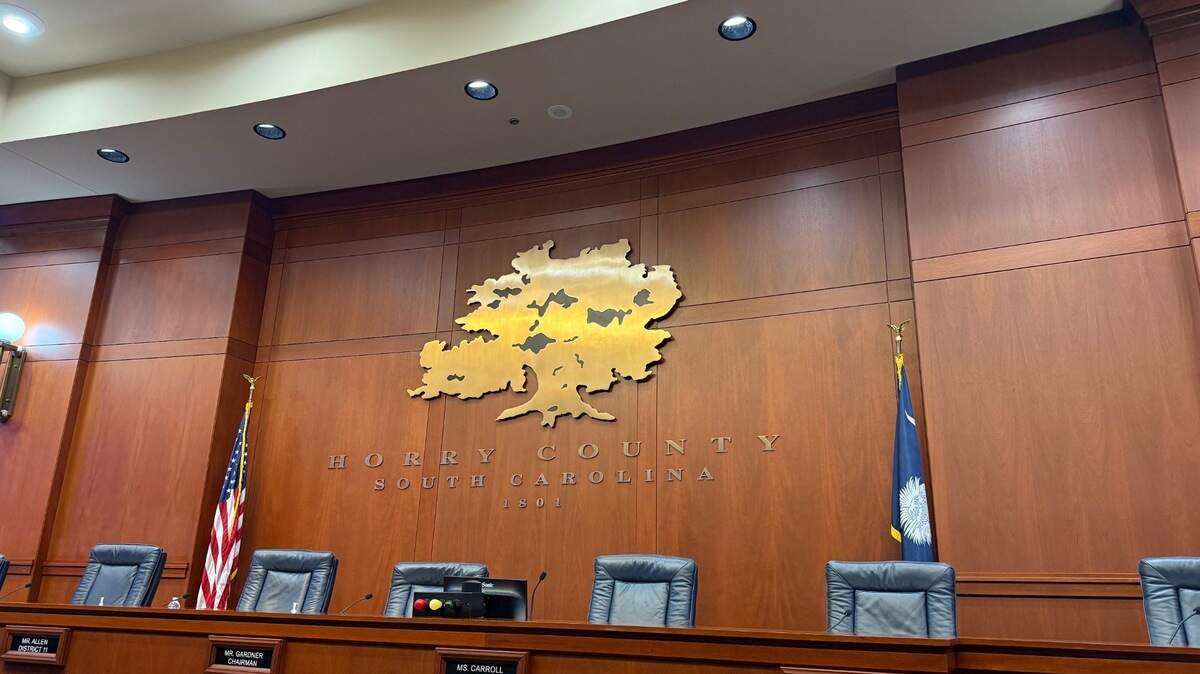
As political divisions deepen across the United States, more Americans than ever are looking for an alternative to the traditional two-party system. One group prioritizing local races and running candidates in the Grand Strand believes it has the answer.
Nationally organized in 2021 by Democratic former presidential candidate Andrew Yang and Republican former New Jersey Governor and EPA Administrator Christine Todd Whitman, the Forward Party is recognized on ballots in six states, including South Carolina.
In the upcoming Horry County Council election, four Forward Party candidates will appear on the ballot. But what is the Forward Party?
In surveys last year, Gallup found that 45% of U.S. adults identified as independents, the highest number since the company started regularly conducting polls in 1988. Compare that to the 27% of adults who identify as Democrat and Republican, and the appetite for an alternative option is obvious.
“We are a home for those politically independent voters who are looking for something other than a standard Republican or a standard Democratic response to problems. I think the key thing is, we endorse, we embrace ideas, regardless of where they come from,” said South Carolina Forward Party executive committee member Chuck Newton. “We want to fix the system, first and foremost, and focus on systemic changes that are necessary to bring about change.”
Among electoral reforms to “fix the system,” Newton cites promoting rank-choice voting, instituting independent redistricting and eliminating straight-ticket voting, which allows voters in states like South Carolina to vote for all the candidates representing a party with a single selection.
“This is the problem with straight ticket voting, for example … You don’t have to think, you don’t have to do any work whatsoever to walk into the voting booth and vote a straight ticket. You go in, you push one button, you go home. No brain work required,” Newton said. “But I think what we’re trying to also embrace is a sense that people need to be engaged in the political system and involved in it and spend some time on it.”
But for all its talk of change and reform, Forward Party leadership can’t escape the fact that it’s hard to fit a third party into a two-party system.
“The people have been coached to think that third party just means spoilers, and that a third party candidate is just going to get in the way, either preventing the preferred Democrat or the preferred Republican from getting elected,” said Newton. “That’s really not the case.”
A viable third-party option?
The Forward Party didn’t run a presidential candidate in the 2024 election. Instead, the group has eyed local offices and built infrastructure to run in both partisan and non-partisan races.
The Forward Party is currently ballot-eligible in six states, with plans to keep expanding in what Newton describes as a “lengthy process.” In the Palmetto State, the party merged with the South Carolina Independence Party and gained ballot access in 2024.
“We have run eight candidates so far, prior to 2026, and five of them have won. These have been local elections, some non-partisan, some not in Charleston County, predominantly Georgetown County,” Newton said. “This year, we expect to have 12 candidates on the ballot, either as Forward Party candidates or Forward-aligned candidates.”
One of those five successful candidates is Georgetown Mayor Jay Doyle, who defeated incumbent Carol Jayroe last year.
That candidate “alignment” process also separates it from its major-party counterparts. Electoral hopefuls can file to run under the Forward Party or seek an endorsement designating them as Forward-aligned candidates. That means Forward Party candidates can even be members of the two major political parties.
“We don’t really care if someone has a D or an R after their name. If they sort of espouse the same values that we’ve set for the Forward Party, we are happy to look at endorsing them for election, and there will be a couple this year,” said Newton. “There are two Republicans and one Democrat that we’re looking at endorsing right as of right now.”
The Forward Party in Horry County
Without a unified platform, it’s up to individual candidates to interpret the Forward Party priorities and values. In Horry County, that means addressing issues like infrastructure, the cost of living and, of course, development.
“You’ve got a county council there in Horry County, it’s been a sinecure for a lot of those members who have been on there … To some degree, they have to take responsibility for the fact that growth seems to be somewhat out of control,” Newton said.
Horry County voters can learn about local Forward Party candidates Genesis Bordner, Kristi Burch, Chris Hennigan and Dylan Thompson on their campaign websites.
“Every one of those candidates is focused on the development issues that Horry County is facing,” Newton said of the four Forward Party County Council hopefuls. “Everyone is quite aware of the development pressures in Horry County, along the coast throughout South Carolina.”
Forward Party policies and priorities
Unlike the Forward Party’s concrete ideas to reform the two-party system, specific proposals and actionable plans for common electoral topics are sparse.
While the Democratic and Republican parties are largely united under common issues and cultural grievances, the Forward Party lacks a consistent party platform. Instead, the group espouses a loose set of focus areas which it leaves up to candidates to interpret for their local communities.
“The individual states set priorities, and then it’s really up to individual candidates to decide what issues are relevant to their particular electorate,” Newton said. “And we don’t, unlike the Republicans or Democrats, we don’t have a hard and fast platform … that’s really up to the local candidates to decide how best to reflect the concerns of their voters.”
The South Carolina Forward Party website lists six priorities for the state:
- Safe Communities
- Healthy People
- Thriving Economics and Workforce
- Quality Education and Life Preparation
- Sound Infrastructure and Sustainable Ecosystem
- Working Democracy.
Across the political spectrum, voters would be hard-pressed to find candidates who don’t parrot talking points about safety, infrastructure and the economy. Political disagreements tend to split on how best to approach the issues, but those kinds of controversies don’t make much of an appearance on the South Carolina Forward Party’s website. According to Newton, this is by design.
“It’s God, motherhood and apple pie in many of those, regardless of your political persuasion or party affiliation … I don’t think that’s necessarily a matter of party preference,” said Newton, who cites free people, thriving communities and vibrant democracy as areas of focus for the party.
The national party does feature a three-part candidate pledge to adhere to highlighting the beliefs that:
- Democracy only works when people respect the established rules and the electoral system is set up to elevate the voice of the voter
- Candidates should work collaboratively to craft long-term solutions to their community’s most pressing problems
- Public servants should be role models for the community.
“We fall back on the local candidates and let them decide, really, what the policy that makes the most sense for their constituents might be … We’re trying to field candidates that have their own choices ahead of them, as opposed to having to pander to the party line, so to speak,” Newton said.