
SC taxpayers pay thousands for out-of-state recycled oysters. What’s being done
Roughly 300,000 oyster bushels are consumed in South Carolina each year, but only 35,000 to 40,000 bushels are recycled, said South Carolina Department of Natural Resources Shell Recycling Coordinator Holly Sommers.
Because of the low amounts of recycling, SCDNR spends thousands of dollars annually to purchase oyster shells from out-of-state shucking houses to fill their quota for planting and managing harvestable grounds. Each oyster bushel could range from $4 to $6.
A new partnership between SCDNR and the Horry-Georgetown Technical College’s Wildlife Society Chapter could boost the amount of reusable shells and save taxpayers money by improving oyster recycling and restoration initiatives in Horry and Georgetown counties through the South Carolina Oyster Recycling and Enhancement program.
The SCORE partnership offers students the opportunity to adopt restaurants for oyster recycling, collect and drop off shells to designated locations, construct Manufactured Wire Reefs and deploy them in areas impacted by erosion and poor water quality.
Mason Eslinger, president of HGTC Wildlife Society Chapter, began volunteering with the SCDNR’s SCORE program about four years ago when he drove to Charleston to help deploy an oyster reef under the Ravenel Bridge.
Now, he leads a group of 41 students through ways to enhance local ecosystems and educate the community. He pitched the partnership to SCDNR Biologist Kevin Swain last April, and plans went into motion in December. Last Friday, an oyster roast in Georgetown officially launched the partnership.
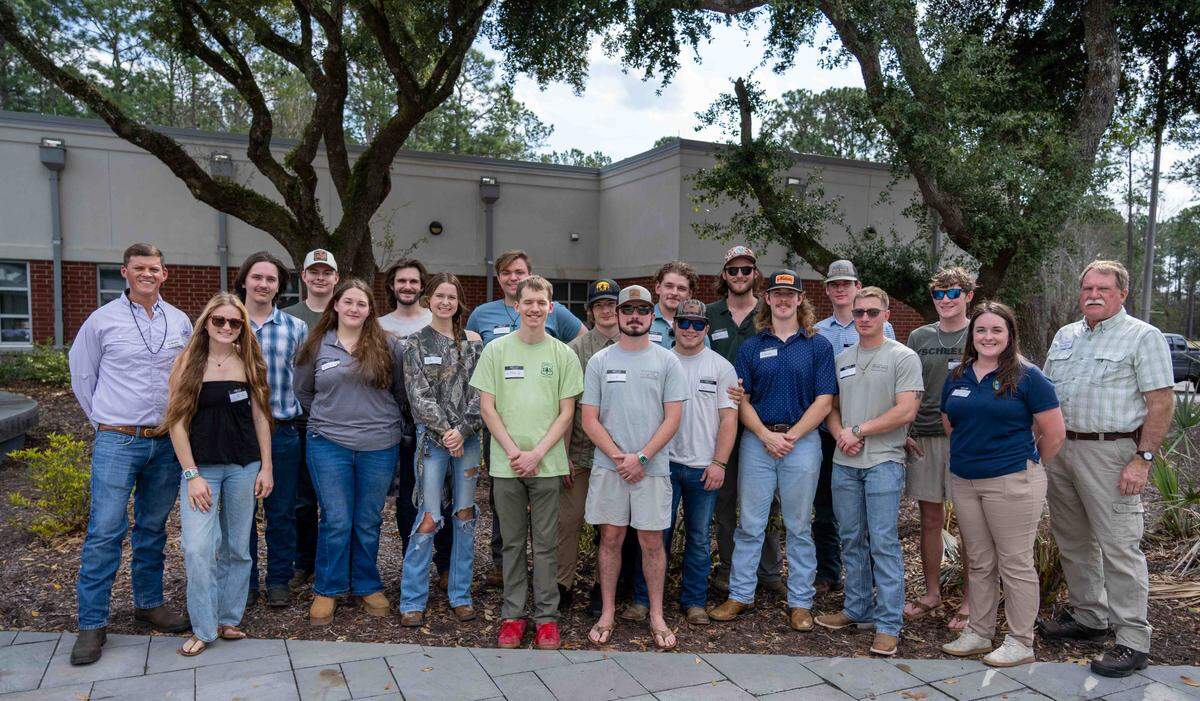
Al Mosley, HGTC professor of forestry, said this is the first student partnership with the SCDNR in the state. He hopes to see more restaurants take part in recycling and to create potential internship opportunities for his students.
“This should strengthen my students’ time in the field,” he said. “They get a feel for how one little project or one person can really make a difference.”
Murrells Inlet restaurants participate in oyster recycling. Will more join?
Only a couple of Murrells Inlet restaurants are known to participate in oyster recycling: The Claw House and Inlet Affairs Banquet and Catering, according to Sommers.
The HGTC partnership hopes to engage local restaurants to recycle their oysters, especially because of the significance of oysters in Murrells Inlet’s salt marsh and the proximity to a new drop-off location in the Murrells Inlet boat ramp parking lot.
Peter Haentjens, owner of The Claw House, said recycling the restaurant’s shells helps to replenish the oyster beds. Each oyster can clean at least a gallon of water in an hour, he said.
“With the amount of oysters all the restaurants on the Marsh Walk go through each year, it’s a very significant replenishing project that gets underway,” he said. “It really does make a difference for the bacteria levels in the water.”
Haentjens said it’s great to have young people interested and involved in the oyster recycling program to keep the saltwater estuary healthy.
For Eslinger, his goal in the first year of the partnership is to expand participation up to 10 restaurants on the Marsh Walk and nearby areas and to increase the number of bushels the group is able to deploy. He wants to see the numbers that support why the program is worth having, but also to see the impact this type of program has on residents.
“A lot of people do have a slight drive to be a part of something that’s bigger than themselves,” he said. “And this is one of those things.”
How do oyster recycling and restoration work?
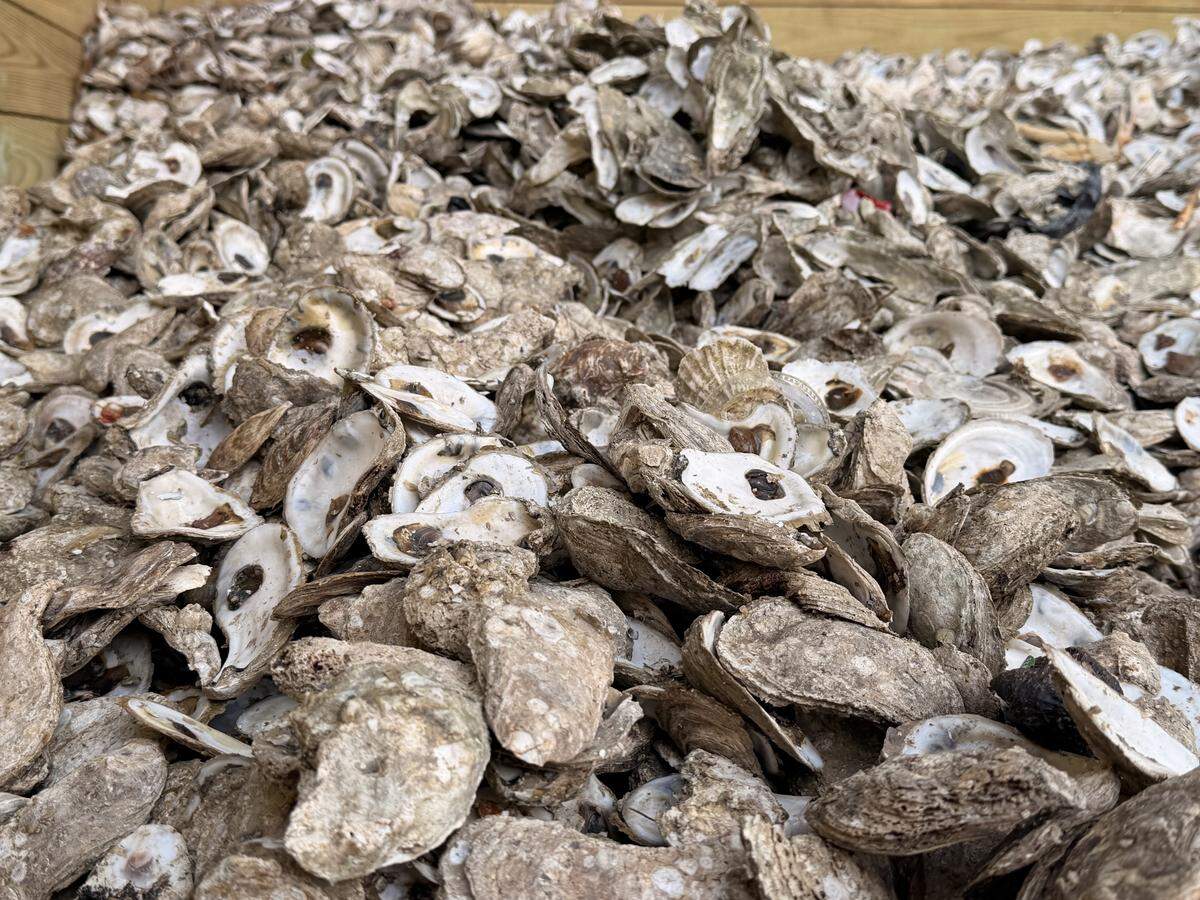
Oyster shells can be recycled at the SCDNR public drop-off sites. Volunteers collect the shells from the drop-off points and participating restaurants once a week, Sommers said, but it could vary depending on the volume of shells. The shells are recorded and marked from where they were picked up and sorted in piles according to how old they are.
Due to the oyster substances and residue often lingering in the shells, they are quarantined for a period of time. Birds pick the shells clean, and the sun bleaches them a white color. Volunteers remove any trash that ends up in the pile.
The shells are used to create the Manufactured Wire Reefs, or 50-pound cages with coconut fiber and oyster shells, Eslinger said. They are deployed in areas with little or no oyster beds. One large scale reef takes nearly 175 bushels, or 20-25 MWRs, Eslinger said. Deployment season lasts through the warmer months, and SCDNR uses upwards of 10,000 bushels of oysters for restoration in South Carolina each year.
Oysters act as natural breakwaters between a soft shoreline and spartina grasses, Swain said. The artificial reefs help protect from erosion. Sediment that would naturally erode backfills and deposits itself behind the reef, allowing for new oyster recruits and spartina growth.
The Murrells Inlet area has been particularly noted as an area of interest due to its historically large shell fishery and impacts on water quality, Swain said.
Sommers said the SCORE program is based in Charleston, but local partnerships have given them “legs on the ground” to get more work done.
“We are one of, if not the most, successful shell recycling programs in the nation because we have such strong partnerships that help us to accomplish and educate,” she said.
This story was originally published February 26, 2026 at 10:21 AM.