
Live Updates: Judge makes ruling in hearing. Will Boyd get immunity?
Prominent North Myrtle Beach businessman Weldon Boyd and his friend Bradley Williams, who are seeking immunity from their role in the 2023 fatal shooting of Scott Spivey, will make their final pleas in court Friday.
Williams took the stand Friday before the Spivey family’s attorneys began calling their witnesses, which could include Boyd’s ex-fiancee – a prospect that Boyd expressed a desire to avoid during his testimony.
The Stand Your Ground hearing, which began Tuesday in Horry County, is expected to conclude Friday with Judge Eugene Griffith Jr. responsible for determining whether either or both of the men qualify under South Carolina’s self-defense law.
Day one focused primarily on whether Weldon Boyd, owner of Buoys on the Boulevard, and Bradley Williams “chased” Scott Spivey for several miles before fatally shooting the North Carolina man in a road rage incident.
Day two centered on a few other key issues, including whether Spivey shot first, as Boyd alleged to law enforcement, and if Spivey’s actions during the road rage incident could have been influenced by abuse of steroids.
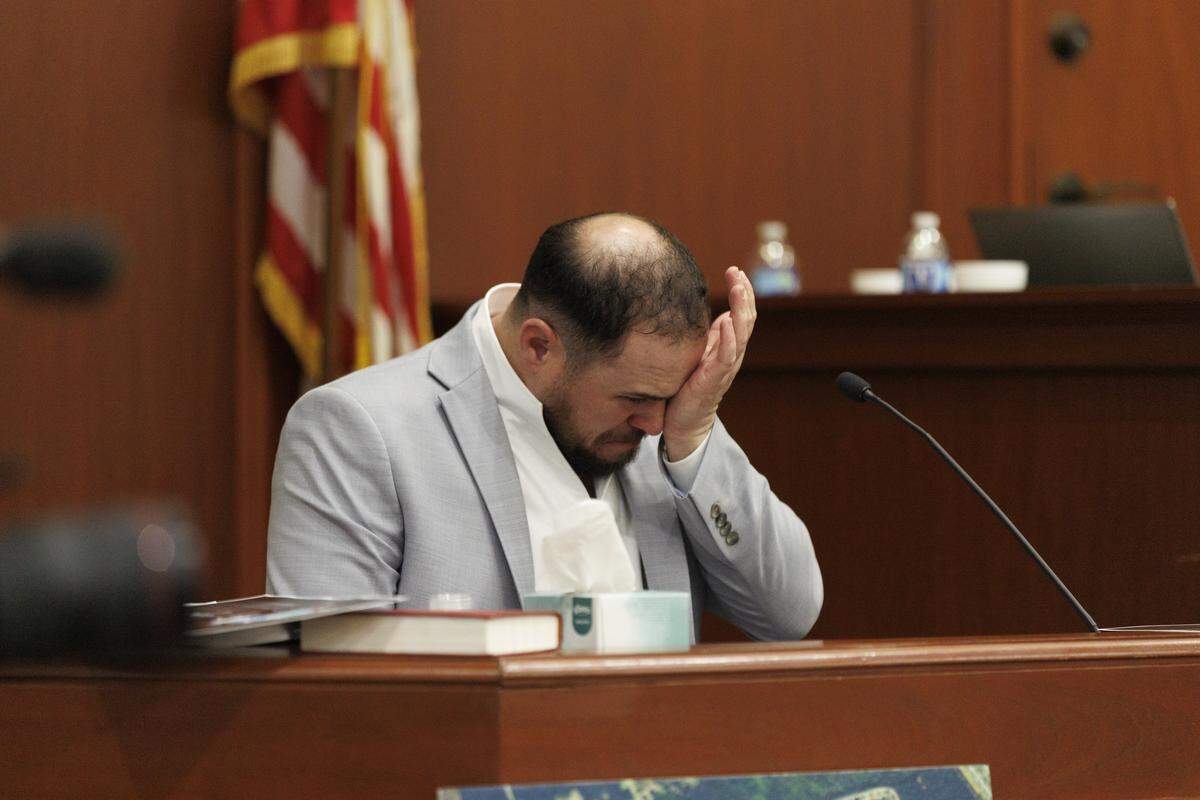
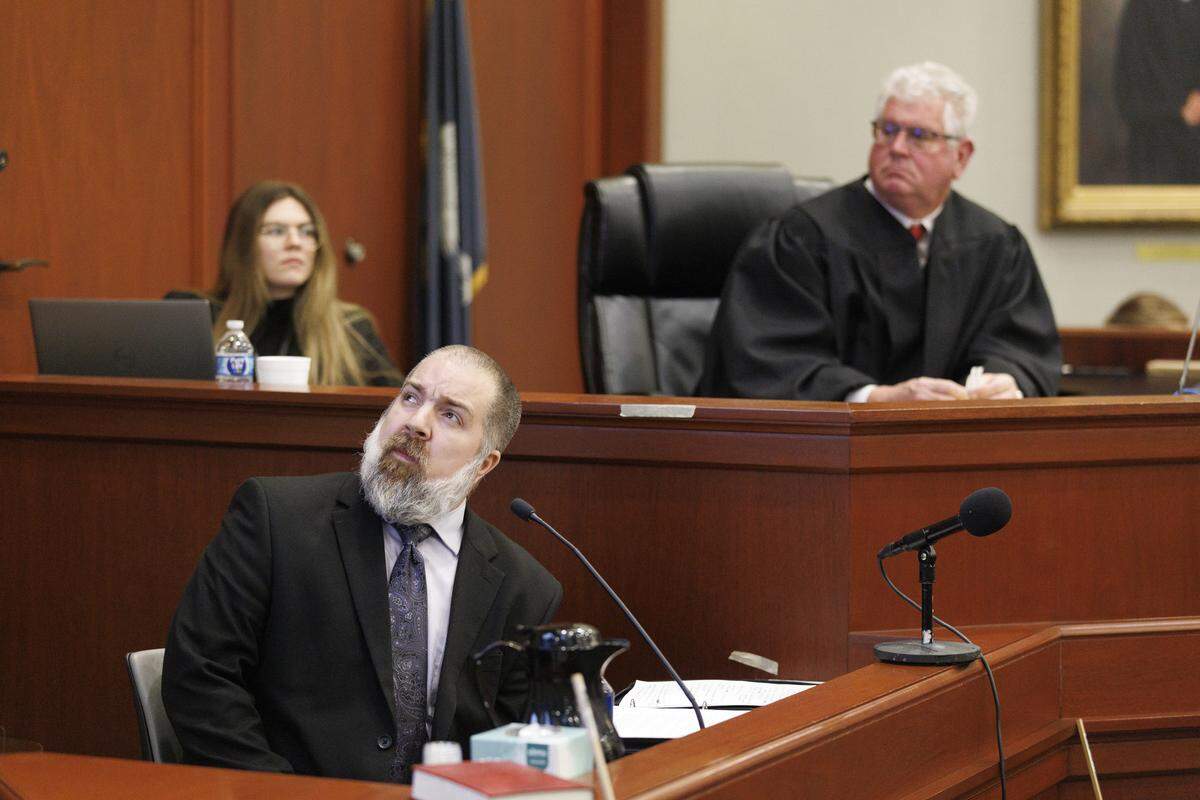
Boyd took center stage on day three, appearing on the stand for more than seven hours to give his side of the story. Boyd appeared emotional at times describing the emotional toll the shooting left with him while expressing “disgust” for his “braggadocious” conversations recorded in the days following the shooting.
The hearing is part of a civil case filed by Spivey’s family alleging wrongful death, but if Judge Griffith determines Boyd’s and Williams’ actions qualify under Stand Your Ground, they will be immune from both civil and criminal responsibility. It’s not clear whether Griffith intends to give his ruling Friday or issue it at a later date. Law enforcement has already declined to prosecute the men under the belief they acted in self-defense.
Did judge grant Boyd and Williams immunity?
(Updated 4:40 p.m.)
Boyd’s attorney points out in questioning Maher that Boyd’s truck was equipped with an active noise cancellation system and has Maher admit that it’s possible gunshots happened outside the truck that were not recorded on the audio device.
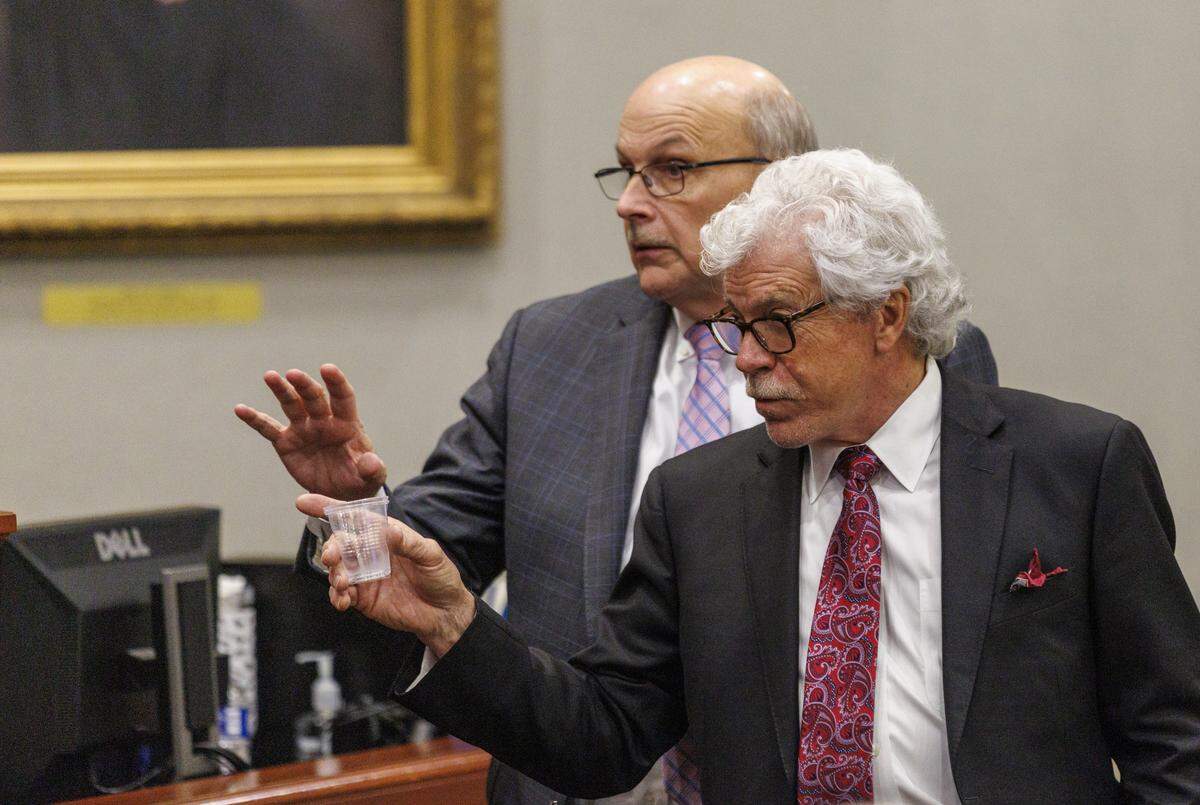
The prosecution rests, and though Judge Griffith entertains not allowing any sort of closing arguments – noting this isn’t a criminal trial and this has already been a lengthy hearing for a Stand Your Ground assertion – he does give attorneys a chance to give a brief final statement on behalf of their clients.
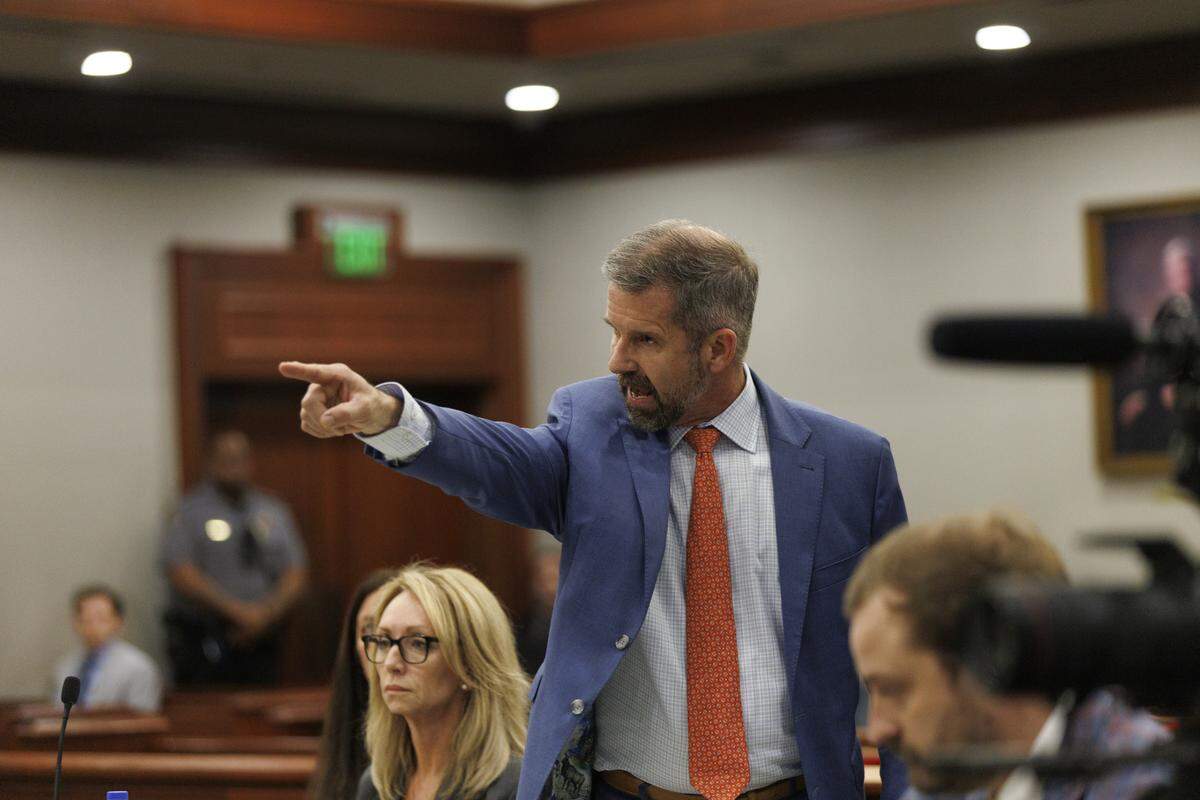
One of Boyd’s attorneys starts off by addressing the “elephant in the room,” arguing that the only reason this court hearing is occurring is because of the phone calls recorded on Boyd’s phone in the days following the shooting. He said Boyd admitted what he said in those calls was “disgusting,” but they occurred after a traumatic event and aren’t relevant to the case. The evidence all shows that Boyd and Williams acted in self-defense, he concludes.
Williams’ attorney is less brief in giving his closing argument, arguing against the narrative that Boyd and Williams chased Spivey for 9 miles or that Spivey had attempted to withdraw from the encounter by speeding away. He calls is “foolishness” that they had lost their right to self defense because they were trying to keep law enforcement aware of Spivey’s erratic behavior.
Tinsley doesn’t give a closing statement, but Judge Griffith quickly admonishes the assertion from Boyd’s and Williams’ attorneys that Spivey driving up to 115 mph wouldn’t be a reasonable attempt at withdrawing from the conflict. Griffith notes that this is an immunity hearing, and he believes the defense team has a “smidgen” of work left to meet the preponderance of evidence needed to be granted that immunity.
Griffith said he really questions the credibility of Boyd, specifically pointing out his decision to call former HCPD Deputy Chief Brandon Strickland immediately following the shooting, then claiming he wasn’t looking for help from him, and very different descriptions of Spivey’s actions between Boyd, Williams and the witness Frank McMurrough.
Griffith concludes that he will be denying Boyd’s request for immunity, while he is still considering Williams’ request, noting that he finds Williams more credible coupled with him just being a passenger in the truck.
Could a gunshot be heard outside Boyd’s truck?
(Updated 3 p.m.)
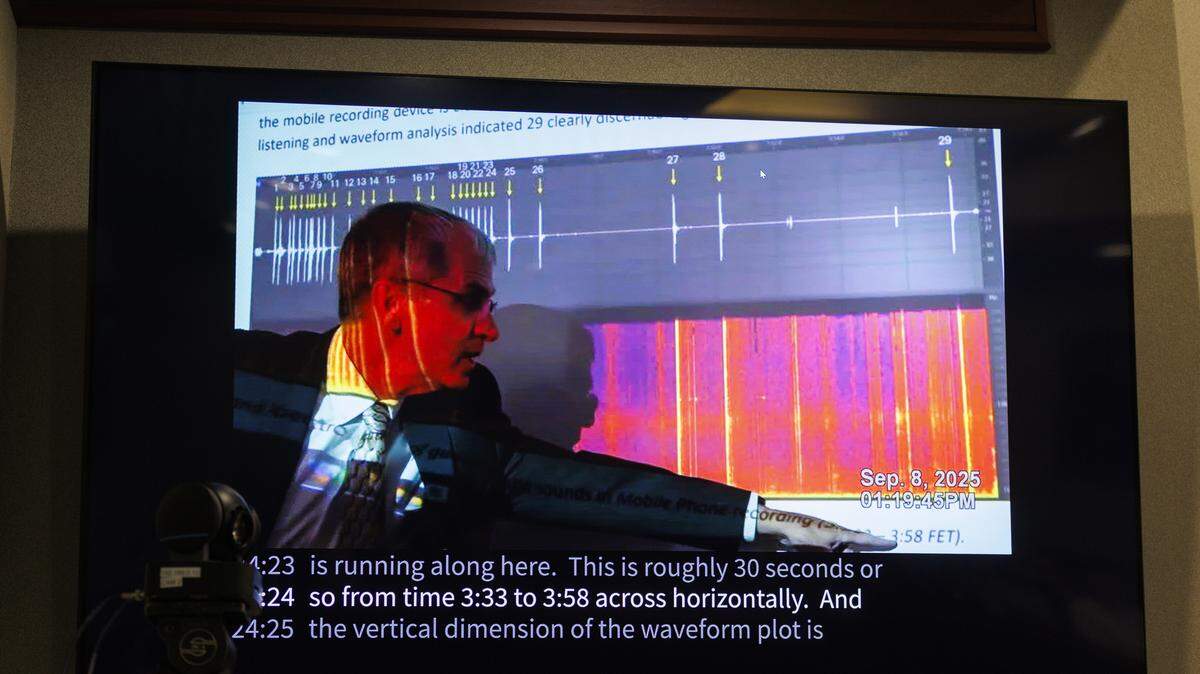
After returning from lunch break, the video deposition of Robert Maher is being shown in court. Maher, a professor at Montana State University, is described as an expert in audio forensic analysis. Spivey’s family’s team asked him to analyze audio from Boyd’s phone of the 911 call, specifically for the period when shots were fired.
Maher said he was specifically asked to determine whether a gunshot could be heard prior to the first audible shot that appeared to come from inside Boyd’s vehicle. Maher said his review did not find any evidence that a shot was fired from outside the vehicle prior to those audible shots inside the vehicle. This is in direct contrast to Boyd and Williams asserting that Spivey fired first. Maher also notes that the audio heard throughout the 911 call is consistent in terms of distance from the subjects speaking, explaining that he’d expect a difference in sound if the microphone recording the call went from a subject’s ear to dropped on the ground, as Boyd alleged happened during his testimony.
Fire lieutenant heard speeding vehicles day of shooting
(Updated 12:29 p.m.)
The defense rests, and Tinsley calls Lt. Brian Shirley, of Horry County Fire Rescue, to the stand. Shirley testifies that while at his station along Highway 9 on the day of the shooting, he heard what sounded like two trucks traveling at very high rates of speed in close proximity. Boyd’s attorney has him clarify that he didn’t see the trucks or know exactly how fast they were traveling.
Judge Griffith calls for a lunch break, with court to resume about 1:30 p.m. Tinsley appears to suggest he has just one witness remaining, a ballistics expert, and he will be showing the court a video of his deposition, which lasts about an hour. So unless something changes, the Spivey family’s team will not be asking Boyd’s ex-fiancee to testify in court. Closing arguments for both sides should be expected shortly after the ballistics expert’s deposition is heard.
Williams agrees with trying to get Spivey off the road
(Updated 12:09 p.m.)
Mark Tinsley, an attorney representing Spivey’s family, points out while questioning Williams that he never told Boyd to stop his truck during the encounter. Williams said he agreed with Boyd calling 911 to help police get the dangerous Spivey off the road. Williams also denied pulling out his gun – as Boyd indicated they had done on the 911 call – until the altercation with Spivey began on Camp Swamp Road.
Tinsley also asks about Boyd telling Williams to delete Facebook messages between the two, a request discovered from a call recorded on Boyd’s phone. Williams said he followed Boyd’s request, but there was nothing in those messages he wanted to hide from police. The request was made to prevent the release of unrelated information in messages between the two before the shooting happened. Williams is dismissed and Judge Griffith calls for another brief break, with court set to resume about noon.
Second shooter takes the stand
(Updated 11:06 a.m.)
After a brief break, Kenneth “Bradley” Williams is called to the stand. Williams, a longtime friend of Boyd, was riding as a passenger in Boyd’s truck when he first noticed Spivey pull up beside him and point a gun directly at him, he said.
Williams said when he and Boyd turned onto Camp Swamp Road, he believed Spivey was preoccupied with a different truck, but when he saw Spivey get out of his car with a gun in his hand, he yelled at Boyd to back up. Williams’ attorney is emphasizing that Williams was just a passenger and did not expressly encourage Boyd’s actions in following Spivey that day. “I was along for the ride,” Williams said.
How fast was Spivey traveling?
(Updated 10:12 a.m.)
The first witness called to the stand to begin the fourth and final day of the hearing is Christopher Watkins, a digital forensic science expert contracted by Boyd’s attorneys to review location data from Spivey’s phone extracted by SLED. Watkins explains that he was specifically asked to look for data that indicates a brake check-type of event, which he details as a sudden deceleration followed by a quick rebound in acceleration.
Watkins’ analysis found three potential instances fitting that description during the day of the shooting, including once prior to when Spivey reportedly encountered Boyd’s truck. The speed data showed Spivey traveling down Highway 9 at speeds exceeding 104 mph at certain points, Watkins showed. Watkins did not have or interpret any data that would indicate how fast Boyd was traveling on that day, he added.
Watkins is dismissed and Boyd’s team calls Timothy Davis, a licensed surveyor, to the stand.
This story was originally published February 20, 2026 at 10:13 AM.