
‘Garbage juice,’ flooding: What are impacts of Horry County landfill filling wetlands
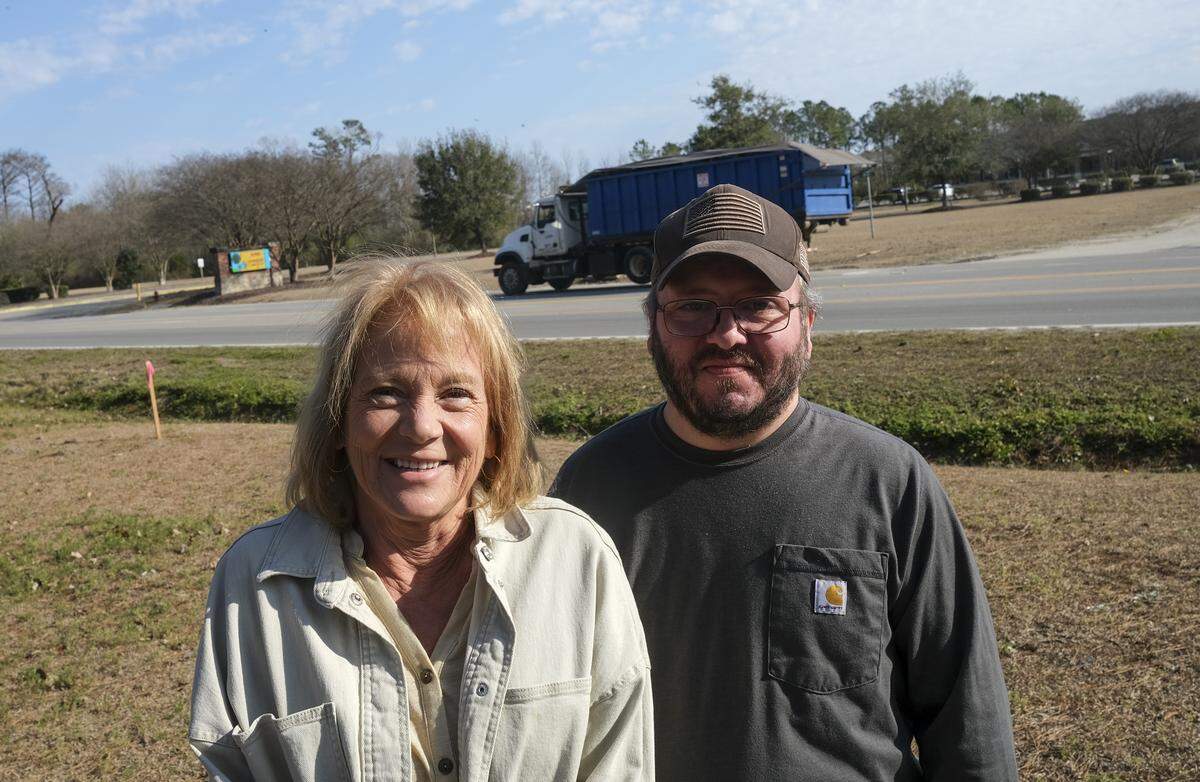
After Hurricane Florence, flooding from Sterritt Swamp crept within inches of entering Chris Hodges’ and his mother, Cheryl’s, home, who have lived directly across the entrance of the Horry County landfill for many years.
Now, the Horry County Solid Waste Authority’s proposal to expand the landfill by filling over 100 acres of freshwater wetlands is alarming residents that there will be additional flooding in Conway, along with other communities, and environmental impacts including polluted waters and disturbing wetland habitats.
The proposed expansion near Highway 90 in Conway is to “provide additional landfill capacity for 23.4 million tons of non-divertible waste expected over the next 45 years” in an effort to meet the needs of Horry County’s growing population.
The county is estimated to reach over half a million residents by 2040, so the need for additional landfill capacity is great. As of July 2024, Horry County was home to 413,391 residents, growing by nearly 18% since 2020, according to national census data.
Filling the wetlands could cause flooding during storms and severe weather events.
“The more you minimize (the wetlands), the less area you have for the water to go,” said Chris Hodges, who also has concerns of increased traffic and trash build up along his property line.
“I’m actively trying to find land away from this area,” he said.
The landfill has expanded in the past, but this proposal aims to clear vegetation and fill 102.4 acres of wetlands, 76.6 of which are protected under restrictive covenants filed in 1993 and 1998.
The SWA said in a statement they have conducted an Alternatives Analysis, and the preferred alternative is to expand on their existing property.
“Complete avoidance of all wetland impacts is not possible under any of the alternatives identified for this project,” the public notice stated.
Involved agencies must decide if this proposal is the least environmentally damaging, practicable alternative before issuing permits. Additional questions about the proposal were directed to the U.S. Army Corps of Engineers.
The South Carolina Environmental Law Project submitted comments on behalf of six organizations and 67 signatories to the Corps, and the South Carolina Department of Environmental Services opposing the approval of the expansion.
The SWA applied for a Clean Water Act Section 404 permit from the U.S. Army Corps of Engineers and a Section 401 water quality certification from the South Carolina Department of Environmental Services. It also requested to amend the existing restrictive covenants where two landfill cells – waste-holding units on the larger property – are proposed.
The SWA has made it clear that no permits have been allocated for the proposed project. A public hearing with the state environmental services has been requested, but a location and date has not yet been scheduled.
The last SWA board meeting overflowed with residents who live along Highway 90 and are opposed or have concerns about the expansion.
An open house on Feb. 23 will provide facility tours by appointment from 1 to 3 p.m. and information about landfill expansion from 3 to 6 p.m. at 1886 Highway 90 in Conway.
What are the potential impacts for residents?
The project would include building two Construction and Demolition landfill cells, or waste from construction projects, and one Municipal Solid Waste landfill cell for everyday garbage. The two landfill cells would be raised at least 2 feet above the seasonal high water table and the solid waste land cell would be raised at least 3 feet, according to the proposal.
Preston Kelly, Winyah Rivers Alliance Waccamaw riverkeeper, said each acre of wetland can hold approximately 1 million to 1.5 million gallons of water per year, meaning 100 million to 150 million gallons of water would be displaced.
“They’re very valuable during the hurricane season,” Kelly said of the wetlands.
Conway residents would be at risk for flooding, he said, along with downstream communities like Bucksport, Burgess and even Georgetown County.
Amelia Wood, a Conway resident who has been following SWA expansions for years, said Sterritt Swamp is a tributary of the Waccamaw River, which flows along her backyard. She and her family often enjoy boating downstream from the landfill site.
“The river is important for recreation, and it’s a source of our drinking water, so we need to take care of it,” she said.
What are the potential environmental impacts?
Roughly 60,000 gallons of leachate, also known as “garbage juice,” are pumped off the landfill property daily and treated by Grand Strand Water and Sewer, said SWA Director of Operations and Planning Stephanie Todd. Leachate is prohibited by law to enter the stormwater management system.
The public notice stated the SWA would design the land cells to produce no leachate, but did not provide information of how it would be accomplished. The two landfill cells would fill the wetlands protected under restrictive covenants.
Kelly said without proper lining and monitoring, leachate could migrate into Sterritt Swamp and surrounding wetlands.
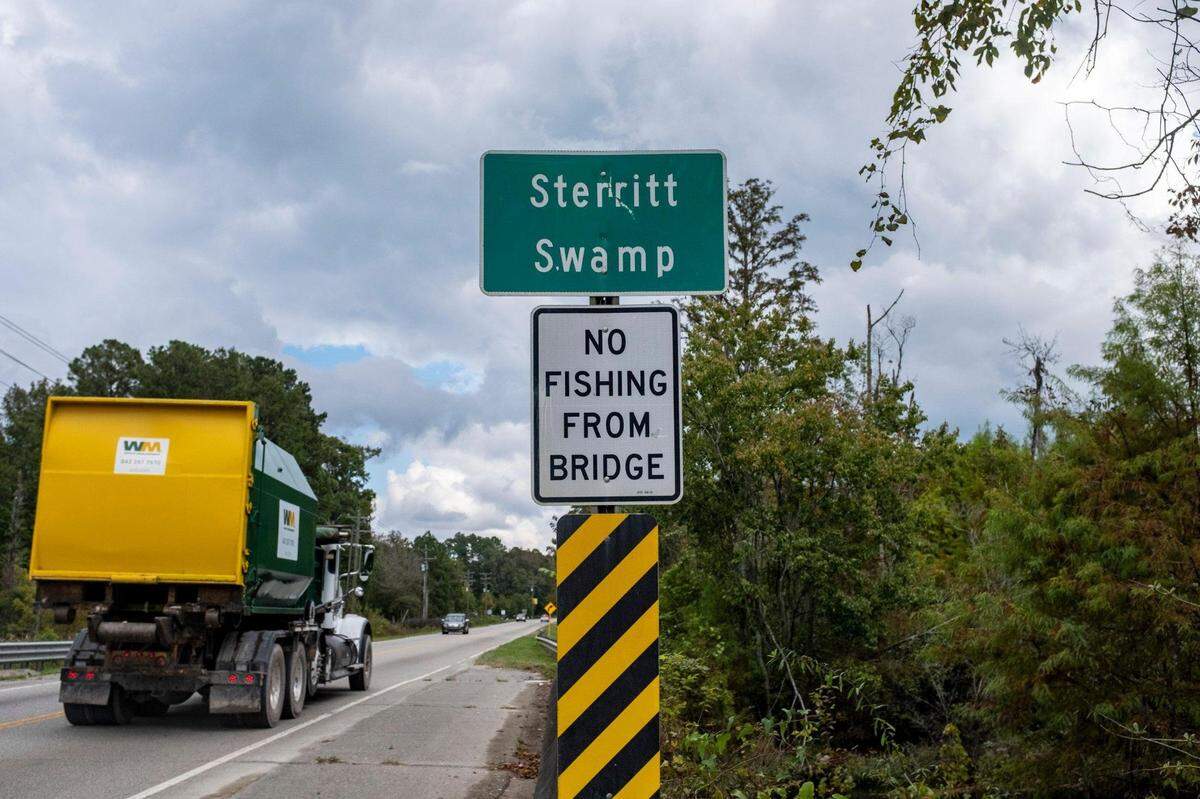
Steritt Swamp serves as a habitat corridor between the Waccamaw River and the Lewis Ocean Bay Heritage Preserve, said Monica Whalen, South Carolina Environmental Law Project staff attorney.
“It has extremely significant ecological values,” she said.
The Corps’ public notice listed 11 endangered, proposed endangered, threatened and proposed threatened species potentially present in the project area.
The comment letter sent to the Corps and the state Department of Environmental Services additionally addressed four rare or threatened species recorded within one mile of the project footprint during the last 10 years, including the bald eagle, Yellow Pitcher Plant, Leatherleaf and Stalked Milkweed.
“The direct loss of wetlands will not only increase flooding and water pollution, but also result in habitat fragmentation,” Whalen wrote in the letter.
The restrictive covenants require the wetlands remain protected and amendments be made only under “exceptional circumstances.”
The SWA previously amended the restrictive covenants in 2008 and 2020. The 2020 amendment allowed for the construction of a bridge and required 0.37 acres of wetlands and 0.03 acres of upland buffers to be cleared.
The allowance for continual amendments to the restrictive covenants is a concern for residents and groups.
“We have watched them break their promises over and over again,” Wood said. “What we haven’t seen or heard in a public meeting is an Alternatives Analysis.”
Kelly said he understands the need for additional landfill capacity and is not opposing another expansion but has insisted there are alternative solutions.
“We just think there are better locations,” he said. “We’re against (the expansion) going into the wetlands and affecting Sterritt Swamp and the Waccamaw River.”