
Did rain really wash out Myrtle Beach tourism? It’s being blamed for the decline
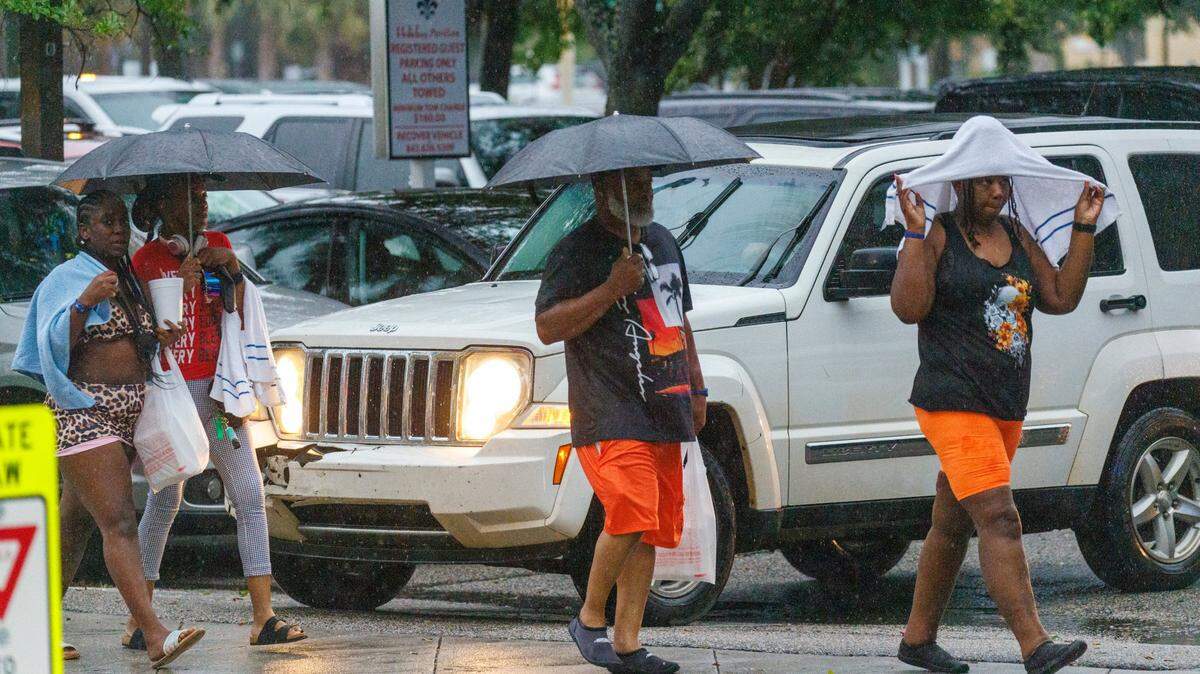
Tourism in Myrtle Beach declined in the second half of the popular travel season compared to the year before.
Could rain, economic woes and international relations be to blame?
The Myrtle Beach Area Chamber of Commerce pointed to a host of local and national causes in a quarterly accountability report to the city, stressing that the fall in tourism isn’t unique to the Grand Strand.
While Myrtle Beach saw a 3.3% decline in hotel occupancy year-over-year in the third quarter, other comparable tourist destination cities also saw declines. Fort Lauderdale, Florida, occupancy dropped 2.1%, Daytona Beach occupancy decreased 6.3% and Fort Myers, Florida, occupancy declined 6.4%. With a 1.4% occupancy increase, the Norfolk and Virginia Beach, Virginia, area was the only comparable destination where the Chamber reported a rise.
On top of travel numbers, local businesses have felt the impact. “The merchants reported a 40% decline in their revenues last year,” new Mayor Mark Kruea told The Sun News last month.
Despite making national headlines last year, travelers’ perception of local safety didn’t significantly impact tourism in Myrtle Beach, according to Visit Myrtle Beach President Stuart Butler.
“We don’t see any evidence that concerns around safety are a significant factor in the decrease in demand … While I recognize there are concerns in challenges locally, it doesn’t translate to a lack of demand on a national scale,” Butler said.
The Chamber uses visitor sentiment analysis, social media sentiment, search interest and business demand to monitor favorability and safety concerns, Butler said.
So why did fewer tourists visit? Here are four reasons the Chamber shared with the city and one additional factor Butler says hurt Myrtle Beach tourism.
Rain
Last year was a rarity in South Carolina. Through the Atlantic storm season, no hurricanes made landfall. But that didn’t stop rain from dampening tourism, according to the Chamber.
“On a local front, our biggest challenge was the weather,” Butler said. “We had increased precipitation here dramatically compared to previous years.”
In its presentation, the Chamber shared week-over-week occupancy changes in relation to precipitation and said rain “deeply affected” visitors who book accommodations and travel in a one-to-two-week window.
Precipitation impacts on Myrtle Beach hotel occupancy, according to the Chamber of Commerce
| Days of rain | Average change in week-over-week occupancy |
| One | 0.7 |
| Two | 1.1 |
| Three | -0.5 |
| Four | 1.7 |
| Five | -2.4 |
| Six | 2.6 |
| Seven | -5.6 |
Named storms brought a “very measurable decrease in demand” with uncertain weather.
“We had a named storm over July 4 weekend., so regardless of what ended up actually happening, that’s going to scare people away … even if the storm doesn’t end up hitting us, the fact that it’s there and potentially could within the next one to two weeks, that’s a challenge,” said Butler. “Especially today, because people tend to wait ‘til the last minute to book. They don’t book six to 12, months out, like they once did 10 or 20 years ago.”
Inflation
Other factors the Chamber says contributed to declining tourism are less local to the Grand Strand. Around the country, inflation grew about 2.9% in the third quarter, compared to the same period in 2024.
As consumers pay more for everyday essentials, fewer people are prepared to drop money on a beach getaway. And with inflation increasing or flatlining in 19 of the last 20 months, the Chamber doesn’t expect improvement in the near future.
“If inflation growth slows, we could expect a better outcome,” the presentation said. “At this time, we do not expect that to be the case.”
According to Bank of America data, consumers spent more money on things like clothing and restaurants last year than in 2024, but less on things like leisure and lodging.
Unemployment
Many people lost their jobs last year, and with them, discretionary spending power. The Chamber points to steadily rising rates of unemployment in places with lots of Myrtle Beach visitors.
In addition to South Carolina, unemployment has increased in Florida, Georgia, North Carolina, Maryland, Tennessee, Virginia and Washington D.C. over the last nine to 10 months.
Gas prices
While overall prices may have risen, the Chamber identified lower gas prices as a main factor affecting Myrtle Beach occupancies in the third quarter. Bank of America found that, in 2025, people spent about 5% less on gas and 6% less on airlines than in 2024.
“Gas prices is a tricky one. A lot of people assume that lower gas prices means more people travel. Gas tends to be a lagged indicator of demand or lack of demand,” Butler said. “So typically, when fewer people are traveling, oil prices go down, which drives gas prices down, because demand’s not there.”
With cheaper gas comes economic uncertainty and, as with rising inflation, the Chamber anticipates falling gas prices will continue.
Trump and Canada
Another nationwide factor which wasn’t included in the city accountability presentation is a drop in visits from America’s neighbors to the north.
Amid growing international hostilities, tariff talk and President Donald Trump’s calls to annex Canada as a 51st American state, some Canadian travelers opted to cancel travel plans across their southern border.
“One of the other national factors that certainly impacted us was a lack of Canadian travelers. We didn’t talk about that on Tuesday, but we saw that we’re right in line with the national averages in terms of Canadian travel being down, depending on the month, anywhere from 20 to 40%,” said Butler. “And that can be significant, especially in our certain times a year, that can be a significant number of folks that would typically come here that didn’t.”
Will tourism pick back up?
There’s no way to see into the future, but the Chamber isn’t optimistic about what it has identified as key drivers of declining tourism.
In July, Myrtle Beach occupancy decreased 1.7% from the previous year. Then, occupancy actually rose 1.1% in August compared to 2024, before dropping 9.2% from the previous year in September.
In the third quarter of 2025, the city saw a 10.8% decrease in the Myrtle Beach Accommodations Tax from the same period in 2024, resulting in a $610,000 drop.
Looking at existing trends, precipitation levels have increased year-over-year for the last three years.
And on the economic front, unemployment rates are projected to grow as gas prices are expected to drop. Even a temporary decrease in inflation “should be seen as a temporary reprieve driven by widespread economic fears due to the government shutdown,” according to the presentation.
Internationally, American-Canadian tensions have hardly defrosted, and it’s too early to say whether Canadian tourists may return to the Grand Strand.
Still, this year’s tourist season could turn around.
“There’s some unknowns that we’re quietly optimistic about. We’re not sure what the stimulatory effect of the big, beautiful bill will be quite yet,” Butler said. “We’re hopeful that we see some of the folks that have chosen not to travel in 2025 find that they have a little more money in their pockets and do want to take that long beach trip, and our job is to make sure that whenever folks are ready to take that trip, that Myrtle Beach is the destination of choice.”
This story was originally published February 6, 2026 at 5:00 AM.