These hidden burials are part of Brookgreen Gardens’ history that’s rarely seen
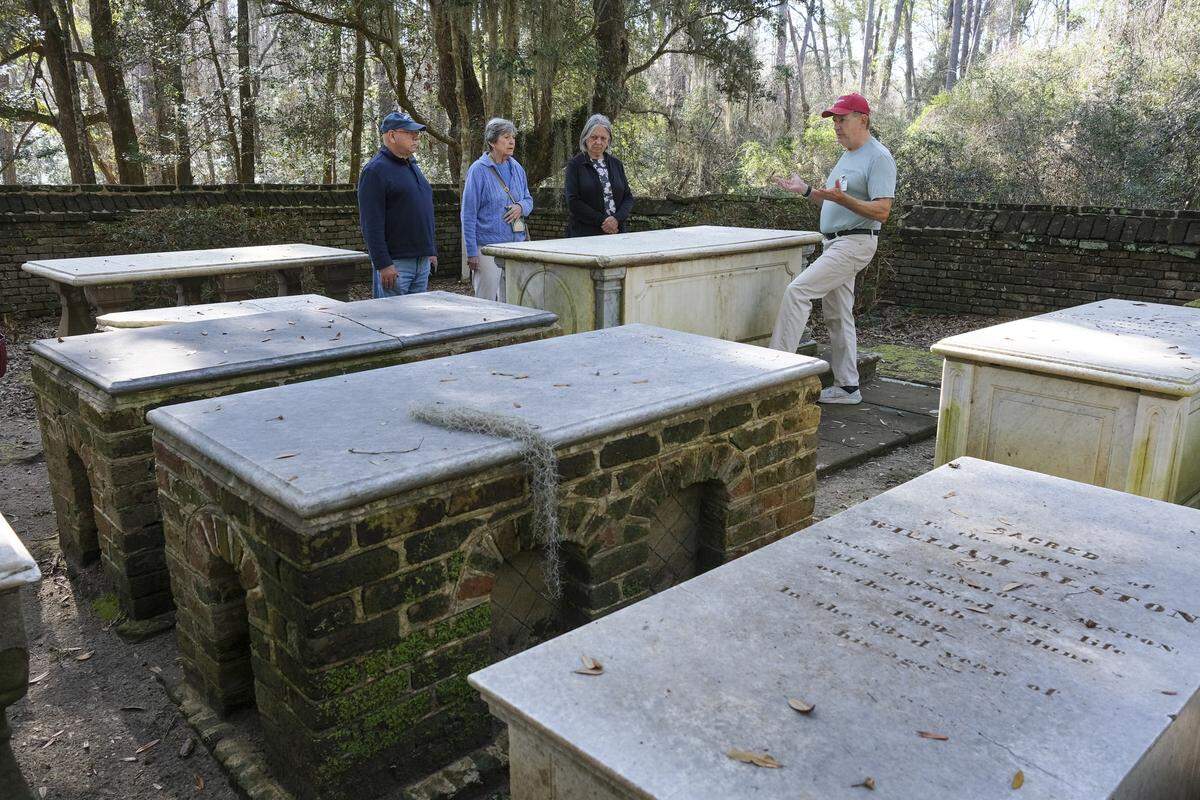
Tom Broderick uses his hand to dust fallen leaves off of a large marble stone that marks the grave of William Allston.
Allston’s burial place is located in a cemetery hidden behind the manicured gardens and curated sculptures visitors usually see at Brookgreen Gardens in Murrells Inlet. It is a part of the former plantation’s history that the public rarely gets a chance to explore.
Broderick shares a glimpse of those who lived and worked on the plantation centuries ago through the graves that include former landowners and their families, and the slaves who toiled the properties.
The graves are only accessible by the public through a guided tour that takes participants on a bus along back roads with rough terrain.
The “Silent Cities” is a popular excursion at Brookgreen that showcases the differences in historical burial customs of the European landowners and their African slaves.
It’s the first tour in two years, Broderick said, after the unavailability of a bus put the trip on hiatus. It’s only available from January through the first weekend in March.
Difference between landowners and slaves
The Alston family cemetery is a stark difference from the burial grounds of the slaves and their descendants.
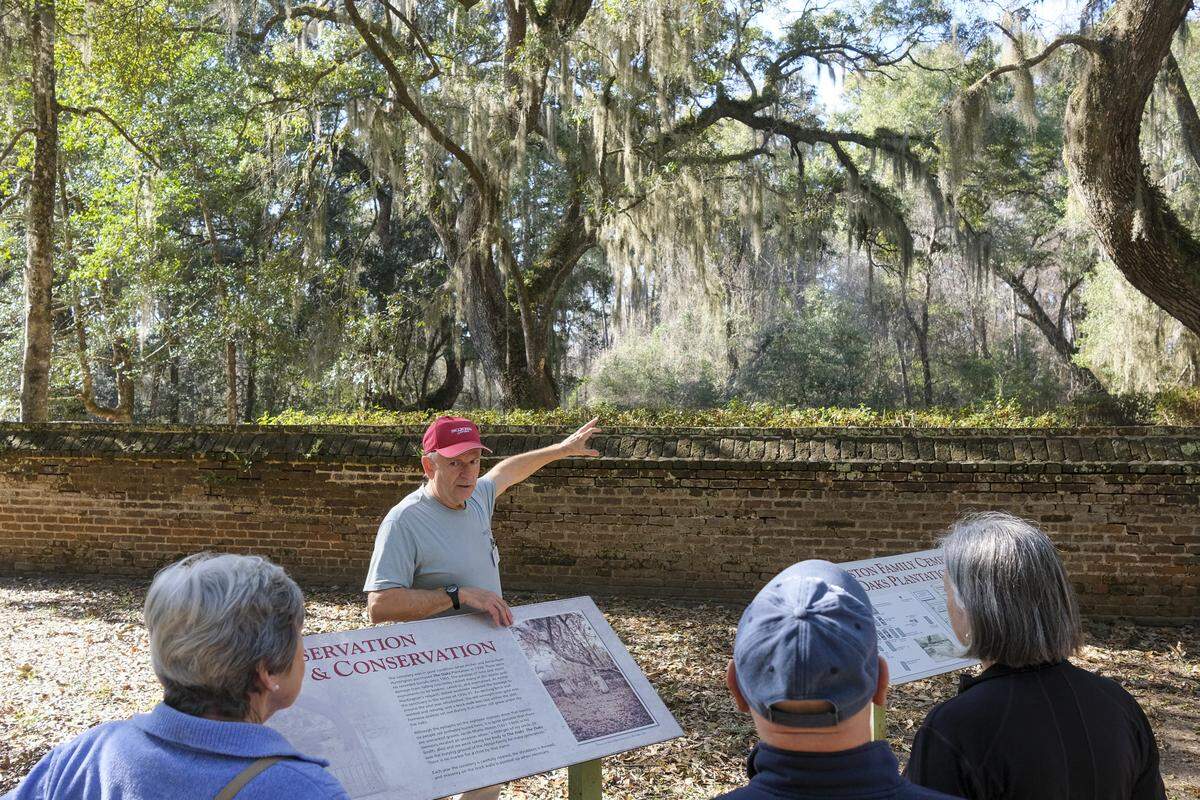
The grave of William Allston, whose name has two “l’s” compared to other family members who only have one, is located in an enclosed, brick wall with a metal gate that was designed by a slave ironworker, whose initials are engraved at the top. The cemetery had fallen into disrepair before Archer and Anna Hyatt Huntington, who purchased the Brookgreen property in 1930, had the wall fixed and the graves preserved.
The marble stones that sit on brick risers are engraved with elaborate tributes and information about those buried there. Old oak trees draped in Spanish moss lean into the cemetery that has walking paths throughout.
The graves of slaves and their descendants are scattered throughout the woods and off the beaten path of the four rice plantations that once thrived in the Georgetown County community in the 18th century. It is believed there were about 400 slaves on Brookgreen Plantation at the peak of the rice production, Broderick said.
The nearly 5,000 acres consisted of Brookgreen Plantation, Laurel Hill Plantation, Oaks Plantation and Springfield Plantation.
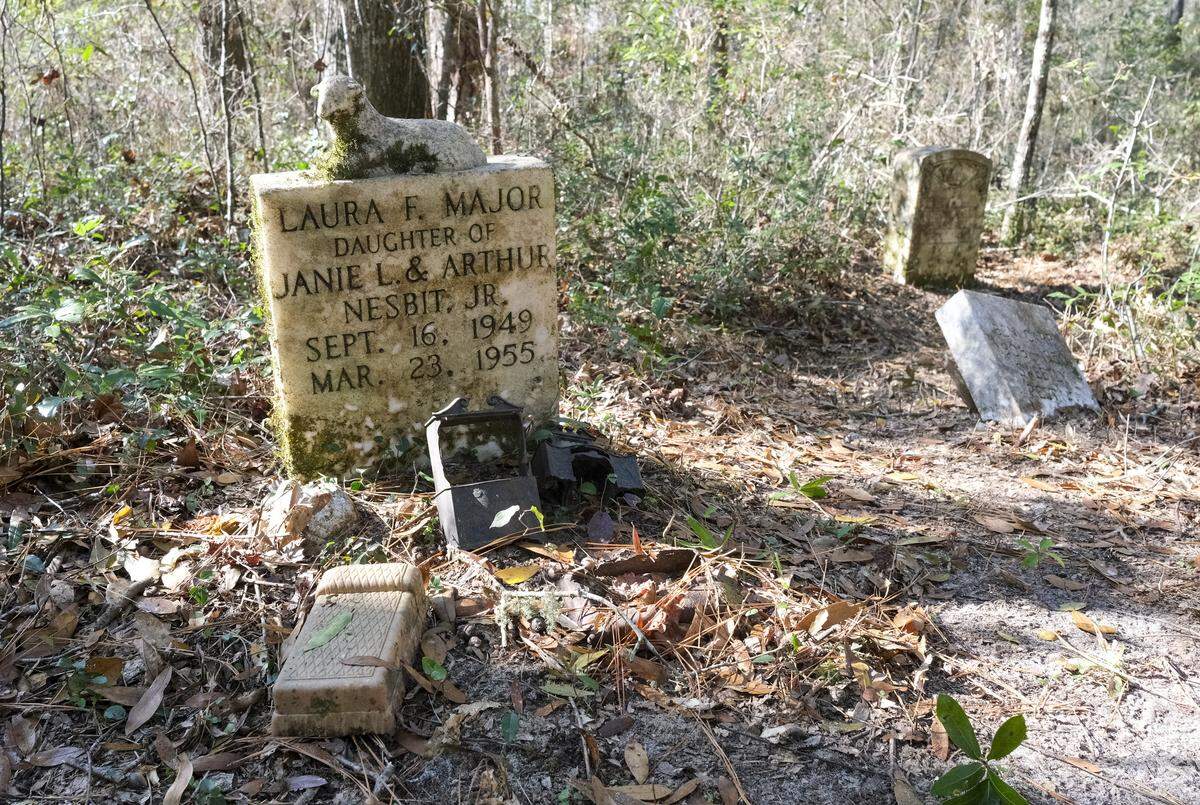
Broderick steps gingerly around the headstones and markers that designate the workers’ final resting spots. The area is solemn and haunting.
Some of the graves have been there for so long that it is difficult to read the tombstone. It’s also unknown how many people are actually buried in these places as markers were often only bricks or cups that were moved or covered up after years of dirt and vegetation growth, Broderick said. They also used bags of cement, which eventually hardened at the head of the plot.
Tributes, based on the Gullah Geechee customs, were placed on the graves to help the dead return home. Remnants of seashells, glass jars and cups and even toys can be found on the ground.
Descendants of the slaves have been allowed to be buried in some of the cemeteries. However, at the Alston family cemetery, no more burials will happen, Broderick said.
Who is buried here?
The Alston family cemetery is located on what was the Oaks Plantation.
William Allston developed the land into a plantation in 1760. Two of South Carolina’s governors are also buried here: Joseph Alston, the state leader from 1812 to 1814, and Robert F.W. Allston from 1856 to 1858.
Joseph Alston was married to U.S. Vice President Aaron Burr’s daughter, Theodosia. She was lost at sea at age 29 and her body never recovered.
The tour, which is 2 hours, takes visitors on areas of the former Oaks, Springfield and Laurel Hill plantations.
After purchasing the property in 1930, the Huntingtons developed it into a garden and sculpture museum. Brookgreen is considered to be the largest outdoor museum of sculptures in the U.S.
This story was originally published January 15, 2026 at 5:00 AM.