Did Horry Police follow precedent in handling officer sex scandal? What we found
After four Horry County Police officers resigned under pressure last week following an internal investigation into interdepartmental sexual relationships, questions remain about the precedent this situation establishes.
Off-duty, consensual relationships between officers don’t generally lead to dismissals, according to a criminology expert. And a previous internal HCPD investigation that found officers engaging in sexual activity on duty did not lead to full dismissals and was not similarly publicized, The Sun News has learned.
Horry County sent a news release Friday afternoon that four officers had resigned a day earlier after an internal investigation discovered non-criminal code of conduct violations. A county spokesman later confirmed the names of those officers: Lt. Misty Gore, Detective Donald Kobithen, Sgt. Torry Lewis and Investigator Kelsey Manemeit.
The county spokesman on Friday evening released an unredacted cover sheet of the department’s internal investigation report that showed these officers were involved in sexual relationships among each other, specifying who each officer was involved with and whether each was married to someone else. County public information officer Mikayla Moskov was also named in the report, and she also resigned.
The four officers were each found in violation of HCPD’s code of conduct policy for “conduct unbecoming,” the investigative report shows.
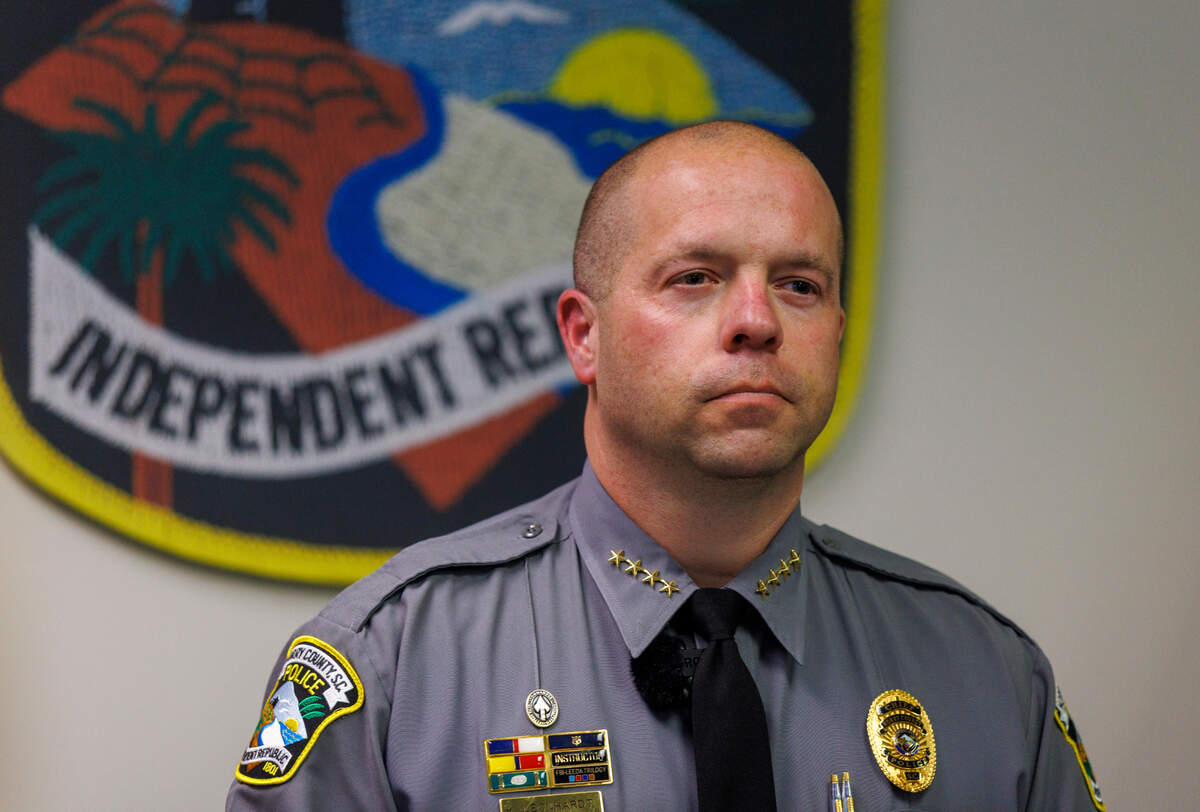
All were allowed to resign voluntarily and maintain their law enforcement certification, South Carolina Criminal Justice Academy records show, but HCPD Chief Kris Leonhardt recently told WBTW News that the officers were informed they’d be terminated if they didn’t resign. He also confirmed no sexual activity occurred on duty, but “it boils down to, for us, trust.”
How police sex scandals are handled nationally
Dr. Janne Gaub, an associate professor in University of North Carolina at Charlotte’s Department of Criminal Justice and Criminology, told The Sun News she’s never heard of another situation where an officer was terminated or forced to resign due to a consensual, off-duty relationship with another officer.
The more typical sexual misconduct-related dismissals within law enforcement agencies involve on-duty sexual activity, non-consensual activity or relationships with a power imbalance, such as an officer with a criminal suspect or a supervisor with a subordinate, according to Gaub, whose research has included a specific focus on misconduct and gender.
Other recent high-profile law enforcement sex scandals — including in 2023 at a small Tennessee police agency and in 2019 at the Mauldin Police Department in South Carolina — involved officers engaging in sexual activities while on duty and then lying about it, news reports show.
It’s not clear whether any of the relationships among the recently dismissed HCPD officers involved a power imbalance. Lewis did sign off on a recent training document for Gore, state law enforcement records show, but a county spokesman did not immediately respond to a question about whether he served as her supervisor, or if that type of relationship would violate any other department policy.
What does ‘conduct unbecoming’ mean?
Gaub noted that every law enforcement has its own policies, and “conduct unbecoming” can generally be a vague, administrative violation that gives department leaders leeway to issue a wide range of sanctions, from a verbal reprimand up to termination.
HCPD’s “conduct unbecoming” policy states: “1. All members are prohibited from engaging in any conduct, on and/or off-duty that brings the department into disrepute, reflects unfavorably upon the employee as a member of the department, damages or affects the reputation of that employee, or impairs the operation or efficiency of the HCPD or any of its personnel. 2. Sworn members will conduct themselves at all times, both on and off duty, in a manner that is in keeping with the highest standards of the law enforcement profession. Sworn members will not participate in any incident that involves moral turpitude or prevents their ability to perform as law enforcement officers. Sworn members will maintain a level of moral conduct in their personal and business affairs. Sworn members will not fail to perform their required duties because of fear or cowardice.”
After reviewing that policy at The Sun News’ request, Gaub suggested HCPD appears to be focusing on the “moral turpitude” and “moral conduct” wording to find the officers in violation, with the adulterous nature of their relationships being the key issue.
“(The policy is) just grey enough that it allows wiggle room, and what would separate your standard sexual relationships from someone having an affair,” said Gaub, who also questioned whether this means any officer found cheating on their spouse, regardless of if it’s with another county employee, would face similar discipline.
A county spokesman did not immediately respond to a Sun News request to answer that question as well as others related to enforcement of the “conduct unbecoming” policy.
For example, the internal investigation report specifies that the investigation was initiated due to an alleged relationship between Lewis and Manemeit, who was married to another HCPD officer. But court records show Manemeit was already going through legal divorce proceedings months before even being hired by HCPD in May. The Sun News asked the spokesman whether that was taken into consideration before determining her policy violation.
Previous Horry police conduct violations
HCPD has cited officers for “conduct unbecoming” violations in recent years under varying circumstances, only occasionally leading directly to a termination or forced resignation, The Sun News has found.
HCPD internal investigation reports previously acquired by The Sun News through Freedom of Information Act requests show 18 sustained “conduct unbecoming” violations during 2020-2022. Details of those investigations included a captain directing an officer to watch a training video on his behalf, a detective compromising a confidential informant, a pair of officers exchanging inappropriate text messages about an intern, and a detective being involved in a fight out of state that resulted in a woman being shot in the foot.
Six officers found in violation during that period lost their jobs during or directly following the investigation, state law enforcement records show, and all six were found simultaneously to have violated other policies.
One HCPD officer with multiple “conduct unbecoming” violations during that time without being dismissed was Paul Damon Vescovi, who was terminated earlier this year after body camera footage showed him on scene after a 2023 fatal shooting writing a note to North Myrtle Beach businessman Weldon Boyd, a potential suspect in the shooting, to “Act Like a Victim.”
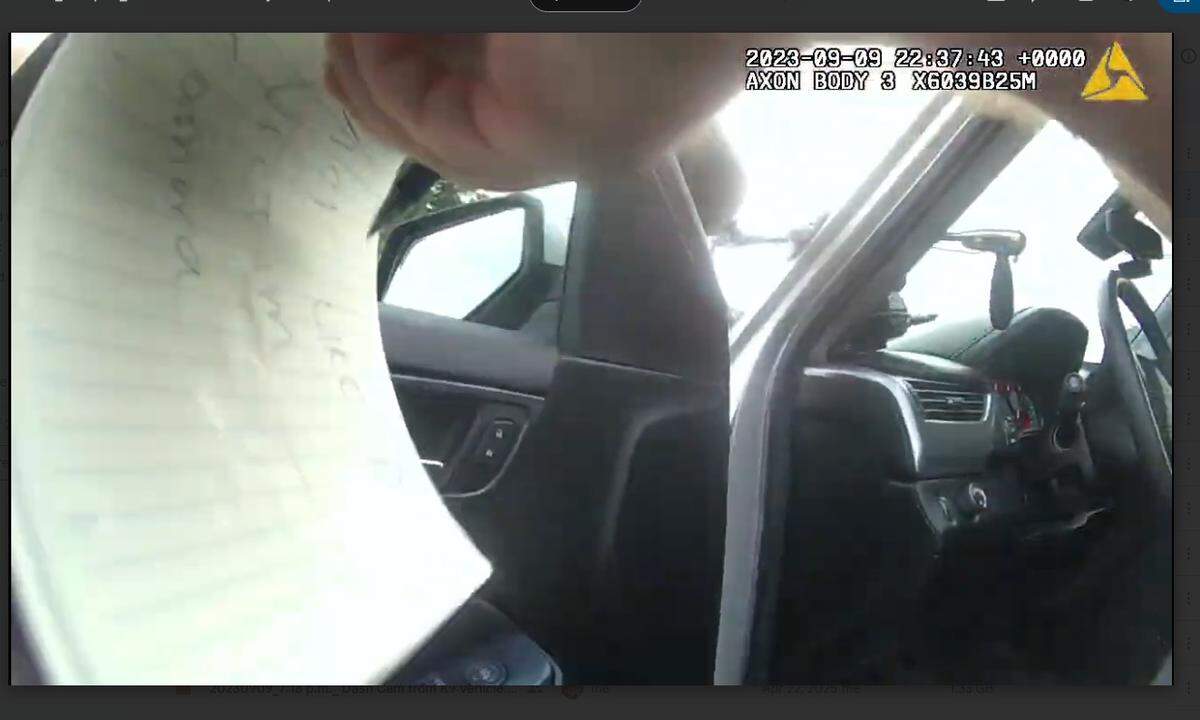
Vescovi’s termination resulted from a “conduct unbecoming” violation among other HCPD and county policy violations, records show. He had already been cited for four previous “conduct unbecoming” violations, including once in 2019 that led to a brief suspension and demotion, according to Vescovi’s personnel file.
Another previous HCPD internal investigation report from 2020 shows that three officers admitted engaging in sexual activities while on duty. All three were found in violation of the department’s “conduct unbecoming” and “neglect of duty” policies, the report states.
One of those officers, who also admitted to driving impaired, resigned in lieu of termination and later found employment with the Atlantic Beach Police Department, state law enforcement records show.
A second officer, who also admitted making inappropriate comments toward a trainee, kept his job before being terminated in 2021 after a separate internal investigation found he lied in court while under oath, according to state law enforcement records.
The third officer remains employed by Horry County Police, records show.
The county did not issue any press release related to the 2020 investigation, and the report does not specify whether the officers were involved in sexual relationships with each other or unaffiliated citizens. The department has changed police chiefs and other leaders since then.
Morality and transparency concerns
Gaub noted that, in her research, the proactive transparency demonstrated by HCPD related to the recent resignations is abnormal for a police department.
“(Agencies) would typically be finding a relatively vague way to describe (the violations) because they often believe officers are entitled to some level of privacy,” Gaub said. “Yes, they’re public servants, but nobody wants ... things done in the privacy of their own home aired out if it’s not relevant to the job they’re doing. But I guess this department found it was relevant.”
Janelle Perez, a former police officer for a California agency who lost her job under similar circumstances, called the entire situation in Horry County “absurd” after reviewing news articles on the situation at The Sun News’ request. She took particular issue with the level of details shared with the public.
“What happens between two or more consensual adults in their off-duty time should have no bearing on their employment,” she said. “The police are held to a higher standard, of course, but when did it become fair for the police to have to reveal their consenting off-duty sexual relationships?”
Perez was discharged from Roseville Police Department in 2012 due to her relationship with a fellow officer. Both she and the other officer were married but separated from other people. When her partner’s wife complained, they were investigated, and she was dismissed despite no evidence of on-duty sexual contact. Perez sued the department, and an appeals court initially found her right to privacy was violated before overturning that decision. She wrote a book, “The Moral Police: Surviving Discrimination in Law Enforcement and Injustice in the Courts,” about her experience.
Perez told The Sun News that extramarital affairs between officers are likely happening within almost every law enforcement agency nationwide.
“Police officers have unique and challenging jobs that require them to build close, trusting relationships with each other,” she said. “They see and hear things that most never will, and they experience trauma from this job that most people would not understand.”
Perez believes HCPD leadership has likely opened a can of worms with its actions in this case.
“Who’s defining morality?,” she questioned. “The chief better be ready to start defending every single thing against (his) moral policy. ... Is this what they want to spend time and resources on? How far do you take it?”