
When will Hurricane Erin impact Myrtle Beach? Here’s the timeline, hazards & more
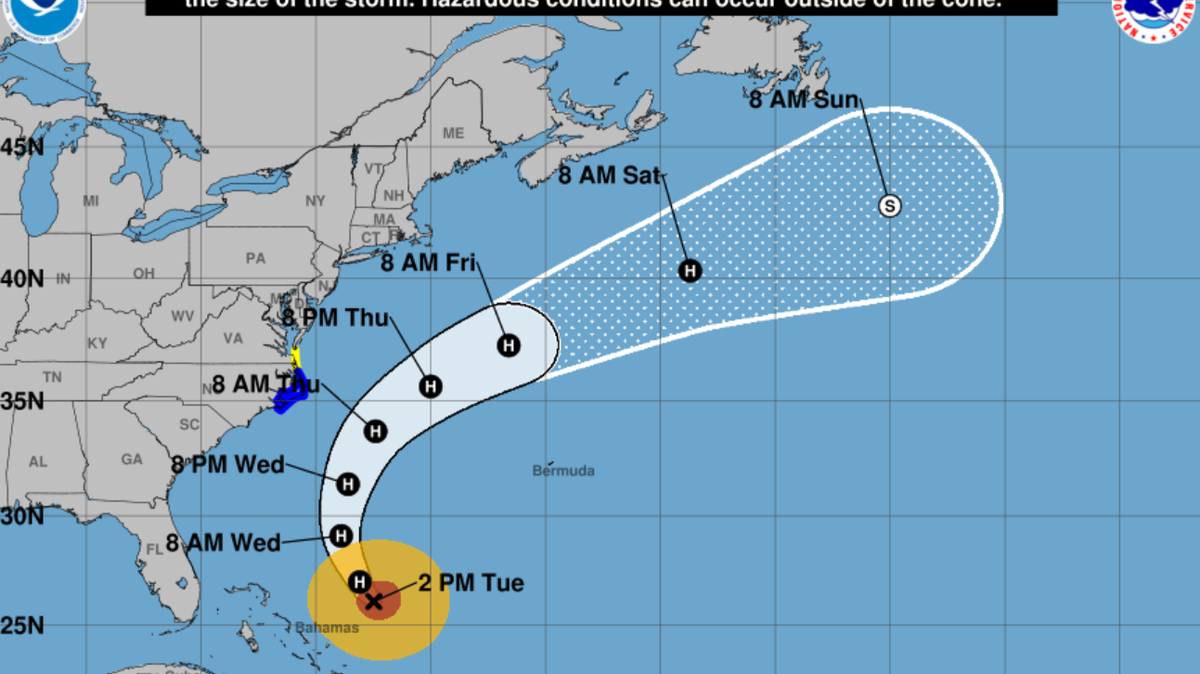
With maximum sustained winds of 105 mph, Hurricane Erin is brewing east of the Bahamas and moving northwest towards the East Coast of the United States. Here’s what to expect around Myrtle Beach as it curves along the Carolinas.
Hurricane Erin will remain hundreds of miles off the coast of South Carolina, heading northwest before shifting northeast, away from the mainland U.S. Although it won’t make landfall in South Carolina, large storm swells are churning up hazardous marine conditions around the Grand Strand this week.
“It’s moving up right now from east of the northern Bahamas, and it should pass us offshore … we don’t have any watches or warnings out for our area,” said National Weather Service meteorologist Rachel Zouzias. “We may see some gusts up to 30-35 knots, mainly over our waters, but in general, it should pass with mainly rough surf and strong rip current activity for us in the Myrtle Beach area.”
Experts don’t anticipate the Myrtle Beach area will see heavy rains or storm winds from the hurricane, but forecasts call for life-threatening rip currents, dangerous longshore currents, high surf, beach erosion and minor coastal flooding.
“We’ll start seeing just more choppy, rougher, stormy-type seas as the system moves to the east of us, up through the Atlantic waters,” Zouzias said. “As it passes us, we get rougher surf, because of the swell generated closer to the shore and closer to the coast between the storm and us, and then as it moves off, we’ll see some northeast swells coming in toward the weekend.”
Coastal hurricane hazards
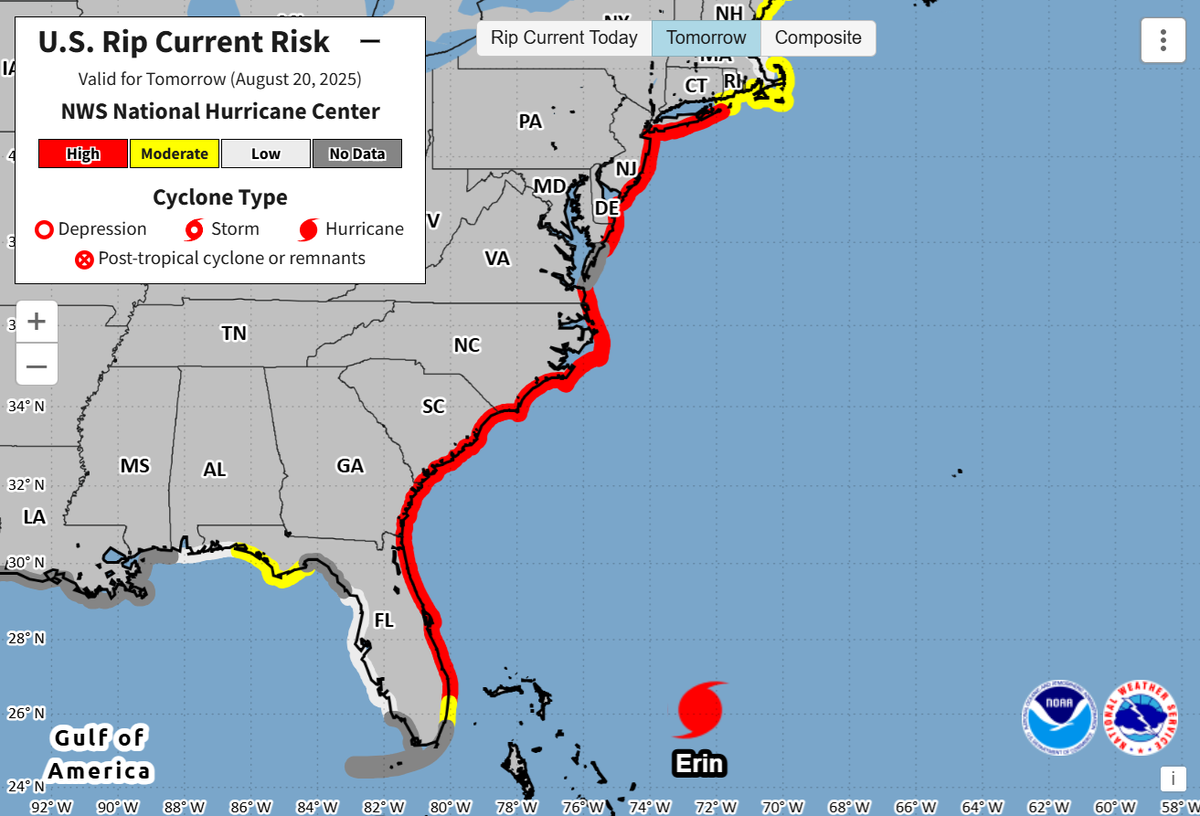
Rough currents in the area are expected through Friday. Rip currents caused by swells from Hurricane Erin hit beaches perpendicular to the shore and longshore currents coincide with strong northeast winds.
Wednesday could be the most dangerous day on Grand Strand shores because of the “very strong” rip currents and longshore currents in the area, according to Zouzias.
High surf will bring breaking wave heights of 4 to 8 feet around the Myrtle Beach area. Although dangerous currents will continue later in the week, according to Zouzias, wave heights will peak Wednesday evening and slowly start to come down on Thursday.
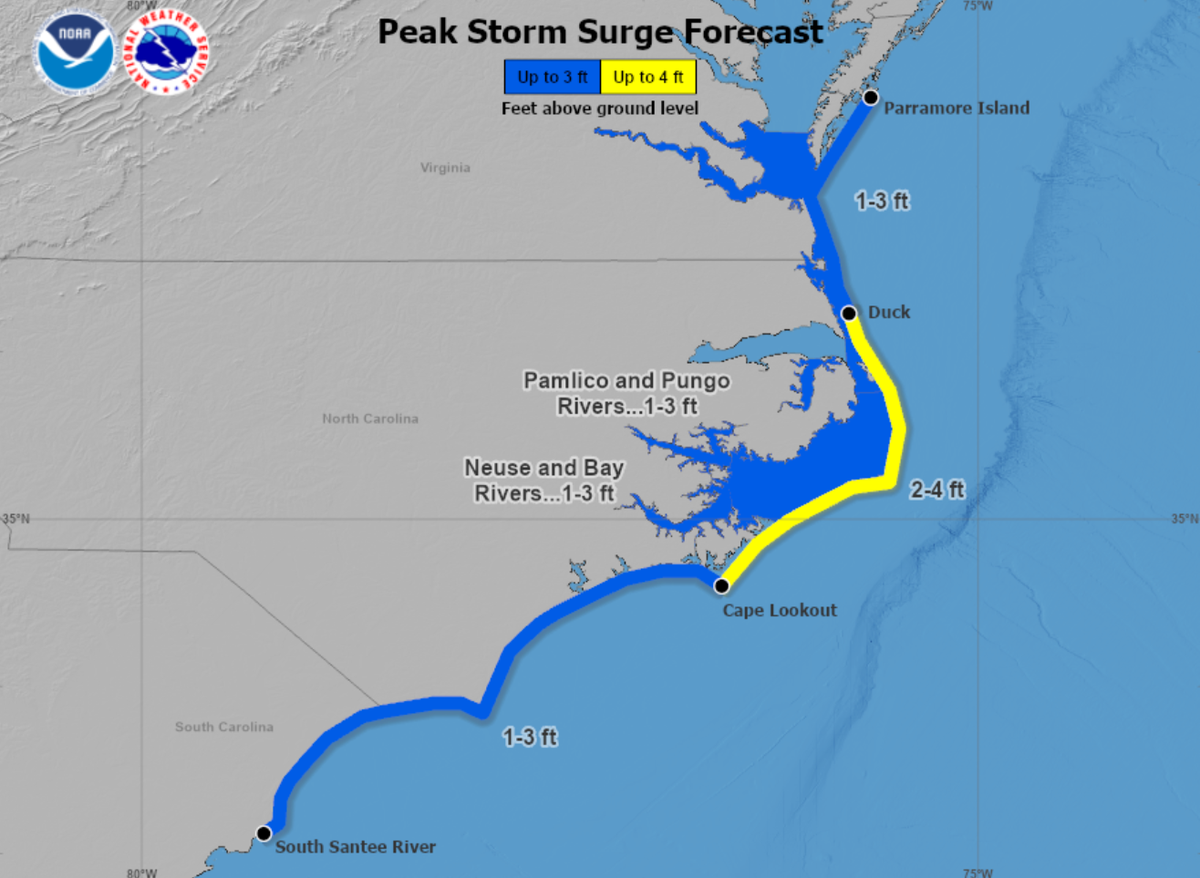
Minor coastal flooding is also likely, particularly in the hours before and after the evening high tide peak, around 6 or 7 p.m. The NWS predicts storm surges 1 to 3 feet above ground level.
“With the strong onshore push and the higher seas, combining with more higher astronomical tides, we will see coastal flooding most likely in the evening,” Zouzias said. “There should be a considerable amount of overwash and beach erosion.”
Localized beach erosion will follow the coastal flooding and considerable overwash. According to Zouzias, east-to-southeast-facing beaches will likely see the worst impacts.
Other tropical systems
As meteorologists monitor Hurricane Erin’s path, two tropical waves in the Atlantic could develop into cyclones in the next week.
Located near the Leeward Islands in the Tropical Atlantic, the first disturbance has a 10% chance of forming a cyclone by Thursday afternoon but a 60% chance of forming over the next seven days.
The second disturbance is brewing about 100 miles south of the Cabo Verde Islands in the Eastern Tropical Atlantic near the African Coast. According to the National Hurricane Center, that tropical wave has a 30% chance of forming a cyclone in the next two days and in the next week.