SC fisherman says Horry County’s shark fishing ban unconstitutional. Here’s why
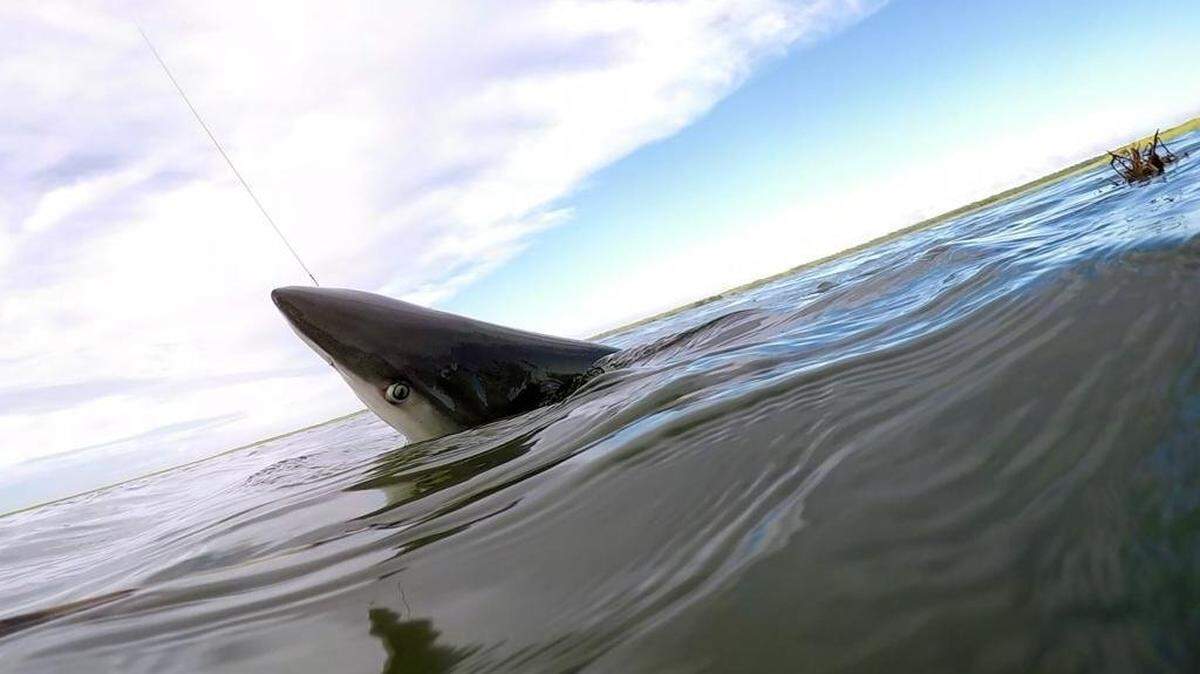
A local fisherman says that Horry County’s ban on land-based shark fishing is “unconstitutional,” and he’s taking it to court.
Gregory Haskins, owner of the Murrells Inlet-based surf and shark fishing guide service Catching With Greg, has taken issue with the county’s outright ban on fishing for sharks from the shore. The ban perpetuates fear, harms shark conservation and stands in contrast with the South Carolina Constitution, he contends. Haskins is questioning the ban alongside Shoreline Shark Conservation, a non-profit operated by his friend that tags sharks in coordination with the National Oceanic and Atmospheric Association (NOAA).
Horry County did not respond immediately to requests for comment on Tuesday morning. NOAA’s Cooperative Tagging Center also did not respond immediately to an email sent on Tuesday morning.
By filing for an injunction against the county’s enforcement of the ban, Haskins and Shoreline Shark Conservation hope to put an end to it for good.
In Horry County, it is prohibited to attempt to catch sharks and other species that “may endanger the public” from any fishing pier, beach or other coastal fishing waters within one mile of the beach.
Haskins’ allegations about the ban are propped up against the “strong history and culture of hunting and fishing” in the county, according to legal documents. The summons, filed on Monday, tells the history of the area’s bustling fishing industry, from early trading to current tourist fishing attractions and the local seafood scene.
At the core of Haskins’ efforts to earn an injunction on the ban is the ability to conduct his business freely.
“With all of these bans popping up across the state, it’s severely limiting my ability to do that,” he said in an interview. He added that proposed bans that would limit his business in other areas, like Georgetown County, were a catalyst for him in pursuing legal action in Horry County.
Haskins has been an outspoken opponent to Georgetown County’s proposed surf and shark fishing ban, which was deferred earlier this month. He said that Georgetown’s ban, which proposed the limitation of daytime surf fishing and a ban on shark fishing on public beaches, would put him out of business.
In the lawsuit, Haskins alleges that, with the abundant shark populations in South Carolina’s waters, shark fishing actually lowers the risk of attacks by reducing the number of sharks in the water.
“Studies have shown that fishing reduces shark populations,” the summons reads. It does not state which studies it is referring to. “A smaller population of sharks reduces the likelihood that swimmers or surfers will encounter sharks in the waters of South Carolina.”
The summons also claims that shark fishing has never resulted in injury to bystanders or people in the water, nor has it caused shark attacks.
“Sharks pose less of a threat to swimmers and surfers than many activities that we accept as commonplace, including the simple act of swimming in the waters of South Carolina,” the summons reads.
Therefore, Haskins argues that the county’s shark fishing ban perpetuates “irrational” fear around sharks by framing the ban as a public safety concern. This fear, he believes, “negatively impacts shark conservation and therefore the health of our oceans,” according to the summons.
Haskins also asserts that the ban prevents him from participating in The NOAA Fisheries Cooperative Shark Tagging Program — “a collaborative effort between recreational anglers, the commercial fishing industry, and NOAA Fisheries to learn more about the life history of Atlantic sharks.”
Customers on Haskins’ fishing excursions get to participate in this program in other areas where he operates Catching With Greg. Shoreline Shark Conservation also participates in this program.
Finally, in the summons, Haskins alleges that the county’s ban on land-based shark fishing is in opposition to state law, which takes precedence over county law.
The summons calls upon a section in the South Carolina Constitution that states, “The traditions of hunting and fishing are valuable parts of the state’s heritage, important for conservation, and a protected means of managing nonthreatened wildlife. The citizens of this State have the right to hunt, fish, and harvest wildlife traditionally pursued, subject to laws and regulations promoting sound wildlife conservation and management as prescribed by the General Assembly.”
Haskins claims that Horry County’s ban is a violation of this section of the Constitution.
“County governments honestly have no business regulating fishing. It’s already regulated by state law,” he said.
In a previous interview with The Sun News, Haskins expressed similar concerns about the Georgetown ban that are written in the Horry summons: That the ban is based in irrational fear under the guise of public safety.
This story was originally published July 22, 2025 at 12:14 PM.