Do Myrtle Beach area drivers have to stop for pedestrians? What SC law says
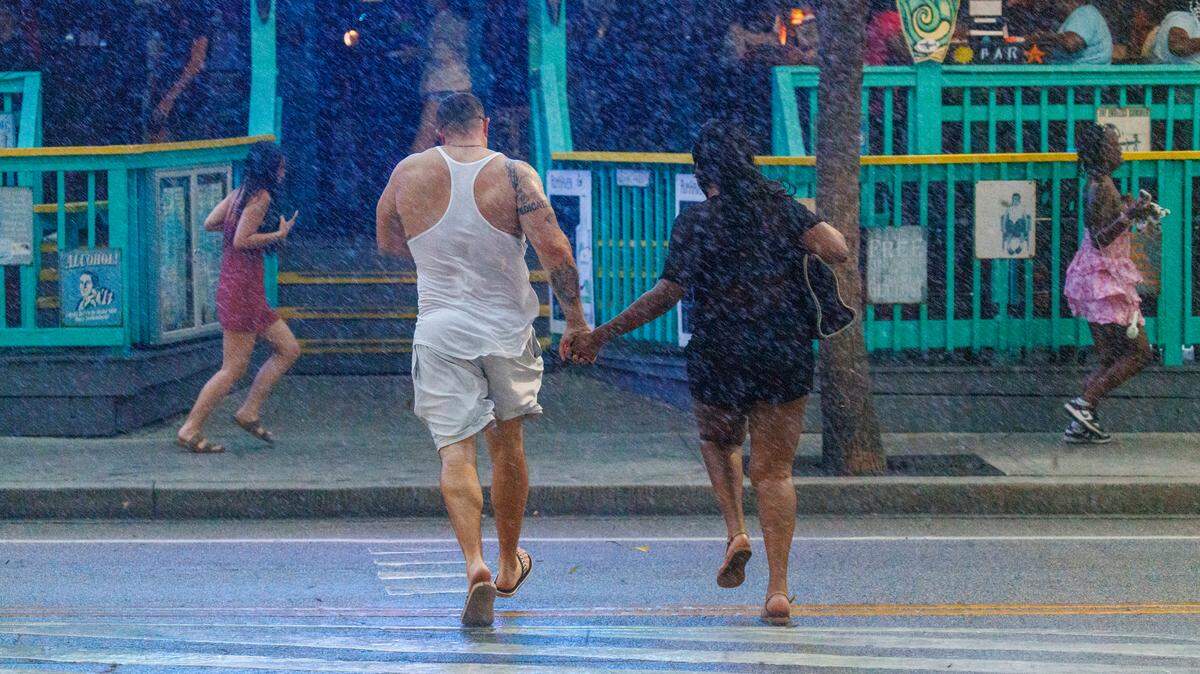
Driving through tourist cities of Myrtle Beach and North Myrtle Beach, it isn’t unusual to see a person or two standing by the road, waiting for the perfect moment to cross.
As summer vacationers flock to South Carolina’s sunny beaches, streets are filling up with people traveling by vehicle and foot alike. But when a pedestrian needs to get across the street, is it up to drivers to let them pass?
According to South Carolina law, only in certain situations.
At intersections and traffic control signals, pedestrians must use a crosswalk if one is available. In these cases, drivers are required to stop for pedestrians, unless signals are directing traffic otherwise. If traffic signals are not present or not in operation at a crosswalk, drivers must yield to pedestrians.
In unmarked areas or spaces between intersections without crosswalks, pedestrians must yield to drivers. If a pedestrian crosses the street outside of a crosswalk, drivers do not have a legal obligation to stop for them. However, if a pedestrian is crossing the street between intersections, drivers are required to exercise “due care” to avoid hitting them.
If a pedestrian does happen to get hit by a vehicle while jaywalking, or crossing the street in an unmarked area, South Carolina law assumes by default that the pedestrian is at fault for not yielding to traffic.
South Carolina law utilizes a comparative negligence rule when pedestrians are struck in situations like this. This means that if a pedestrian is found to be less than 50% at fault in the situation, they can still recover damages. Damages will be reduced depending on their percentage of fault.
If a pedestrian is found to be more than 51% at fault, they cannot recover any damages.
If the driver was speeding, distracted, under the influence or otherwise impaired or negligent, they can share fault or even be fully responsible.
For example, if a driver was attentively driving the speed limit and hits a pedestrian who darts into the street suddenly, the pedestrian is likely to be found entirely at fault. However, if the driver was texting or impaired by alcohol while a clearly visible pedestrian carefully crossed the road, blame would be likely to shift onto the driver.
In 2023, more than 1,200 collisions in South Carolina involved involved pedestrians, resulting in 193 deaths, according to the South Carolina Department of Public Safety.
AI was used to compile case law for research in this story. It was fact-checked by a reporter.