
Myrtle Beach bracing for below freezing temperatures. Will there be snow this week?
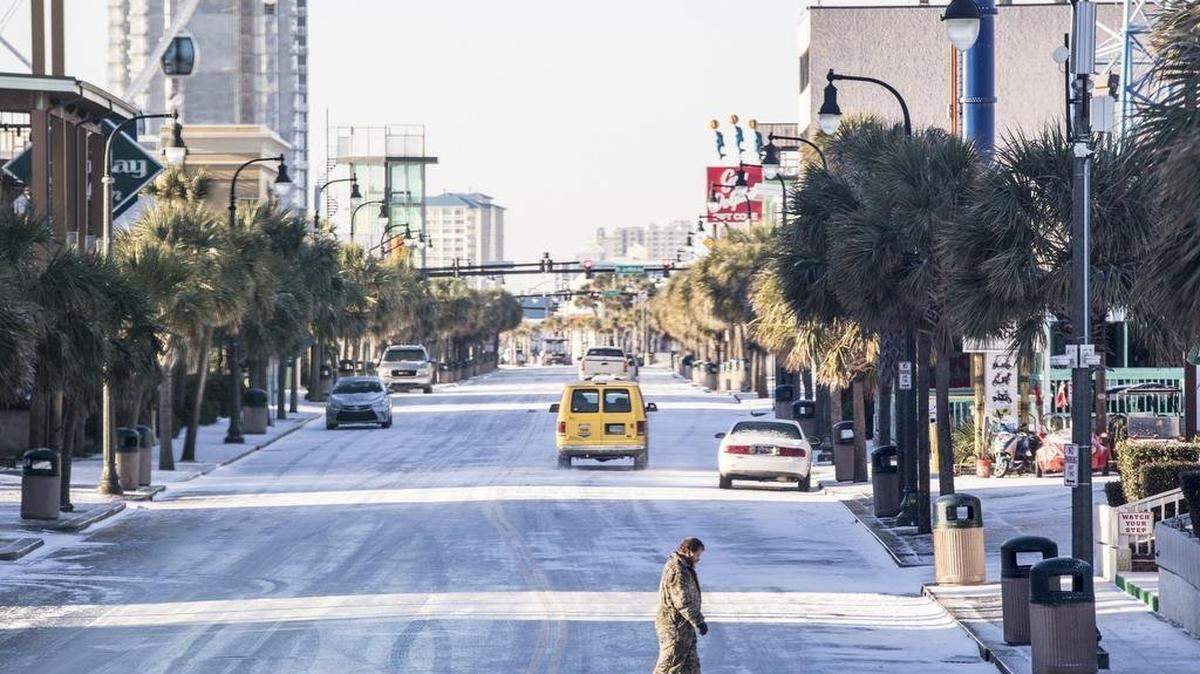
The Grand Strand and surrounding areas are bracing for an unusually cold system this week. With Monday night’s rain, could that mean snow for Myrtle Beach?
According to Rachel Zouzias, a meteorologist with the National Weather Service in Wilmington, the area is experiencing a “chilly air mass through mid-week.”
“It’s almost like a highway coming down from Canada into the Southeast,” Zouzias said. “It’s basically just a strong cold air induction with this flow.”
Snow isn’t unheard of in Myrtle Beach — some areas in Horry County saw up to 3 inches of snow in January 2018’s Winter Storm Grayson–but it is rare.
According to NWS records, the average low January temperature in Myrtle Beach is 36.7 degrees Fahrenheit, which is nearly 5 degrees above the freezing temperature of 32 F.
While the area can expect both freezing temperatures and precipitation this week, according to current NWS predictions, it’s unlikely that the two will coincide to form snow.
What the forecast says
Folks in Myrtle Beach can expect cold, sunny days Tuesday and Wednesday, with highs in around 43 F and 45 F, respectively. At night, however, the lows could drop to around 28 F.
While the NWS forecast predicts it will remain sunny, Thursday is projected to be the coldest day — and night of the week, with a high near 41 F and a low around 26 F at night.
There is a 50% chance of rain Friday night and Saturday, according to the NWS, but the low will likely be around 35 F, meaning that precipitation probably won’t freeze into snow or sleet.
“The cold air is in place and then as the moisture moves in with the system, the temperatures go above freezing,” Zouzias said. “So it looks like, at this point, it’ll just be a very cold rain.”
By the weekend, Myrtle beach will probably return to seasonably cold temperatures, Zouzias said.
Taking precautions
Although the freezing weather is only predicted for a few nights, it’s a good idea to prepare people, pets, plants and pipes for the cold.
“Any vulnerable people, if you have any older folks, make sure people just stay in and make sure their heat’s working,” said Zouzias, “and pets, too. Take them inside, make sure that they have some proper shelter to take care of them.”
Regularly checking the forecast
Whenever possible, avoiding being outside during the coldest parts of the day
Dressing for the cold
Ensuring pets and livestock are not overly-exposed to extreme cold and have access to plenty of food and water that isn’t frozen
Knowing the temperature thresholds of plants and crops
Taking precautions like insulating pipes or letting cold water drip from faucets with exposed pipes to prevent pipes from freezing
Filling vehicles with at least half a tank of gas
Creating or updating a car winter survival kit
This story was originally published January 7, 2025 at 6:00 AM.