Peacocks now live near the Marshwalk. How did the two dozen of the fowl get there?
At the peak of golden hour when the setting sun meets the horizon, a number of peacocks can be found perched on rooftops and in front yards in Murrells Inlet.
The start of a curved private neighborhood where the birds live is across a double yellow line road from the Belin Memorial United Methodist Church.
They are at peace, basking in the last moments of sunlight before it dips below making the sky dark.
Rachael Holt Rhodes, her husband David and their four-year-old son Liam come to visit the peafowl, the plural of male peacocks and female peahens, each day after school.
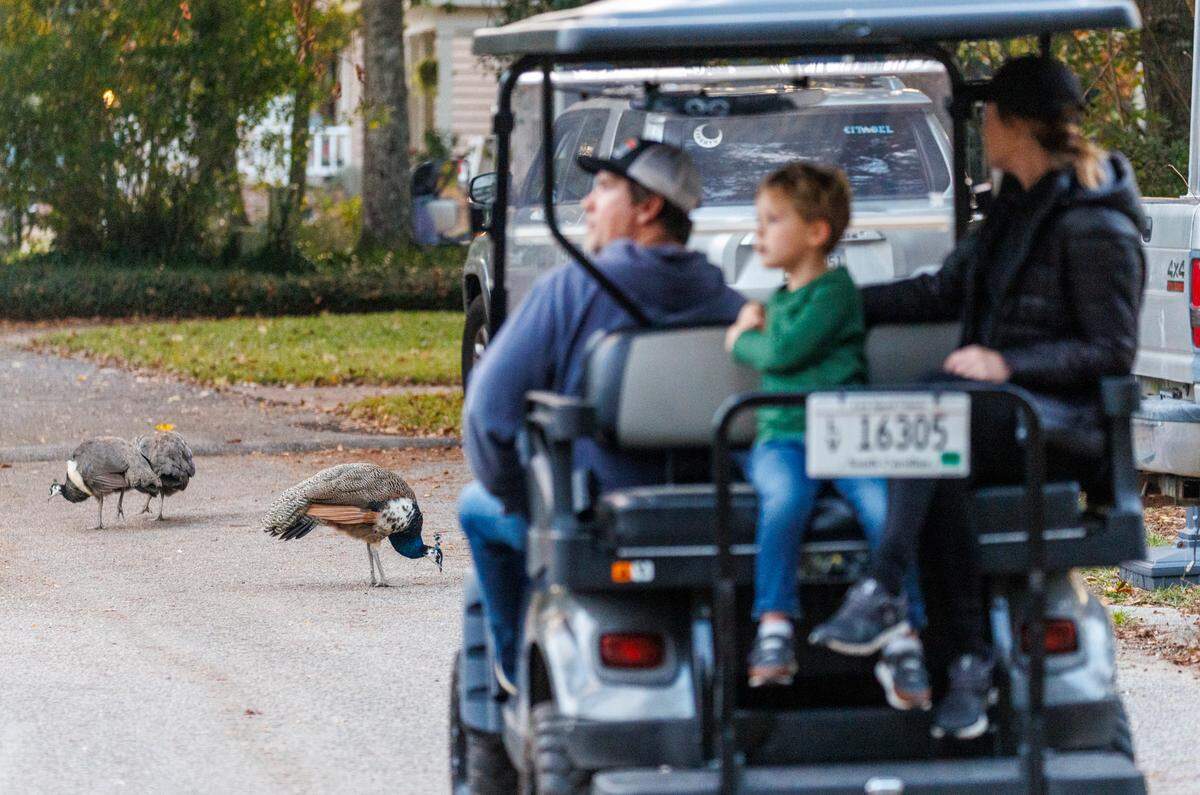
The neighborhood’s mail carrier, Latoya Nicholson, said she’s seen them for years while she makes her routes.
But, peacocks and their less colorful female counterparts, peahens, are not native to North America.
They are believed to be descended from birds that were brought to a California ranch in the 1870s from India, according to Audubon Magazine.
It’s not uncommon for people in the U.S. to domesticate peafowl and have them as outdoor pets.
How did these birds end up in this quiet Grand Strand neighborhood?
Al Hitchcock, the owner of Goat Island, said he brought five birds to live on his island in 2015.
Hitchcock said that people enjoyed visiting them. He’s had his own peafowl in his backyard for the past two decades.
About a year after Hitchock introduced the birds to the island, Hurricane Matthew hit the area, damaging Goat Island and displacing the animals that once called it home.
“When the storm came over, it tore up the island,” he said. “We rounded the peacocks up, and put them back over on the island, and they flew off a few days after that.”
Two of the original five birds died in the storm.
From then on, Hitchock said the peacocks and peahen made a new home in the neighborhood, multiplying from the remaining three to now close to two dozen.
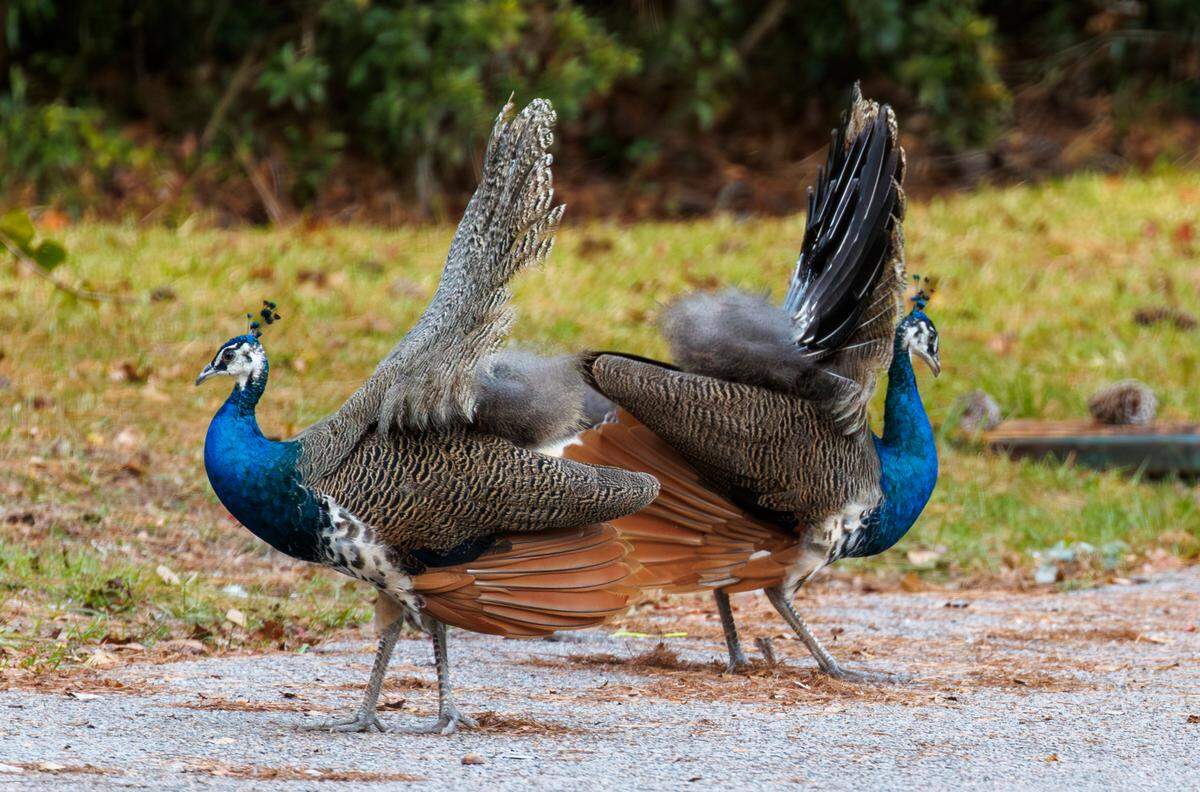
Despite efforts to round them up and bring them back to Goat Island, Hitchock said the animals always found their way back to the small neighborhood across the street from the church.
“They’re content there,” he said.
Each spring he said peahen lay eggs and about two to three chicks hatch. Some die as a result of predators.
When asked what a peacock’s predator is, Hitchock said “pretty much everything,” from foxes to birds of prey to raccoons.
The birds subsist on a diet of sunflower seeds, torn up pieces of bread and small bugs they take on their own.
Hitchock said the typical lifespan of a peacock is between 60 to 70 years, so the birds will be around for a long time.
Editor’s Note: This story was updated to correct the name of Belin Memorial United Methodist Church. (Updated at 11:38 a.m. Nov. 23, 2024)
This story was originally published November 23, 2024 at 5:00 AM.