
Will Myrtle Beach, SC need replacement sand after Tropical Storm Debby? Here’s what we know
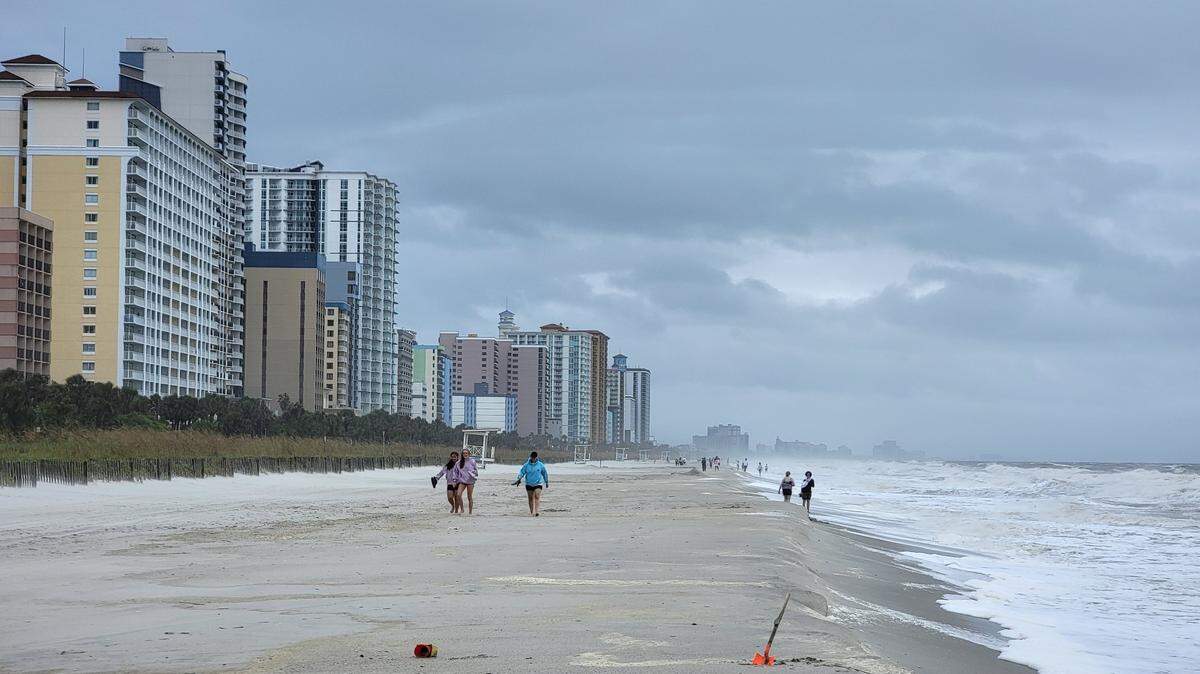
Tropical Storm Debby passed through the Grand Strand this week, bringing heavy rainfall, rough currents and strong winds. But despite the inclement weather, the storm didn’t impact the coast in Myrtle Beach enough to require renourishment, the process of replacing sand lost by erosion.
Sand on the shore and dunes of a beach is vital in protecting coastal communities from flooding. The beach acts as a buffer between ocean and neighborhoods and dunes can mitigate wave damage.
“Our beach did not receive any significant impacts from Tropical Storm Debby. We typically receive the most water inundation on the south end of the beach and the water stopped before the base of the dune line,” Myrtle Beach parks maintenance superintendent JC Blackhurst said in an email.
“We did have a fair amount of erosion at the water line, which is to be expected from an event like this,” said Blackhurst. “This will naturally balance itself out with a few tide cycles.”
Tropical Storm Debby also didn’t significantly impact the shoreline in unincorporated Horry County or North Myrtle Beach. A representative for the county said post-storm evaluations concluded that the amount of sand on beaches didn’t change much and a representative for the city of North Myrtle Beach said erosion from the storm was minimal.
“While there are situations when [the Office of Ocean and Coastal Resource Management] will grant emergency permits to move sand, it’s our position that sand dunes are significantly stronger when allowed to build naturally,” Blackhurst said.
Although no immediate renourishment is required, last year the U.S. Army Corps of Engineers, Charleston District announced plans for emergency renourishment to South Carolina beaches to address beach and dune erosion caused by storms like Hurricanes Ian and Nicole.
No dates have been announced for the renourishment, but projects are typically repeated every eight to 10 years, and the last cycle for Myrtle Beach was in 2018. For the next renourishment project, Myrtle Beach is currently set to receive 800,000 cubic yards — about 80 dump trucks — of sand.
This story was originally published August 10, 2024 at 6:00 AM.