One of SC’s first Black officers still working more than a half a century later. His story
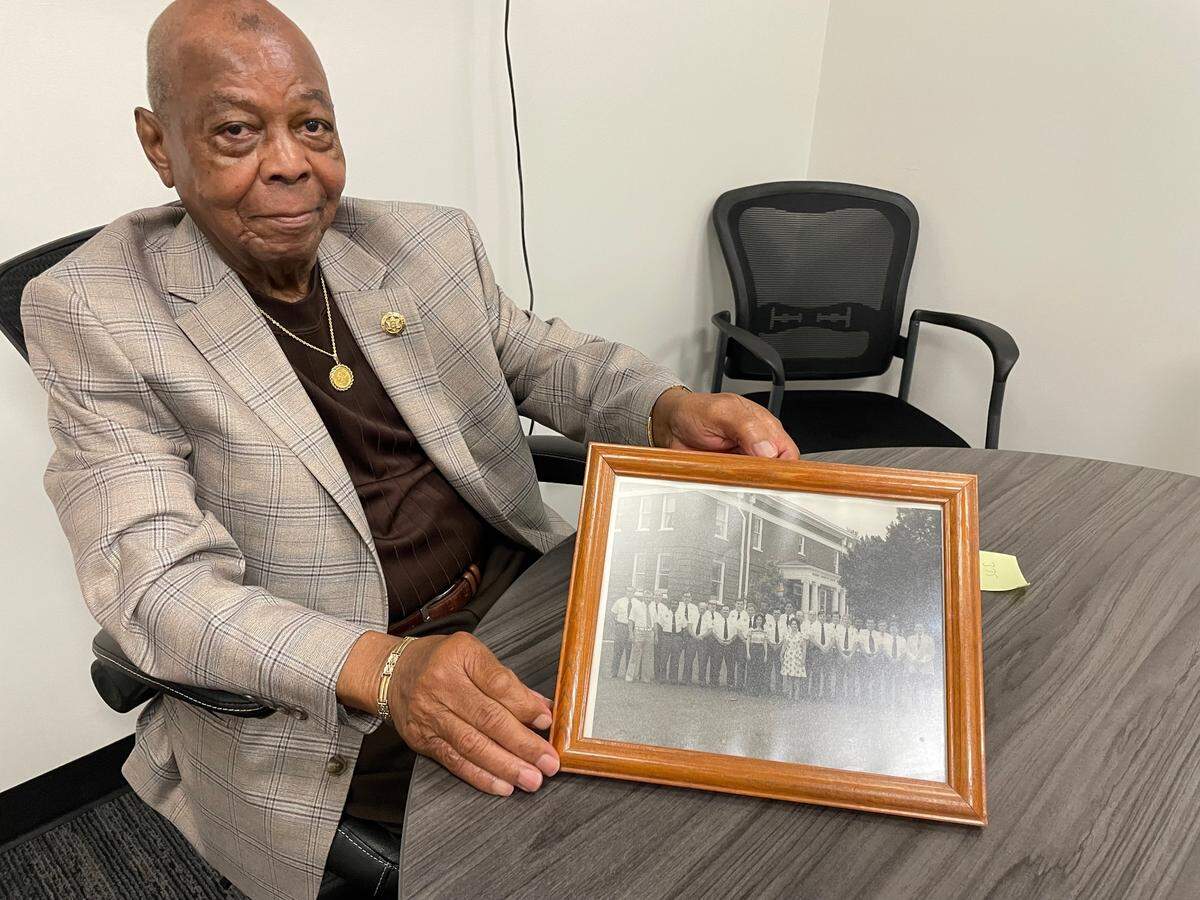
Ralph Vaught is holding a black-and-white photo of the Horry County Police department from 1975.
There are 25 people in the photo – the entire department, which included the police chief, secretaries and officers. Vaught is the fourth person from the left – one of only three Black officers on the force at the time.
Two years earlier, Vaught was only the second Black officer hired by the county – 12 years after the first Black officer joined the department.
Vaught pauses for a moment before sharing what it was like being one of only two Black county officers during a time when racial segregation still existed in the South.
“We only covered anything that happened in the Black area,” Vaught said in a measured tone. “At that time we were not allowed to arrest white people. We didn’t start arresting white people (until) 1977.”
Vaught joined the force in 1973 at the encouragement of Jobe Blain, who was the first Black officer in Horry County. Between the two of them, they covered the entire county from Georgetown, to Myrtle Beach, to Aynor.
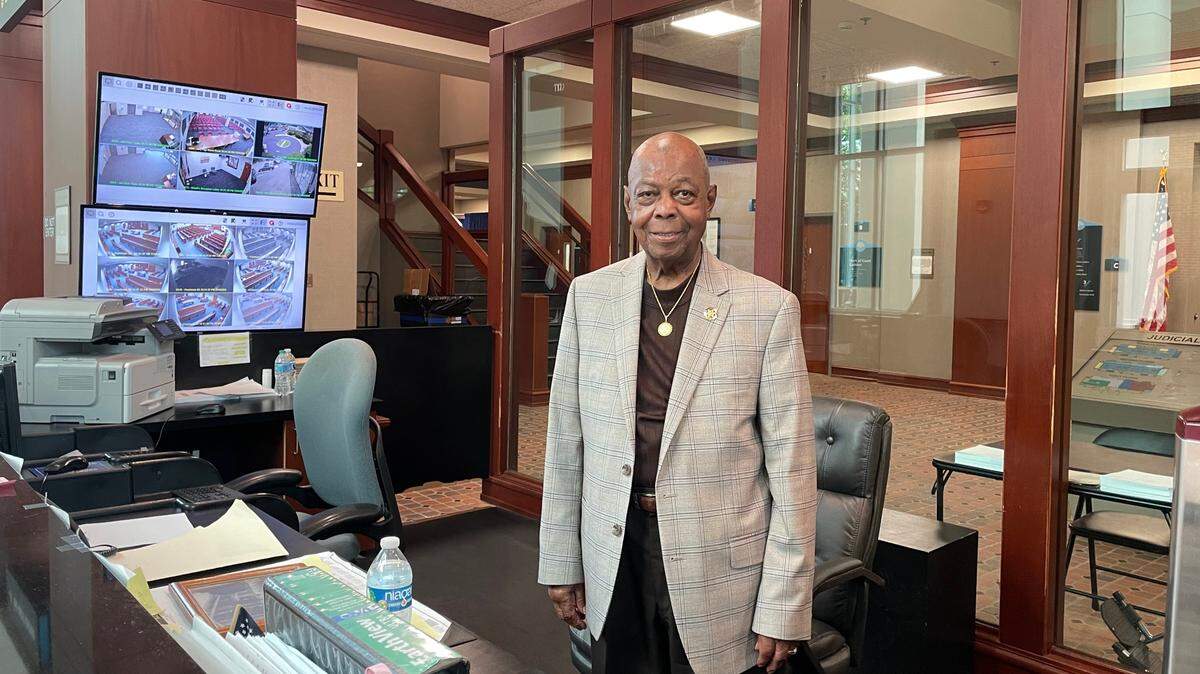
On July 10, the 87-year-old marked a half a century working for Horry County. While he’s no longer a police officer, he can be seen daily at the Horry County Government and Justice Center in Conway, sitting behind a desk as the security supervisor for the Horry County Sheriff’s Department.
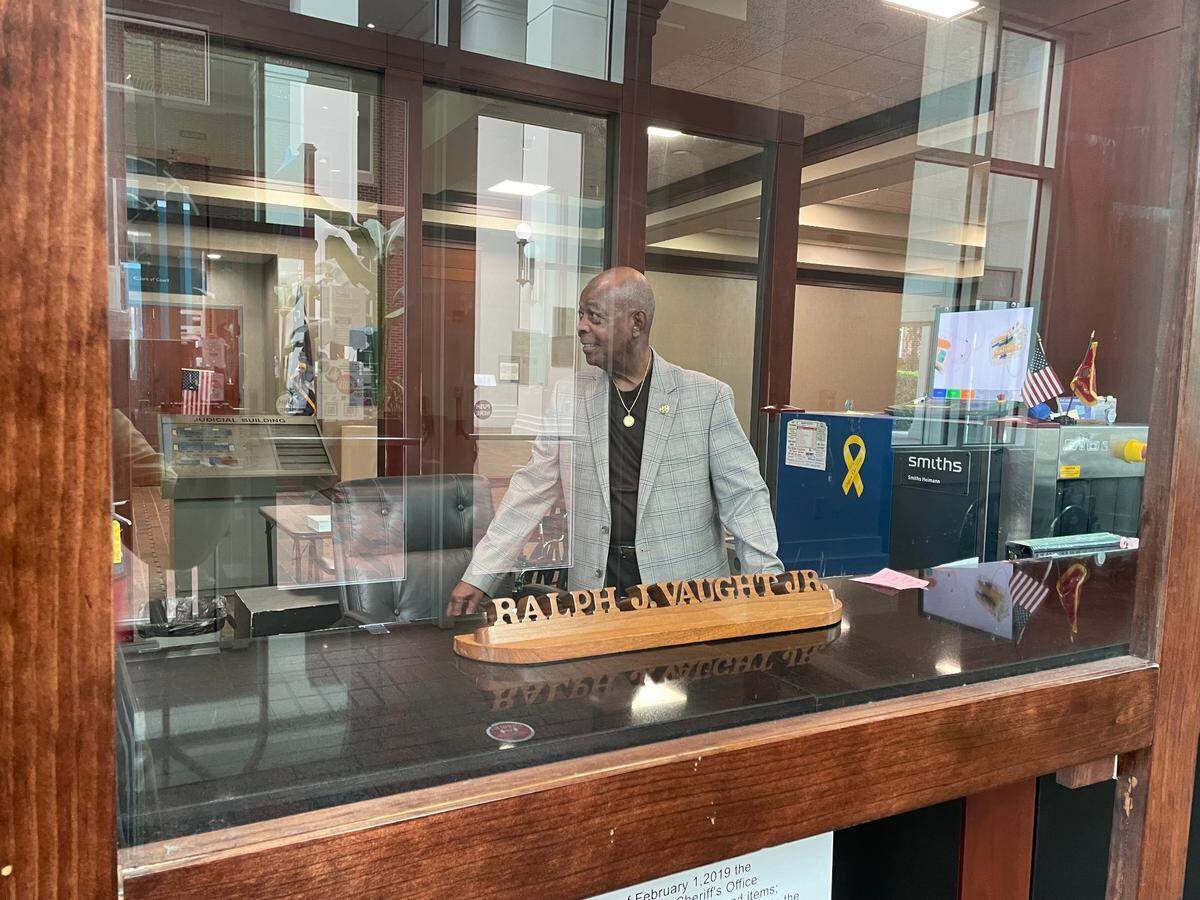
It’s just the latest in a long career for the Horry County native, who continued helping to break racial barriers in both his job and family.
“I like people,” Vaught said. “I like meeting people. Horry County has been good to me and my family, and I feel like I need to give back when I can and while I can.”
They call him ‘Pappy’
Vaught joined Jobe Blain, the first Black Horry County police officer, after Blain encouraged him to apply.
Vaught laughs as he describes how Blain, whose daughter is Conway mayor Barbara Blain-Bellamy, would drive around Atlantic Beach in a Studebaker and furnished his own gun. “He was a big man,” said Vaught, adding that if Blain came to get you, you were going with him.
He said the first white arrest that he and Blain made was in the Aynor area.
“We went to get the guy with a warrant,” Vaught said. “He came to the door and Jobe asked him, ‘Are you so and so?’ and he said, ‘Who are you?’”
Blain identified himself as a police officer and the man replied, “You ain’t the police,” and told the men to leave his house, calling them the n-word, Vaught said. “Jobe told him, ‘We’re gonna leave your house, but you’re going to leave with us.’”
Blain told Vaught to open the car door. “I opened the door to the car and the next thing I knew the man came by me gettin’ in the car,” Vaught said. “If the door hadn’t been locked, he would’ve went through the other side.”
The man continued to call them the racist remark all the way to the jail.
Vaught had to deal with a lot of racism during that time, he said. He often had to work the county by himself, as the white officers wouldn’t go with him to incidents in the primary Black areas, he said.
Early in his career, Vaught worked many hours as the police department didn’t require officers to punch in or out. “You didn’t have days off,” Vaught said. “If you had a case, rape case, shooting or death, we normally worked until we got a lead or solved it.”
He said there was no going home at 5 or 6 p.m. Many nights Vaught would go home at midnight or 2 a.m., only to get another call and have to go back out.
And Vaught often had to deal with dangerous situations, including fighting with suspects and facing having a gun pointed at him during an arrest.
“I didn’t have the sense enough to be afraid of nothing,” Vaught said. “And everyday I looked forward to coming to work.”
While responding to a shooting on Dick Pond Road, Vaught recalls having to get behind the police car and told another man riding with him to get down inside the vehicle. “I looked and saw him standing up,” Vaught said. “I said, ‘Watcha doin’ standing up?’”
The man told Vaught he was trying to see where the bullets were coming from. “I said, ‘Get your ass down and get back in that car,’” Vaught said laughing.
Vaught eventually was promoted within the department, becoming the first Black detective for Horry County in 1983. Then, when the J. Reuben Long Detention Center was built in 1989, Vaught was a part of its design and became its first director.
“I learned to curse when I started running the jail,” Vaught said. “That’s when I started cursing. I’ve been cursing ever since.”
Vaught retired from the jail in 1999 and then took two years off, working at a funeral home during that time.
It was when Horry County Sheriff Phillip Thompson took office in 2001 that Vaught went back to work. Thompson asked Vaught to come work for him. After much persistence from Thompson, including him showing up in Vaught’s driveway one evening, Vaught became the security desk supervisor.
Thompson said he went to work for Vaught in 1980. They have been together for 44 years, Thompson said.
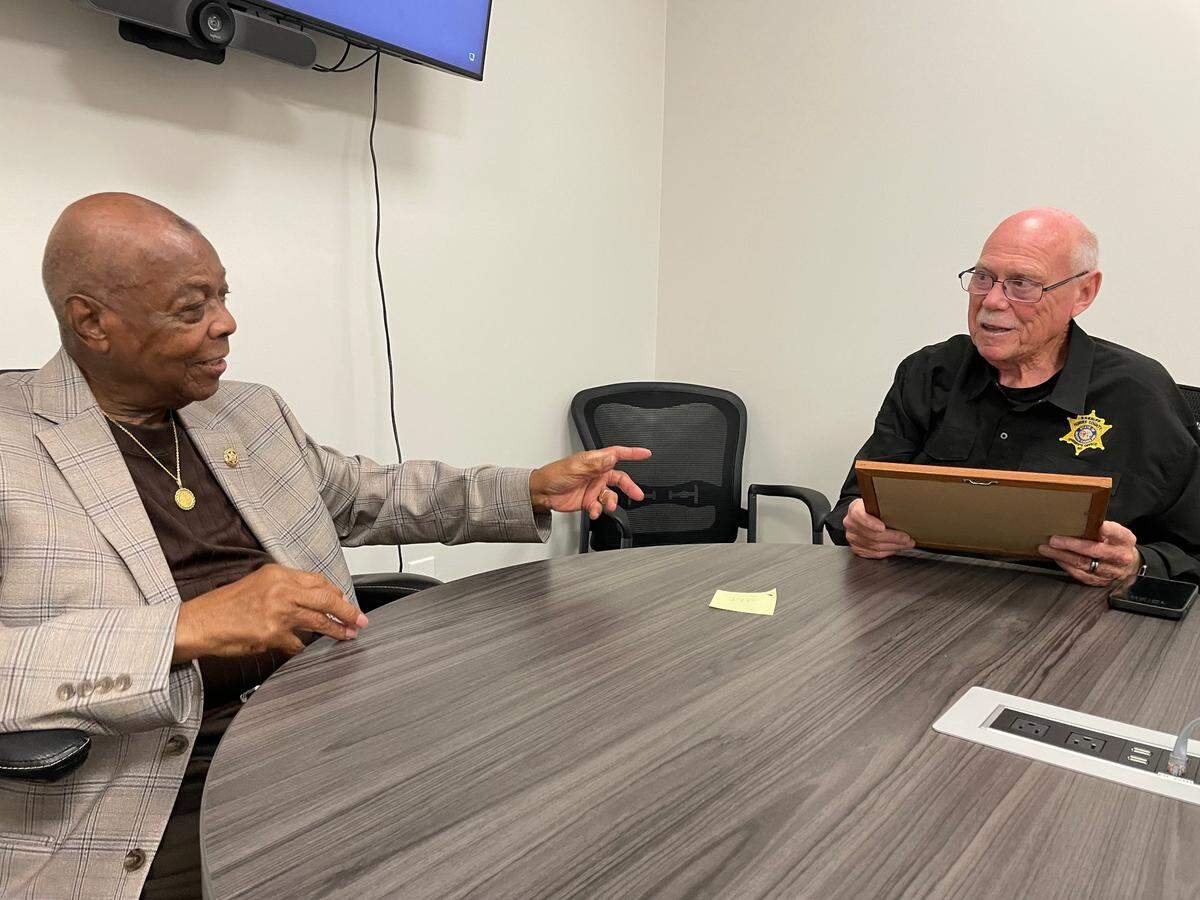
“With his experience, his knowledge, folks in the county know him very well; he was just the right choice for us,” Thompson said. “People come here now just to see Ralph and get advice.”
Most people in the sheriff’s department call him “Pappy,” and almost every day people come in and “shake my hand and thank me for what I did (for them) when they were at J. Reuben Long,” Vaught said.
“He has mentored so many people in law enforcement and in life. … He has a passion for people. And the young folks that come to work for us now, he is mentoring them. They gravitate to him,” Thompson said. “He mentored me; he taught me a lot. We just continued our relationship. … We have had a whole lot of good times and we’ve had a few rough roads along the way.”
Vaught still uses the advice given to him by his mentor, Jobe Blain.
“Treat people the way you want to be treated,” he said. “The one thing that Jobe Blain taught me when I first started, he said if you see a person and you know them, keep repeating their name so they stay with you, and he said if you didn’t know them, try to get to know them.”
Thompson said that Vaught has compassion for people.
“Sometimes he doesn’t show it and wants to be a tough guy,” Thompson said. “He is a very giving person. … He makes a difference.”
‘Something to look forward to every day’
Vaught, who now lives in Conway, was raised in the Wampee community, which is near North Myrtle Beach.
“I came up poor. P-O. Not p-o-o-r,” Vaught said. “My family never owned a vehicle. Never. Anywhere that we went, we walked. If we had to go to Wampee, we had to pay someone to take us there and back.”
“All the Black kids walked to school,” he said. “You didn’t have any buses.”
It’s that reason that Vaught now has so many vehicles. “I’m down to four,” he said. “I did have five.
“The reason I have so many cars is because my family never owned one. I promised the Lord if he let me live, that one day, I would eat what I want to eat, when I want to eat it, I would build me a decent home and I would have me a decent car. And the Lord has blessed me with that.”
Vaught was married when he joined the police force in his 30s. He had served as a military police officer in the Air Force. He and his wife, Marva, had three children, and not only had to deal with racism in Vaught’s job, but also with their children.
His daughter was the first Black student to go to Burroughs school on Main Street in Conway. Vaught said he doesn’t remember Horry County ever having a problem in the school system, when they began to be integrated.
“If it did happen, I would’ve known because like I told you, (the Black officers) worked all the Black areas,” he said.
Vaught and his wife were married for 56 years before she passed away in 2013. He also has four grandchildren and four great-grandchildren.
Vaught said his wife understood his role as an officer and offered her support. “If I wanted to do it, she was behind me,” he said.
Vaught continues to work every day. He also comes to work dressed to impress, often wearing a blazer and slacks, and making sure his shoes are polished.
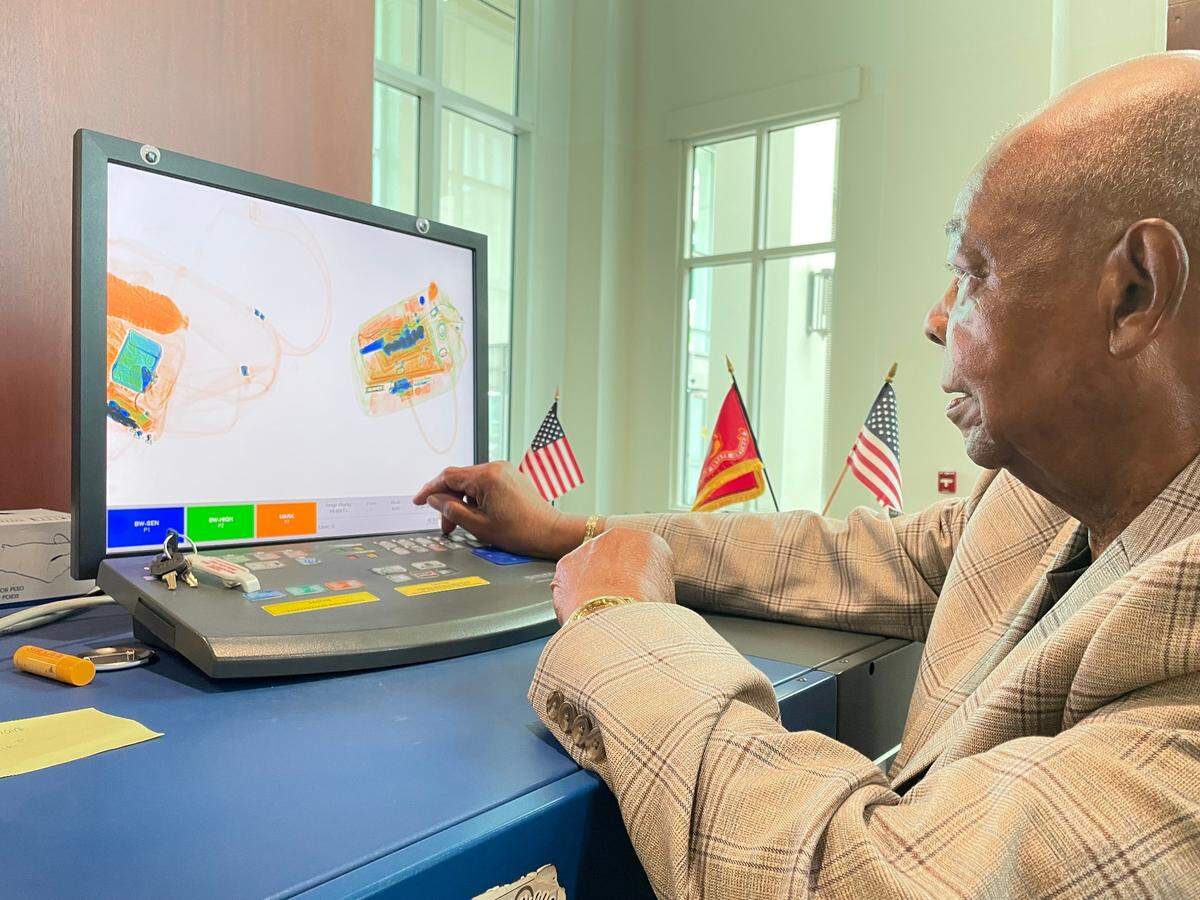
He does have a plan for when he will stop working, and that’s when Thompson’s term is done. Thompson has been sheriff since 2001 and is up for re-election this November.
Until then, Vaught continues to come to work every day.
“I think every man or woman needs to have something to look forward to every day,” he said. “I have a pretty sweet job.”