Sunset Beach Maze Man has captivated vacationers and locals. How he makes his sand designs
While walking up to the nearly completed sand maze, “Maze Man” Hunter Gibbes has to shoo people away.
“There’s no entrance or exit,” he tells the beachgoers who are attempting to solve an unsolvable maze. The maze has a circle in the middle that grows farther out, with various rings that are wide enough to walk through. But there is no way to start or end it.
Gibbes picked up his shovel and began drawing lines. He packs the sand down around the edges, making a clear walking path. He periodically stops and glances around at the maze. Once finished, Gibbes steps out with his shovel and within seconds, a pair of teenage girls are walking it. He stands back and smiles.
“I get to watch people and they entertain me by being frustrated,” Gibbes said. “You can see the ones determined to make it through.”
Gibbes, who is originally from Columbia, South Carolina, has been making sand mazes in the tide line in Sunset Beach for nearly 20 years. It started randomly one year when he was vacationing with his family.
He spent many years vacationing in Sunset Beach with his family before moving to the North Carolina coast in 2017. He retired in 2022 and now spends a good chunk of his time tracing lines in the sand.
He’s become a local phenomenon, gaining over 10,000 followers on Facebook and being a conversation topic among vacationers and residents. He said people tell him they heard about him through the guestbook at rental homes.
Gibbes was nicknamed the Maze Man years ago by a group of kids who noticed him walking back to his house from the beach.
“Eventually they got to the point where they recognized me and they would say, ‘Hey Maze Man,’” Gibbes said. When asked how he feels about the title, he said, “I feel good. It’s who I am and what I do.”
The designs are all in his head
When asked about his creative process, Gibbes said he keeps the mazes in his mind.
“If you were to map it out on paper, the scale is off,” Gibbes said. “When you have something on paper and it’s this far on paper, how much is that on the beach? I don’t know.”
He likes to start with the middle of the maze, usually drawing a circle first. Gibbes said he prefers circles but has done other shapes as well. From there, he makes the circuits . He’ll add as many as the tide schedule and number of people on the beach allows.
Once the body of the maze is complete, he adds the lines. The more lines he adds, the harder the maze becomes. He said he’s constantly trying to make his mazes more complex than before.
It usually takes 1.5 to 2.5 hours to build the entire maze. Gibbes does this around four times a week. Once finished, he sits in a beach chair under an umbrella and watches people complete the maze.
Several hours later, the tide will come in and wash away his design, creating a blank slate for the next maze.
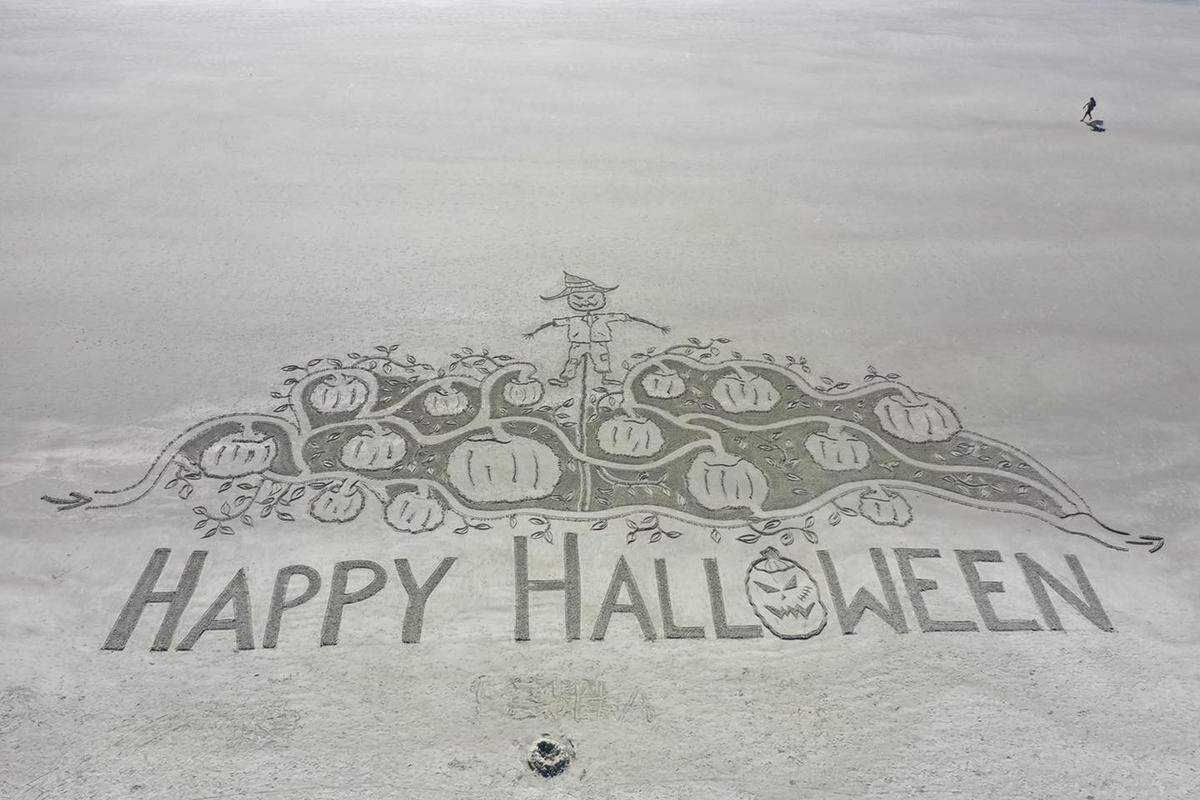
When asked what his favorite maze, Gibbes pulled out his iPhone and started to scroll through his camera roll, which was mostly pictures of the beach. His favorite was a fall-themed maze he did on a whim in October 2023.
A friendly personality to go with mazes
Sometimes when creating mazes, it takes Gibbes longer than expected because he can’t stop talking to people.
“He tries to stay focused but can’t help being friendly and chatty,” said Laura Ferrel, a friend of Gibbes.
She met him when he first began doing the mazes. She would vacation in Sunset Beach and while her kids did the mazes, she would converse with Gibbes.
Gibbes said he loves watching people interact with the mazes. He likes to watch people’s faces as their stare of confusion turns into excitement as they find the way out. Sometimes, if he notices someone is having a particularly hard time, he’ll go up to them and give a few hints.
The kids tend to finish the maze first, Gibbes said. On Aug. 1, Savannah Cope, 5, ran out of the maze with a smile on her face and her arms held up in the air, while her grandfather and older cousins were still stuck inside.
Gibbes tries to create a maze that’s difficult but not too hard. He also stays away from creating dead ends as that can make the maze path too obvious.
“For the most part, I watch the white of the sand,” Gibbes said. “I know it’s a good maze when the sand is all white because people are walking all over trying to figure it out.”
This story was originally published August 14, 2024 at 6:00 AM.