‘Welcome to Myrtle Manor’: Fans of TLC show still visit Myrtle Beach site years later
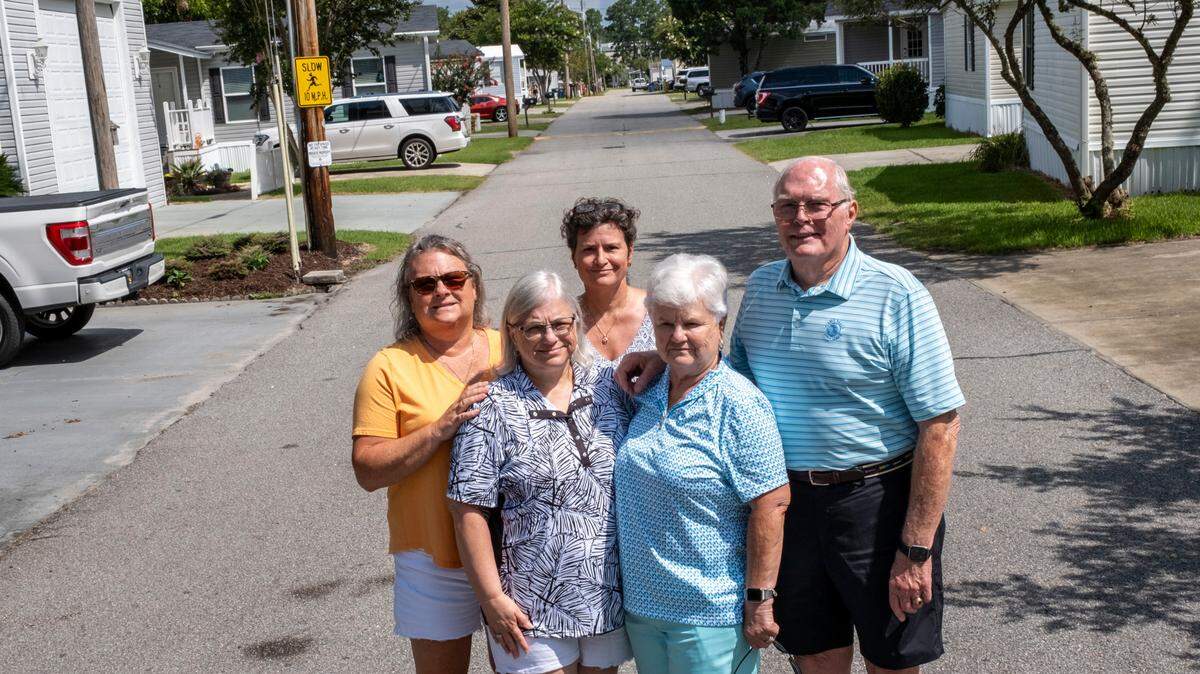
The pink trailer at Patrick’s Mobile Home Park sticks out among the rows of other mostly neutral-colored trailers.
Once home to Tangulls hair salon, it is the only thing left from the national TV reality series “Welcome to Myrtle Manor” that brought the mobile home park into the homes of millions of viewers for three seasons.
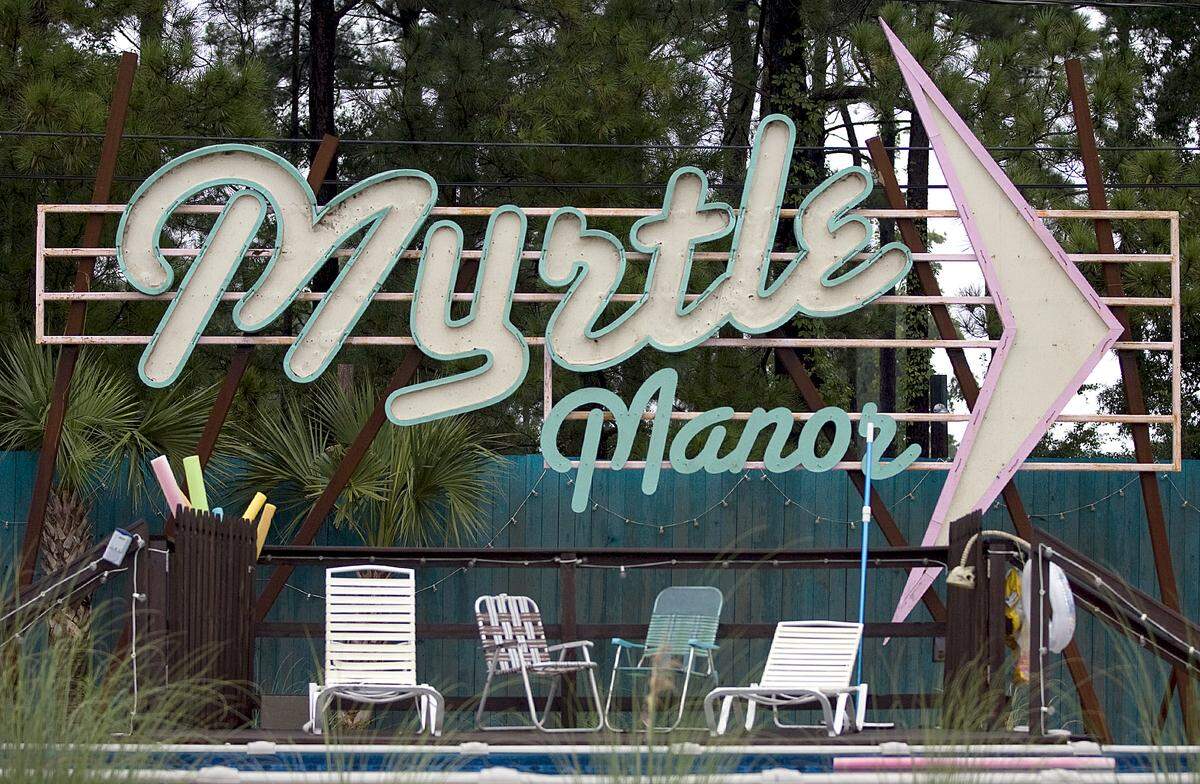
Even the large, audacious sign that became the show’s calling card is gone, as well as the entire cast of the show.
But that hasn’t stopped fans from continuing to visit the family-run business located off of Highway 15 in Myrtle Beach, even though the show ended nearly nine years ago.
Patriarch Cecil Patrick said they receive phone calls and visitors “almost every day.”
“You’d be amazed at the number of people that flew in here,” Patrick said. There have been people from all over the U.S., but also Australia, Mongolia, Nigeria and England.
The TV show is just one chapter in the mobile home park’s history.
Patrick’s Mobile Home Park opened in 1970 on land that was originally purchased by Cecil Patrick’s grandparents in 1923.
It was recognized earlier this year as part of the Horry County Historic Preservation Commission’s Legacy Business Recognition Program. The program pays tribute to local businesses that have contributed to the economic heritage of Horry County for more than 50 continuous years.
Mobile home park still a family homestead
The mobile home park is 35 acres with 120 lots, Patrick said. All of the lots, as of July 6, were occupied. The lots are rented for $350 a month without utilities, he said. However, when the home park first opened, lots were rented for $25 a month and included water and trash pick up.
The property was originally a working farm with woodlands.
In 1969, Patrick put a mobile home on the property for his family. The family, who saw the need for affordable housing, dug every trench and laid every pipe by hand, according to the Horry County Historic Preservation Commission’s nomination of the business.
Patrick and his wife, Barbara, who have been married for 60 years, and his two daughters, Dana Painter and Becky Robertson, still live on the property.
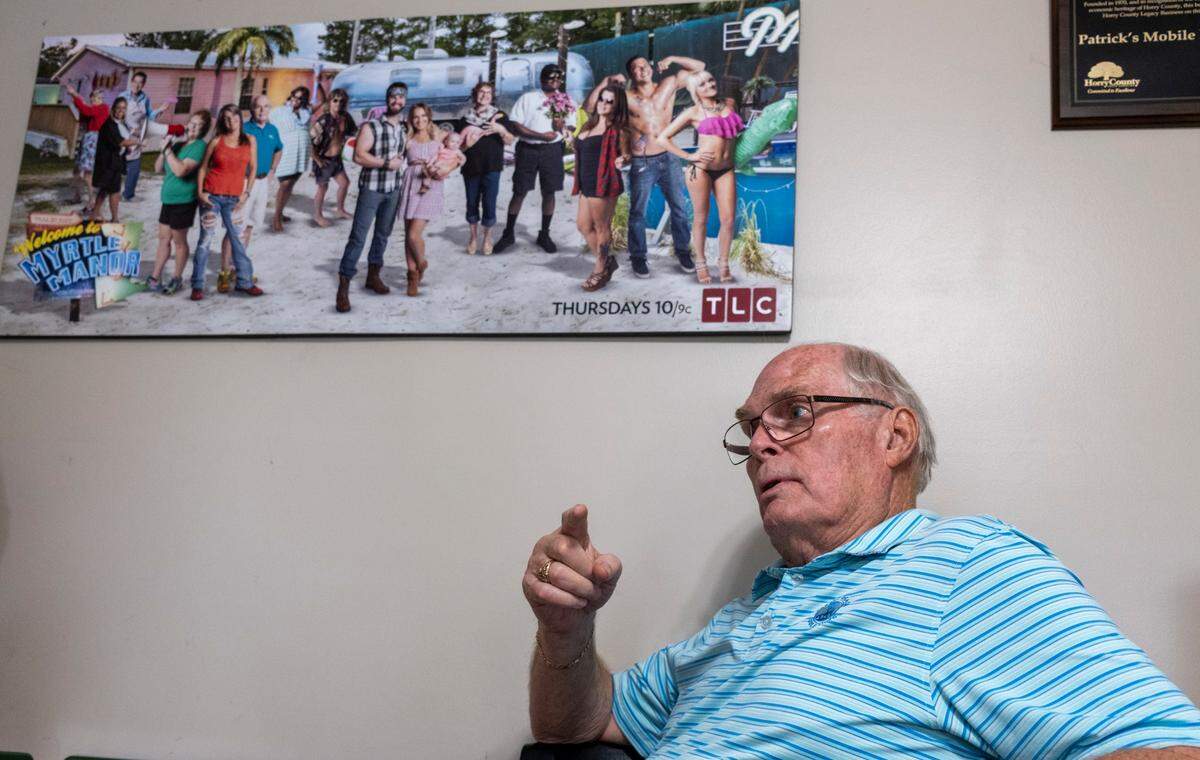
The 79-year-old said he operates five businesses out of the mobile home office, which is located at the entrance of the park. He said the home park makes the “least amount of money” but requires the “most attention.”
But he did make “lots of money” from the filming of “Welcome to Myrtle Manor.” Patrick declined to say how much he was paid. A large part of that came from the show merchandise that he was able to sell.
Patrick did make appearances on the show, as well as Robertson, who operated as the mobile home park’s manager. She could often be seen in episodes driving around in a golf cart and using a bullhorn.
She still has both. “I loved that thing,” she said about the bullhorn.
Cast members often ‘real’ at ‘Myrtle Manor’
The premise of the TV show revolved around the lives of an eccentric group of people living in the family-run trailer park. The series often showed drinking, relationship drama – lots of it – and other problems among the residents, some who had lived in the park for years and others who were placed there solely for the creation of the show.
The show was produced by The Weinstein Co. and aired on the TLC network for three seasons, ending in 2015.
The city of Myrtle Beach declared the area of the mobile home park a film district at the time, Patrick said. However, the stipulation was that everything had to be put back just the way it was after filming ended, Patrick said. That’s why the studio took the sign with them when they left.
Many of the people who were on the show did not live in the mobile home park. TLC chose the cast and moved them into seven trailers they placed on lots that were rented at Patrick’s Mobile Home Park, Patrick said.
Peggy Beaulieu, who eventually became part of the regular cast, was already living at the mobile home park. She was the oldest resident, having lived there for more than 30 years. But others, such as Chelsey Stetson, was living in Myrtle Beach at the time and was approached by a casting agent about being on the show while out one day with her friends.
Most of the stuff that happened on the show was real, such as Peggy’s pink gun.
“She would shoot you,” Patrick said laughing. In one episode, during a drunken, late-night party, cast members had to take the gun away from Peggy.
Then there was the time in which Jared Stetson placed a beach chair on his Silver Bullet trailer. “There’s so many good stories,” Patrick said.
However, TLC’s producers would often give the cast situational prompts and have them react.
“The first season was the realest season,” Chelsey Stetson said by phone from her Ohio home. Stetson was in her 20s at the time.
Stetson, known as Chelsey Keller in the first season, eventually married fellow cast member Jared Stetson at the end of the second season and they had a child together.
She still comes to visit the Patrick family when she is back in Myrtle Beach. And although she doesn’t talk about the show much, she has no regrets doing it.
“I wouldn’t have had a daughter,” she said. “I definitely walked away with the best outcome of it.”
Gina Shelley, who co-owned Tangulls with fellow cast member Roy Bullard, is always asked whether she and Roy were scripted. “We were never scripted,” she said. “The only time we were scripted is when they would ask us questions during an interview.”
About 90 hours of filming would go into one 45-minute episode, Shelley said. There were usually two film crews operating at a time.
No one would say how much they got paid for filming the show. However, it appears that cast members would get paid anywhere from $400 to $800 for a four-hour call time. Filming took place every day, except Sundays, ranging from four to six months.
Shelley was able to buy a car and started saving for college.
“I had a good time and made good money,” she said.
TV show had major impact on the local economy
Patrick, who was born and raised in Myrtle Beach, said the best part of the show is its effect on the community after it ended.
Coastal Carolina University did a three-year impact study on the Grand Strand community. The study showed that the show brought in $101 million in film-induced tourism, $790,142 in merchandise sales, more than $2 million in economic impact of production and more than $3 million in advertising equivalency.
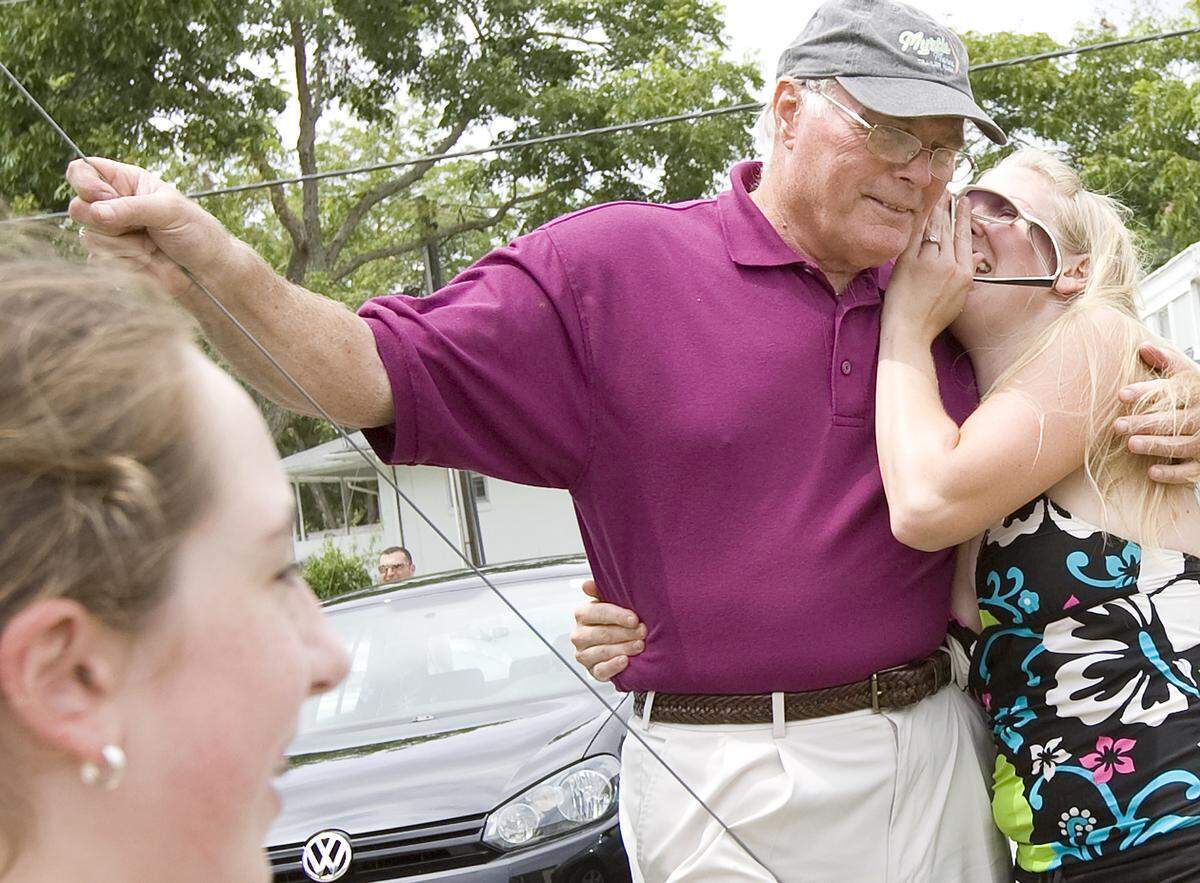
The family also gives back to the community. Barbara Patrick makes breast cancer pillows and gives them away to women who are dealing with cancer. And each August, the family conducts a back to school bash where hundreds of school children can receive school supplies that have been donated from local businesses. This year’s event will be 6 to 8 p.m. Aug. 18 at 1908 Highway 15, next to the mobile home park.
Painter said that most of the people who live in the area, including the mobile home park, are working people, and they need the help.
Originally, TLC wanted the family to pick a national charity that they could donate proceeds to, but the family refused, saying they wanted to keep everything local.