
Take a look at the 5 options for the future of Myrtle Beach life guarding policies
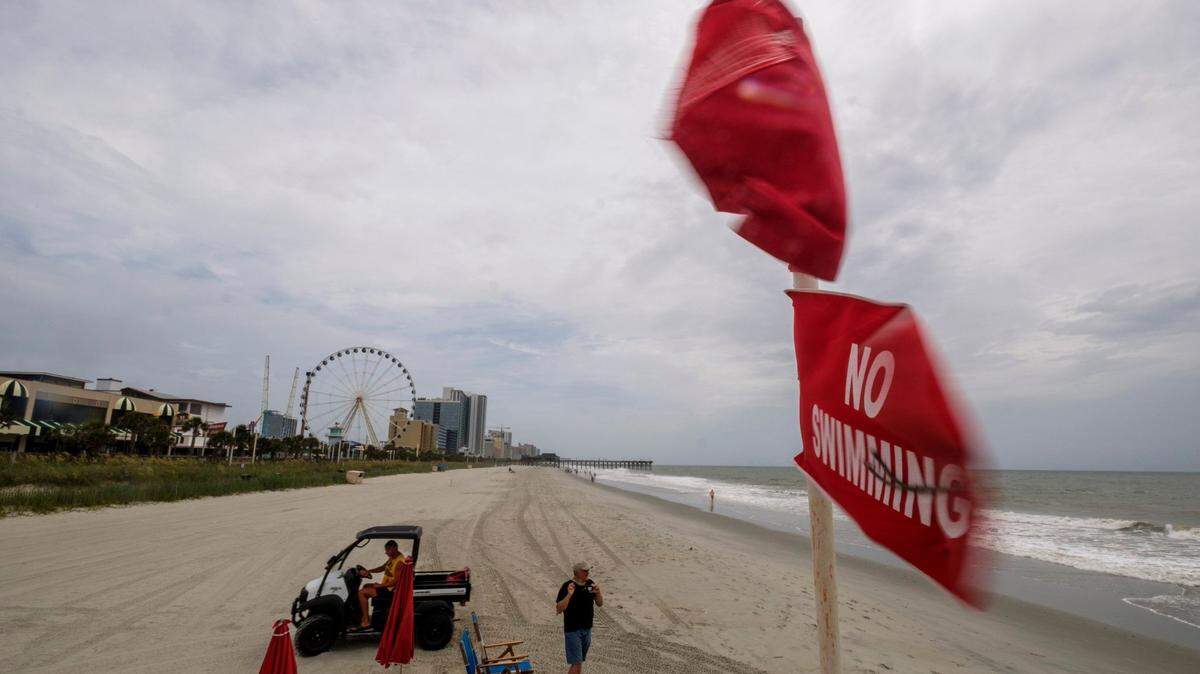
Myrtle Beach has five options to consider for the future of its life guard policy. Some are expensive alternatives that carry multi-year implementation plans while others can be implemented right away without any extra cost.
The city council is expected to make a decision later this spring, though Mayor Brenda Bethune said during preliminary talks “consensus” is ending the current model that has some life guards splitting their time between watching the water and handling rentals.
Option 1: Do nothing
The city’s existing franchise agreements with John’s Beach Service and Lack’s Beach Service run through 2024 and 2025, respectively.
Under those contracts, the private firms would continue to hire and train lifeguards while also allowing for commercial activity — a debunked model known as “dual role” guarding that’s so dangerous the U.S. Lifesaving Association refuses to certify any agency that uses the method.
Following a $20.7 million civil verdict against Lack’s last summer— a jury ruled dual role guarding contributed to the drowning death of a vacationer in 2018 — the city’s beach advisory committee last month recommended an end to dual role guards on the oceanfront.
Option 2: Follow Horry County’s lead
The most likely path forward is adjusting the city’s pacts with John’s and Lack’s, keeping them as lifeguard providers but splitting off rental duties -- a move Horry County will finalize later this month.
Company representatives told the beach advisory committee they’re willing to amend the deals.
Re-configuring the contracts wouldn’t bring any extra costs to the city and is consistent with most other beach communities.
Option 3: A public-private partnership
Officials could spend the next year establishing a new training curriculum and command structure, adding a stable of 20 lifeguards paid through the city who would work alongside those employed by John’s and Lack’s.
It’s likely a half-milliion dollar spend, with $389,000 alone for salaries, according to information provided March 7 to the council.
“Once you make this step, this would be a year-round commitment with full-time employees,” Brian Mitchell, the city fire department’s ocean rescue battalion chief, said.
Option 4: A city-run lifeguard program
This is where things really get expensive. Should city leaders opt to sever franchise agreements and move lifeguarding in-house, the outlay is between $945,000 and $1.32 million for hiring up 98 lifeguards.
In addition to personnel costs, the city could have to pay for 50 stands — a total of $125,000, five trucks at $225,000 in all and thousands more for maintenance and support costs.
Option: Swim at your own risk
A 22-year-old state law gives oceanfront communities authorization to offer lifeguard services directly or via franchise agreements but doesn’t mandate them.
Given the decades-long presence of guards on city beaches and their massive tourism draw, the notion of an unattended shore is a nonstarter for city leaders.
“The people coming to the beach for years expect lifeguards out there,” said Myrtle Beach police Master Cpl. Kevin Larke, who oversees the agency’s beach operations.
This story was originally published March 8, 2023 at 8:38 AM.