
Myrtle Beach’s downtown tax tool is ready for use. Emails show how it came together.
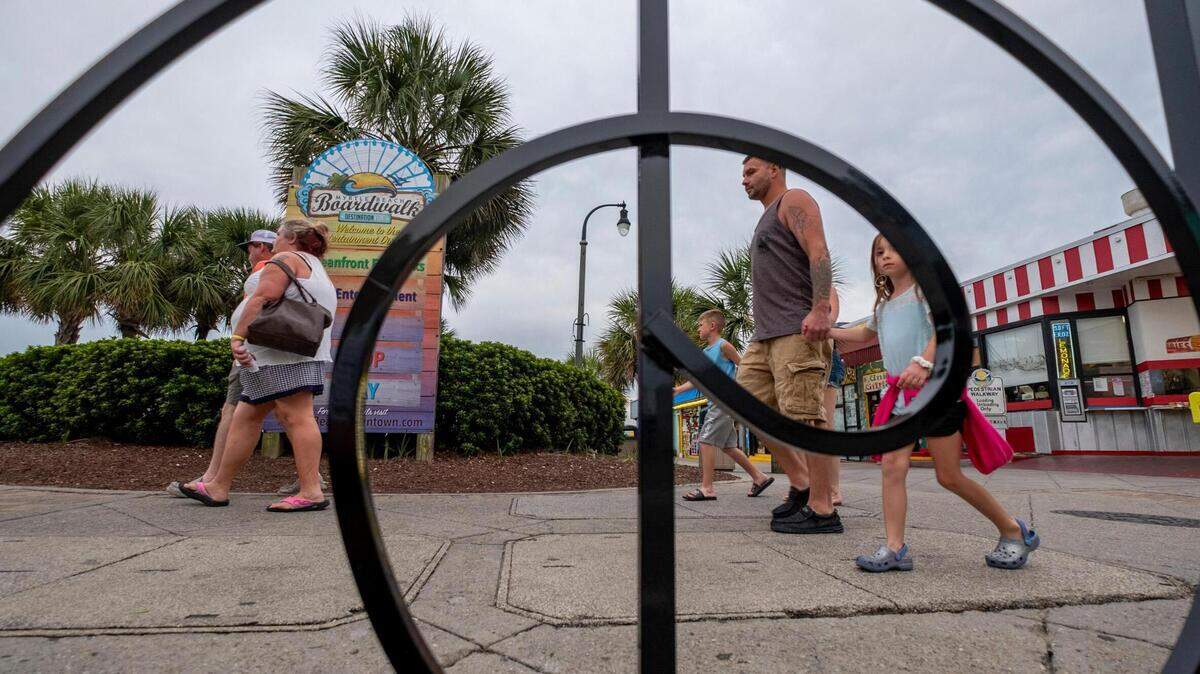
As Myrtle Beach leaders continue to focus on generational changes to the city’s downtown, one of the newest tools at its disposal is a special tax district expected to generate nearly $14 million over the next decade.
The assessment will first show up on fall tax bills for roughly 3,600 commercial properties between 11 Ave. S and 21st Ave N, a 689-acre area that covers much of the city’s merchant sector. In all, the properties have a total assessed value of $60.4 million, based on six percent of their market price.
South Carolina law sets two rates for property tax: Primary homeowners who live in their dwelling year-round and don’t get extra money through short or long-term rentals are assessed at 4 percent of their value.
Income-generating parcels including short-term rentals or homes that are only occupied for part of the year are required to pay 6 percent of their total value. Those so-called “4 percenters” are exempt from the city’s municipal improvement district assessment.
To get a better idea of how the district’s boundaries were drawn and some of the details that went into creating it, The Sun News submitted a Freedom of Information Act request with the city, asking for records dating back from Nov. 1, 2021 through mid-August. Here’s a breakdown of what the documents reveal.
Because the district’s ultimate goal is to attract private investment, create more housing and spur a more walkable, visitor-friendly environment, businesses are being asked to pay now for a long-term result. The properties assessed at 6 percent will pay an additional one percent of that 6 percent value, with that money going to the district’s operations. Assessed property of $100,000 would pay $60 to the district annually Assessed property of $200,000 would pay $120 to the district annually
Mayor Brenda Bethune was an early supporter
James Lima, a New York-based urban planner working with city on revitalization efforts, reached out Bethune in mid-November 2021, hoping to win a letter of endorsement for the district’s creation.
Bethune and her husband operate ten parcels within the district through BJ Investment, a property management company they run together.
“The Downtown Myrtle Beach MID will be established to partially fund the Downtown-enhancing services to be provided for Downtown Myrtle Beach, including, but not limited to, public realm maintenance and supplemental sanitation services, downtown marketing and promotion of small business, events and programming, planning and research to support economic development, and other related services,” the letter reads in part.
Bethune has made the continued growth of downtown a main priority of her administration. She was part of a group that visited cities including North Charleston earlier this year to bring back ideas that could help win more investment and growth here.
Bethune and 33 percent of the district’s businesses indicated their support of the assessment through letters of endorsement sent to officials, emails show.
A data-driven approach to success
Just before Christmas, Lima’s firm unveiled a framework for the district at a Myrtle Beach Downtown Alliance meeting, using high-end slides to show just how important healthy downtown are for a city’s overall health.
On average, downtowns occupy about three percent of all city land, but have nearly a quarter of the total workforce and trend younger, with 46 percent of residents between 18 and 34 years old, compared to 23 percent nationwide.
Within the industry, tax districts like Myrtle Beach’s are known as “networked governance,” and more than 2,500 cities across North America have adopted such strategies since 2019.
“The revitalization of downtowns and neighborhood districts requires special attention beyond what local governments alone can provide,” Lima explained in his presentation.
Focus areas within Myrtle Beach include:
- Responding to feedback from business owners and others in the private sector
- Build and cultivate a base of support to ensure long-term success
- Several of those slides found their way into materials used by Downtown Alliance officials ahead of public hearing on the district.
City leaders say the new collection is not a tax
In April, Bethune responded to an email from Jody Martindale, a managing member of the 21st Avenue N. shopping plaza anchored by a Dollar General.
Martindale said she was against paying any more taxes to the city, but Bethune described it was a “nominal fee” based on assessed property values.
“There is not a new tax being imposed on businesses,” Bethune wrote in an April 27 email. “The fees collected will be used to increase services, increase our clean and safe program, marketing, events, etc. to help all of the businesses in the district, including yours.”
Bethune said city leaders are encouraged that gains made in other cities with similar financial structures in place could benefit Myrtle Beach.
“What we have learned from other cities is that the MID helps increase property values, bring new businesses to the district, activate spaces with good activity that drive out bad activity, including homelessness and so on.”