
Myrtle Beach top ranked for most unsafe swimming days. What it means and what’s being done
Last year, Environment America, a federation of environmental advocacy organizations, ranked Myrtle Beach as number one in the state for most potentially unsafe swimming days in 2020.
John Rumpler, the clean water program director at Environment America, explained that Myrtle Beach had potentially unsafe water conditions on 85% of the days tested that year.
“While we were not able to pinpoint pollution sources for any particular beach, sewage overflows, stormwater runoff, and manure from factory farms all contain fecal bacteria,” Rumpler said.
Mark Kruea, the City of Myrtle Beach’s spokesperson, said that the city doesn’t take much stock in the report for a variety of reasons.
“The statistics show that our ocean water quality is better than, say, 25 years ago, when we first started voluntarily testing,” Kruea said. “We’ve spent upwards of $75 million in the past two dozen years on stormwater quality and quantity issues, and the results are visible.”
Kruea also stated that comparing two beaches is not “apples to apples.”
“We don’t have any heavy industry or point-source pollution here; other places do. We test often and at multiple locations; some beaches may test only once a month, yet they are being compared to us.”
Myrtle Beach has eight long-term swimming advisories right now, according to the SCDHEC beach access guide. A long-term swimming advisory means that high levels of bacteria might be present, especially following storms or rain. Swimming is not advised within 200 feet in each direction.
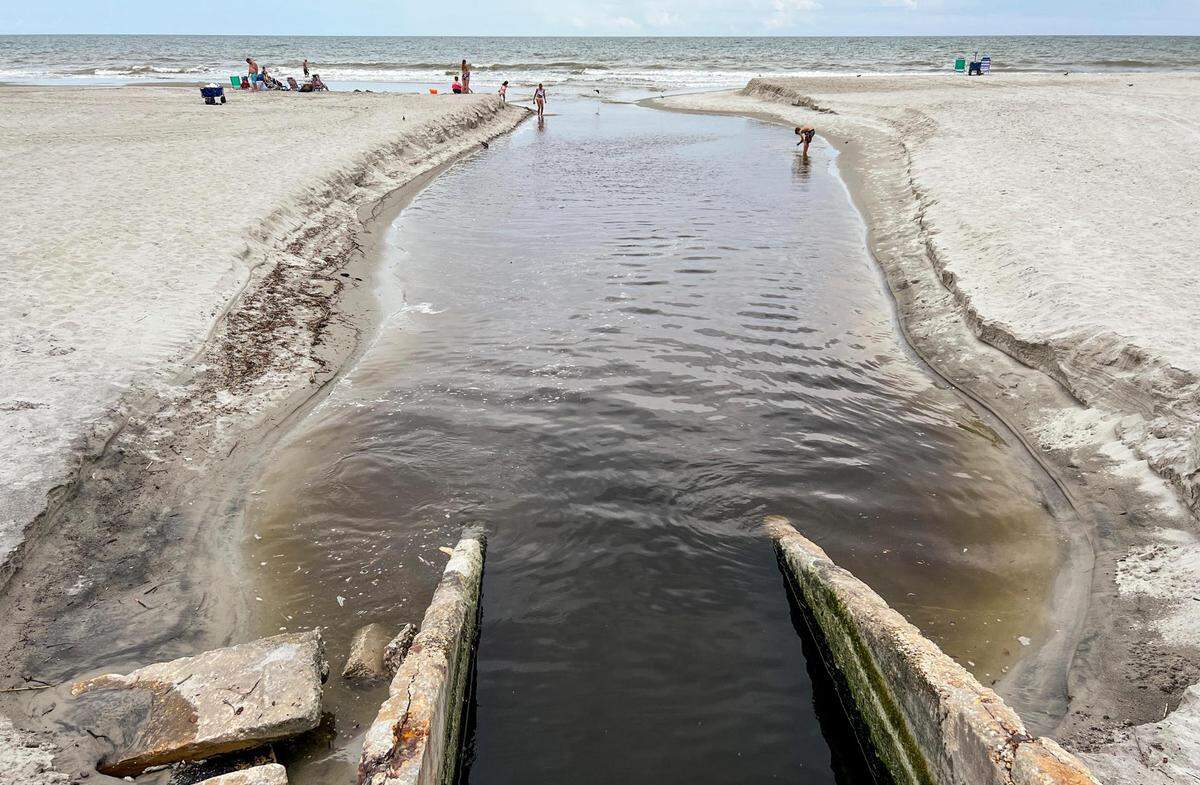
Here’s where they are located.
- Midway Swash
- 15th Avenue South street end
- Withers Swash
- 8th Avenue North
- 24th Avenue North
- 34th Avenue North
- 50th Avenue North
- Cane Patch Swash
Signs posted outside of these swimming advisories warn residents and tourists of the health risks associated with it.
“The amount of bacteria within a swash or coming from a stormwater pipe can vary, with elevated bacteria levels expected after heavy rains that wash pollution into those areas,” Ron Aiken, SCDHEC media relations director, said. “Depending on bacteria levels and the type of bacteria present, there could be a risk for gastrointestinal issues or skin infections.”
Carlie Wareham, a resident from Chattanooga, Tennesee who was visiting Myrtle Beach on Thursday, said she wished she was more aware of the advisories.
“I think to enjoy the water, you’re gonna have bacteria no matter where you go,” Wareham said. “More people might not come to the area to visit if you were more aware about this situation.”
According to Aiken, long-term swimming advisories are removed when water quality data shows improvement and less than 10 percent of the samples exceed the standard.
Horry County currently has 17 long-term swimming advisories in total.
One solution is to build larger drainage pipes to go out farther into the ocean
The City of Myrtle Beach is in the beginning stages of planning its fifth deep ocean outfall pipe. A $30 million dollar check from the state of South Carolina was announced last week that will help fund the project on 24th Avenue North.
Deepwater ocean outfalls are dual 84-inch diameter pipes that run along the beach and are about 1,500 feet under the Atlantic Ocean. The purpose of these deep ocean outfalls is to improve the water quality of the city’s beaches, according to city officials.
The City of Myrtle Beach already has four existing deep ocean outfall pipes.
- 25th Avenue South
- 4th Avenue North
- 14th Avenue North
- 53rd Avenue North
SCDHEC, as well as the City of Myrtle Beach routinely tests the state’s beaches for high levels of bacteria or rainwater.
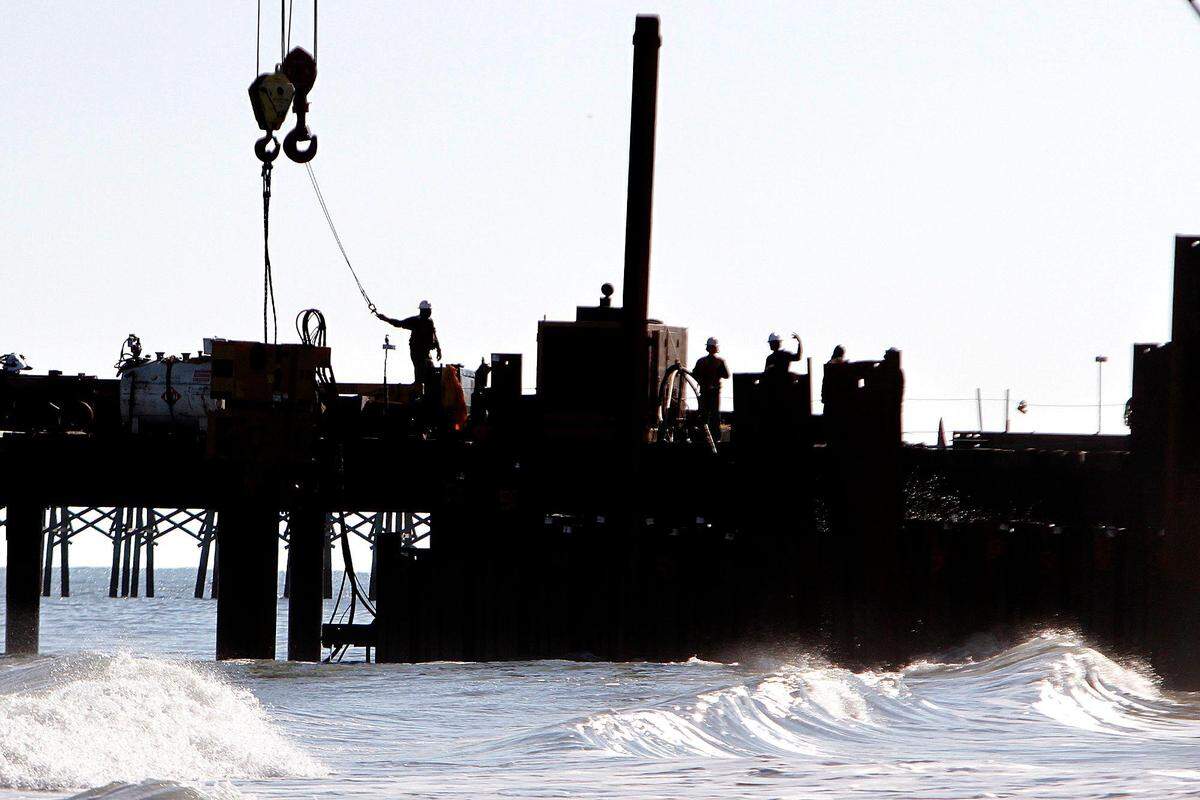
Aiken, SCDHEC’s spokesperson, said that the implementation of these drainage pipes have resulted in a downward trend of long-term swimming advisories.
Has this worked elsewhere?
According to city officials, some water quality solutions are modeled after Virginia Beach. Brad Delashmutt, the environmental health supervisor for Virginia Beach, said that they historically have not had many issues with water quality. Virginia Beach has similar ocean outfalls, two sites located at the northern end of the ocean front.
Delashmutt said the completion of the projects removed the drainage that went onto the beach.
“Once they moved them offshore, the sampling at those sites was a lot better,” Delashmutt said.
The project is expected to complete by early 2025, with work beginning in late 2023. At the same time, 11 existing drainage pipes will be removed from the beach.
The funding was included in this year’s state budget, and was approved by the General Assembly.
The project will happen in two phases. The first phase will install the dual outfall pipes from the west side of Ocean Boulevard, and the second phase includes installation of lateral header pipes along the boulevard, along with other improvements needed to capture overflow from existing stormwater at the former Myrtle Square Mall site.
The City of Myrtle Beach currently has four deep ocean outfalls, including the latest one at 24th Avenue North that was completed in 2016.
This story was originally published August 27, 2022 at 5:00 AM.