
Watching Ian and new to Myrtle Beach? Here’s what you need to know about storm prepping
For the second year straight year, an above-average number of named storms are churning in the Atlantic Ocean just a week ahead of hurricane season’s official start.
“While we hope our city doesn’t have to host any of these names, we do have a responsibility to prepare for the worst while we hope for the best,” Dana Rush, an employee in Myrtle Beach’s emergency management department, said May 24.
Atlantic hurricane season runs from June 1 through Nov. 30, and typically carries 14 named storms. In 2021, there were 21 named storms — four were major hurricanes and eight in all made landfall.
Tropical Storm Ian
On Sunday morning, Tropical Storm Ian remained on track for a potential landfall somewhere along the Florida Gulf coast later this week — with the Big Bend area in the center of a forecast track that could still change, as reported by the Miami Herald.
The storm continued to slowly organize but by Monday the National Hurricane Center expects it to morph into a monster, approaching Cuba on Tuesday as a Category 4 storm with 130 mph winds. The western part of the island, including Havana, was now under a hurricane warning. By early Wednesday, Ian is expected to be more than 100 miles west of Key West — a dangerous system with its final destination still up in the air, reports the Herald.
How busy is it getting out there?
The National Oceanic and Atmospheric Administration predicted May 24 a 65 percent chance of an above normal hurricane season up and down the Atlantic seaboard, with a 70 percent chance of three to six major hurricanes making landfall with sustained winds of at least 111 mph.
“We just experienced two extremely active hurricane seasons, marking the first time on record that two consecutive seasons exhausted the list of 21 storm names,” NOAA administrator Rick Spinrad said at a May 24 press conference.
Travis Glatki, head of Myrtle Beach’s emergency management department, said none of those storms are yet close enough to land to pose a threat.
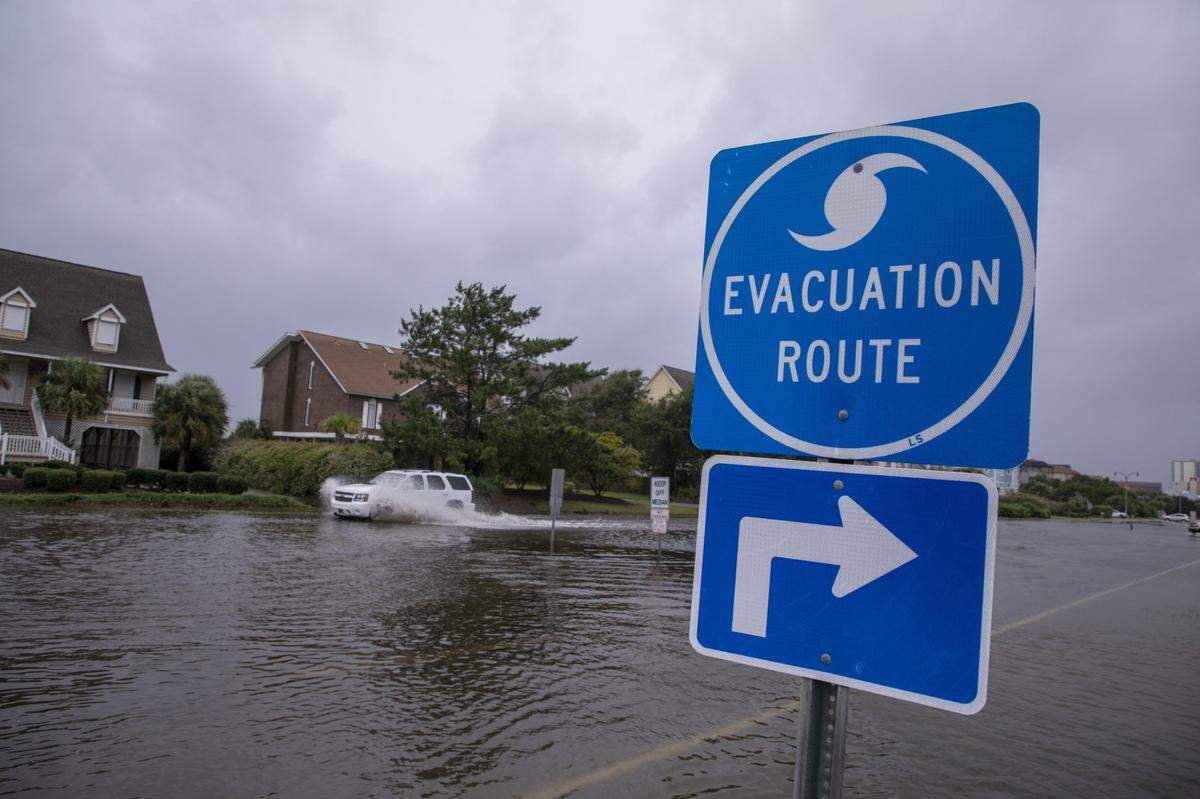
Storm-weary Horry County has tools to help plan and avoid a hurricane’s wrath
One of the most useful is the state’s “Know Your Zone” program, which allows people to determine their evacuation zones by entering their address into a database.
Now in place for all nine coastal counties, “Know Your Zone” was pioneered by Horry County’s emergency management department.
Local government websites including Horry County, Myrtle Beach and North Myrtle Beach all have portions dedicated to hurricane response and storm preparation, including lane reversals, re-entry procedures and links to road conditions and closures.
“The city is well prepared. Our EOC (emergency operations center) is ready. Every department has their own (supply) stores that they deem necessary,” Glatki said.
Don’t forget about storm surges, and know the difference between a watch and a warning
While a hurricane’s punishing winds and driving rains may devastate properties within its path, Horry County experienced firsthand the destruction of storm surges from hurricanes that hit further away.
In 2018, waters from Hurricane Florence caused more than $40 million worth of damage here and nearly $2 billion statewide, battering thousands of homes across the Grand Strand.
“When discussing hurricanes, storm surge is often the forgotten factor,” Rush said. “But we need to understand the storm surge is a constant flow of water above and beyond our normal high tide levels that we see.”
As a storm approaches land with winds of between 39 to 73 mph, forecasters may issue either a watch or warning. A storm watch — issued 48 hours ahead of time — means tropical storm or hurricane conditions are possible, while a warning — issued 72 hours out — means storm conditions are expected.
This story was originally published May 25, 2022 at 5:00 AM.