
Animal rights group joins Surfside Beach ‘goose whisperer’ to protect town’s birds
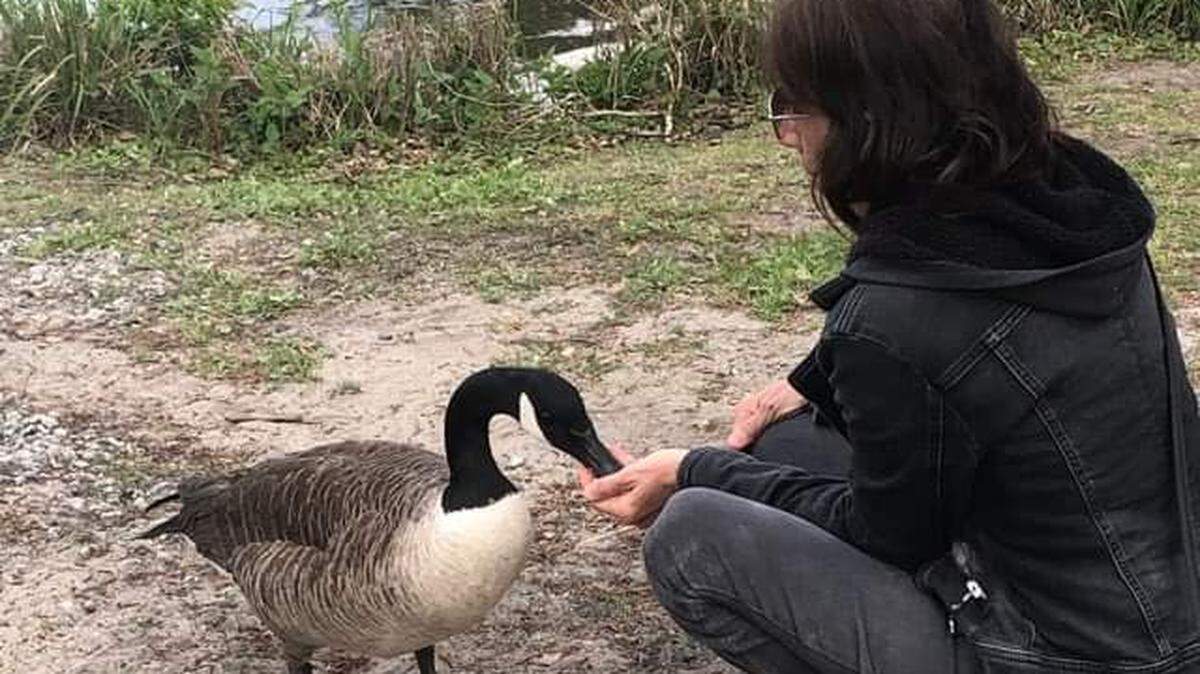
A local woman who has run afoul of Surfside Beach town laws in her efforts to protect Canadian geese has picked up a national ally.
Proudly self-proclaimed as the “goose whisperer,” Maria Pesce was cited last summer by police for feeding the birds and racked up several hundred dollars worth of fines for doing so during the past four years, she told The Sun News on Tuesday.
Most recently, Pesce agreed to a Feb. 21 plea bargain stemming from a July 2021 citation — prompting a California-based animal rights group, In Defense of Animals, to publicly support her. They’re calling on Surfside Beach leaders to draft a mitigation plan using non-lethal methods so the waterfowl can live harmoniously among residents.
Pesce, who lived in Surfside Beach about eight years, said she was forced to move out of town last year in part because of harassment and hate directed toward her because of her commitment to helping the birds.
“There’s no goose problem in Surfside Beach,” Pesce said. “There’s a hater problem.”
Under town ordinances, feeding of ducks and geese is prohibited because nourishing them “encourages waterfowl to halt their normal migrations and establish a residency in the town.”
Violators can be fined up to $200 for doing so, according to the ordinance, though Pesce claimed she’s been fined more than $400 on occasion.
“The human hand-feeding of water fowl within the town limits is resulting in a public nuisance by the deposit of fecal matter, garbage, debris, and filth on surrounding properties, and destruction of lawns and ornamental shrubs,” the town’s ordinance states.
But Pesce, who is diagnosed with Asperger syndrome, said she doesn’t feed the geese arbitrarily: her aim is to try and move them away from roads and other dangerous locations. She’s been distraught at numerous instances of seeing motorists intentionally aim to run over the geese, she told The Sun News.
South Carolina is home to more than 50,000 resident Canada geese and is on the migratory path of two other populations during the fall and winter months.
With their distinctive long, black necks, white cheeks and gray plumage, Canada geese can be attention grabbing.
But with development creeping onto their natural habitat, the congregation of geese at public parks, swimming areas and water treatment facilities can make them a nuisance.
“As both human and resident Canada goose populations have increased in South Carolina, conflicts have increased,” the state Department of Natural Resources notes on its website.
Solutions offered
Lisa Levinson, campaigns manager for In Defense of Animals, offered several methods Surfside Beach can pursue when it comes to managing its bird problem, including:
- Election of a wild animal expert to the town council and establish a Standing Animal Preservation Committee to resolve conflicts with area wildlife and implement humane, nonlethal coexistence strategies.
- Hosting educational meetings to educate homeowners about non-lethal goose stewardship strategies to coexist peacefully with wild animals.
- Restoration of native habitat, plant taller grasses, and/or native seed products that can be mowed short and naturally deters geese and ticks.
- Creation of a “tolerance zone” for geese away from human activities.
- Purchase of sweeper machines or hire employees to remove goose feces with minimal investment.
- Implementation of an egg oiling program with residents’ cooperation to reduce goose populations over time, along with new egg-oiling methods, like leaving one or two eggs un-oiled so geese won’t reproduce again in the same season.
- Combination of sonic repellents and trained herd dogs.
Mayor Bruce Hellyer did not immediately respond to a request for comment, but the he uneasy truce between the birds and Surfside Beach residents is nothing new. In 2020, Police Chief Kevin Hofmann said allegations of kidnapped geese led to several online threats and other crimes.
He also made it clear the town’s ordinances will be enforced.
“From the police department’s perspective, the ordinance regarding the feeding of waterfowl will be enforced. It is a public health hazard. Anyone seen feeding the geese will be cited,” Hoffman wrote on the department’s Facebook page.
Sun News reporter David Weissman contributed to this story.