Lengthy ER wait time, visitor policy causing frustration at Grand Strand hospital
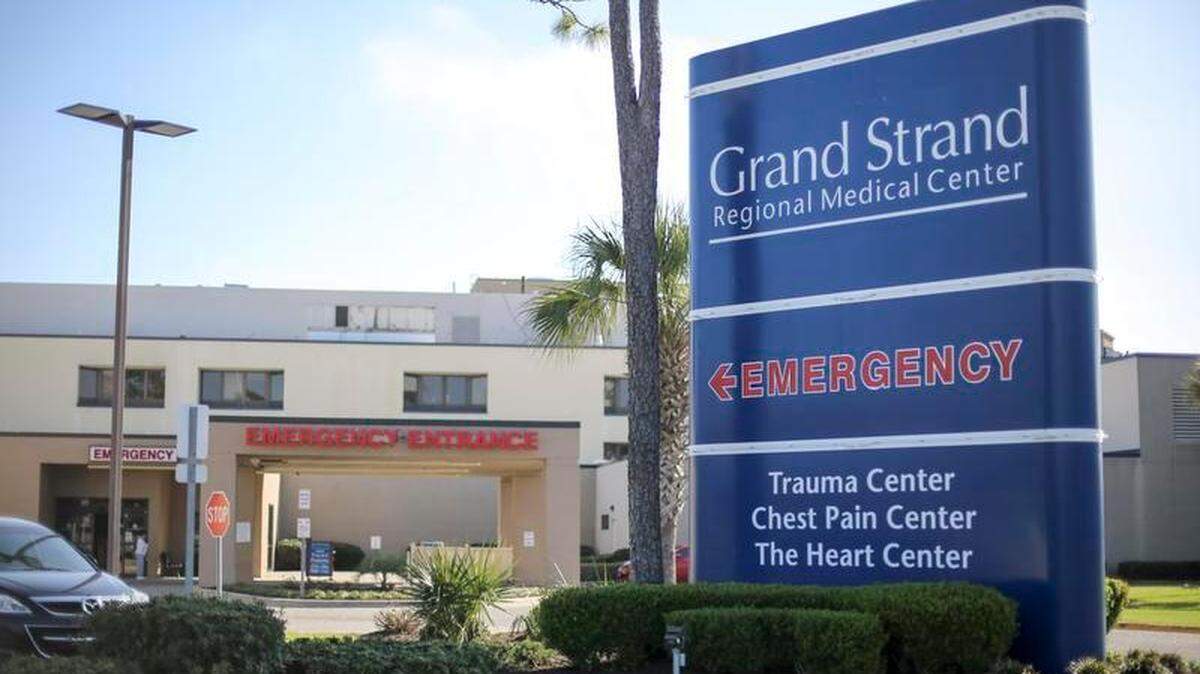
An already nerve-wracking trip to the Grand Strand Medical Center emergency room Monday night with her wheelchair-bound husband turned more so for Dana Brooks when she was advised to leave his side.
Brooks, of Socastee, said she brought her husband, James, to the hospital ER about 3 p.m. on the order of his infectious disease specialist. But after more than four hours of waiting, an employee told her and all other non-patients they needed to leave the waiting room due to concerns about spreading COVID-19.
“He’s in a wheelchair and can’t walk,” she told The Sun News. “I’m his caretaker. If he had to go to the bathroom, no one would be able to take him.”
After waiting in her car for several more hours, Brooks decided to just take him home as staff had informed them the wait could last more than 30 hours.
And that’s where he remained Tuesday afternoon, still unsure of what’s caused his loss of mobility in his legs.
The healthcare system’s website listed the average ER wait time as 10 minutes as of Tuesday afternoon at its Myrtle Beach facility on 82nd Parkway.
The website’s average ER wait times give an “estimated time in which patients will be seen by a provider after they register in the ER,” according to Katie Maclay, a hospital spokeswoman responding to questions about lengthy waits.
“Like other hospitals in our region, we are caring for an influx of COVID-19 patients,” Maclay wrote in an email. “This impacts our ER wait times. It also means some patients that need to be admitted stay in the ER until an inpatient bed is available for them.”
In response to a follow-up email questioning whether the healthcare system would specifically dispute the assertion that some patients have recently had to wait more than 30 hours before admission, she wrote that “patients are being cared for while in the ER” and repeated that “it may take some time” to get them transfered to an inpatient bed.
She didn’t address a question about asking visitors to leave the ER waiting room.
Hospitals in Horry and Georgetown counties have frequently reported patient surges during the pandemic and taken precautions related to visitors to try to reduce the potential for spreading COVID-19, though Brooks noted the waiting room wasn’t particularly crowded with just about a dozen people there Monday evening.
The website also notes its current visitor policy for emergency room patients recommends visitors remain in their vehicles while their loved one is waiting to be seen, but advises visitors to let staff know if there’s a special reason they need to stay by their side.
Brooks said her pleas to wait with her husband were denied.
“If I hadn’t taken him home, he’d still be waiting there alone,” she said, noting that staff told her the long wait was due to lack of available staff, not beds. “I’m still extremely angry.”

Brooks added that staff refused to help her move her husband back to the car because the decision was against medical advice, and they could be liable if something happened to him.
James Brooks, a 61-year-old retired golf instructor, was mostly healthy until last November, when a severe case of pneumonia kept him in the hospital for 28 days, including five on life support, Dana Brooks told The Sun News.
His doctors have been unable to determine the cause of the recent numbness in his legs, which is why he was advised to go the emergency room, she said.
“It’s scary, we still don’t know what’s wrong,” Dana Brooks said. “He can’t be sitting in a waiting room like this for more than 30 hours. This is a huge problem (in the Myrtle Beach area) that needs to be figured out.”