As downtown Myrtle Beach suffers, new plan shows potential to improve quality of life
After presenting a grim picture of downtown Myrtle Beach compared to city centers in other urban areas, planners and architects pitched a proposal to city government in hopes of alleviating problems.
The nonprofit One Grand Strand has been working for more than a year to study Myrtle Beach and analyze its issues, according to CEO Michael Clayton. The nonprofit, along with planners and architects, recognized the city’s efforts to improve the downtown area, but Clayton pointed out “decades of unfulfilled plans.” Part of the nonprofit’s goal is to couple the city’s plans with action in order to revitalize the downtown area.
“City government is doing its part, council is doing its part ... now it’s time for the private sector to step up,” Clayton said while addressing city council and the public at a special meeting Tuesday.
Myrtle Beach is falling behind
James Lima, president of James Lima Planning and Development, displayed statistics on safety, economic stability and overall attractiveness to residents and tourists that showed Myrtle Beach far behind in comparison to other cities in the country.
The city’s main ZIP code, 29577, is one of the top 20 most “economically distressed” in the state, according to a measure called the Distressed Communities Index referenced in Lima’s report.
The median household income in downtown Myrtle Beach is around $26,700 annually, just slightly above the federal poverty line of $26,200. The poverty level is 34% in the area, a figure which Lima called “alarming.”
“We are very concerned about the current state of your downtown, especially economically,” Lima said at Tuesday’s meeting.
The economic distress has directly impacted small businesses in the area and leisure and hospitality sectors, which are central to Myrtle Beach’s economy, according to Lima’s report.
Safety in the area also raised alarm for Lima. The downtown Myrtle Beach crime rate is six times the South Carolina average, which he pointed out can be increased by the influx of tourists visiting the area each year. But, more crime doesn’t necessarily mean more cops are the answer, he said.
“Myrtle Beach can’t police its way out of the current situation,” Lima’s presentation to council read.
Simply put, “good activity rounds out bad activity,” Lima said, meaning creating successful businesses and social activities in the area will help curb crime. He said the use of “place management” has been proven across the country to decrease crime rates instead of simply adding more police presence.
Those factors, along with the low walk and bike scores, the and the low number of parks and entertainment venues in downtown Myrtle Beach, present challenges for not only city council, but the city’s chamber of commerce and those in the private sector as well.
What does the development plan look like?
Lima and architect and urban planner Rob Lane unfolded a plan, called the One Grand Strand downtown development framework, to connect parts of downtown Myrtle Beach and develop them to increase safety, livability and entertainment in the area. They highlighted initiatives already jump-started by the city, including the plans to focus on the arts and innovations district and the existence of the Downtown Development Office.
But, as illustrated by Lima’s statistics, players in the city have to get to work.
“There’s no option to do nothing,” Lima said while addressing reporters Monday, adding the city has gotten a good start on some development plans.
The improvement of downtown Myrtle Beach is vital, Lima said, because downtown areas generally drive the city’s economy, contribute heavily to tax revenue and help a city compete for resources, talent and funding. The image of the city also relies on a thriving downtown, Lima said.
Myrtle Beach Mayor Brenda Bethune said the plan is something she hopes residents can “get excited about.”
“What you have seen is exactly why we have invested in the downtown master plan,” Bethune said, addressing the public. “There have been comments that the city is trying ti be a developer and that is not true but we are a partner. We cannot be alone and it does take partnerships, great partnerships, to do what we’re doing and transform Myrtle Beach.”
Myrtle Beach Planning Commission chairman William Pritchard expressed support for the plan, and said he expected to bring positive feedback from the commission to council soon. The planning commission is set to meet Tuesday afternoon to discuss the plan.
A few residents and business owners spoke at the meeting, asking for transparency about taxpayer contributions to the plans and keeping business owners in the loop on the plans moving forward.
Lane laid out specific plans to develop the Withers Swash Greenway area and entice people to build homes on that land. He noted there’s an opportunity for equity throughout this plan, specifically once Withers Swash Greenway becomes a bustling neighborhood.
“We don’t need to gentrify this place to build on it,” he said, addressing reporters.
The plan includes creating a hub of activity on Broadway Street as Lane painted a picture of residents living above the stores they shop at. The goal, he said, is to allow people to live, work and play in the downtown area. Lane emphasized that smaller scale plans are just as important as the larger strategies in order to connect the various parts of downtown.
A plan to bring Coastal Carolina University into the downtown area of Myrtle Beach is integral to the development, Lane said, as most successful innovations districts have an “anchor” institution. If CCU has more of a presence in the area, students will be more inclined to spend time in downtown Myrtle Beach, he said.
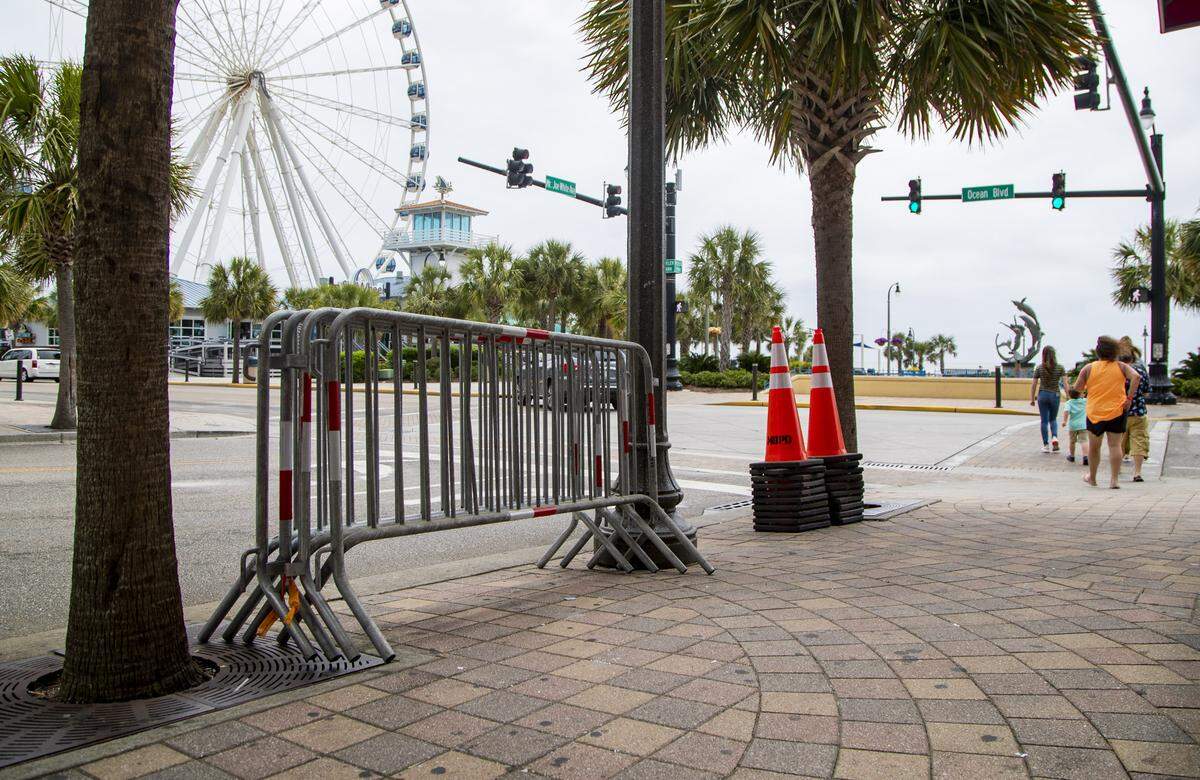
Lane also focused on the improvement of the oceanfront and boardwalk. Though parts of the boardwalk are thriving, it feels disconnected from Broadway Street and other parts of the city just a bit more inland, Lane said. He wants to make sure the attractions on the oceanfront are at the front of people’s minds when they spend time in Myrtle Beach.
Between the four areas Lane focused on — Broadway Street, Withers Swash Greenway, the CCU Corridor and the oceanfront and boardwalk — he gave examples of how different people should be able to enjoy a full day in Myrtle Beach.
From a CCU student hanging out at a concert at the beach, to visiting families checking out amusement parks and the proposed “Rails to Trails” pathway, Lane said the plan should include everyone, tourists and residents alike.
COVID-19 impact on Myrtle Beach’s growth
While COVID-19 and the resulting economic recession caused many urban planning projects to come to a screeching halt and derail strategies to improve infrastructure, the pandemic also revealed the need for local economies to become more resilient, Lima said.
That’s especially important for places like Myrtle Beach, where jobs in tourism are common and the pandemic ravaged the job market this spring.
Myrtle Beach should be able to come back better than before the public health crisis, not just return to the “still-vulnerable” state before the pandemic, Lima said.
Perhaps one of the most jarring impacts of the pandemic was revealing the vulnerability of an economy that relies heavily on one industry. With 45% of downtown Myrtle Beach jobs in the hospitality sector, Lima stressed the importance of diversifying the economy and becoming a year-round destination instead of a seasonal tourist hotspot.
What comes next?
Lane and Lima recommended forming a Place Management Organization to run day-to-day operations, which would be comprised of a board and staff from both the public and private sectors. Contrary to the disbanded Downtown Redevelopment Corporation, the PMO wouldn’t operate within city government.
Planners recommended council direct City Manager John Pedersen to work with property and business owners and draft a business plan with a budget and sources of funding to support the PMO for council’s approval by February 2021. They also recommend council adopt the One Grand Strand framework into the existing downtown master plan. Pedersen is set to retire in the coming months, when the incoming city manager would take over the tasks.
The City of Myrtle Beach, Myrtle Beach Chamber of Commerce, One Grand Strand and downtown business and property owners would all be involved with the PMO in a model called “networked governance.”
The funding for the organization would come from municipal improvement districts, tax increment funding and outside sponsorships or public and philanthropic contributions under Lima and Lane’s plan.
The timeline of the project is a bit of a gray area, as Lane and Lima pointed out that parts of the plan can be implemented immediately, while others will take time.
This story was originally published December 1, 2020 at 10:37 AM.