Does policing in Horry County need to change? Activists, top cops discuss reform
A number of public safety officials appeared on a panel Monday night to discuss policing, the relationship between officers and communities of color and reform following national protests and racial outcry over the deaths of Black men and women at the hands of police officers.
Horry County Police Chief Joe Hill was joined by Chief Deputy Tom Fox, Myrtle Beach Police Chief Amy Prock and North Myrtle Beach Police Chief Thomas Dennis. The panel, billed as a “Virtual Unity Day” was produced by The Peaceful Protest, a group of activists whose mission is to educate others about race and social justice.
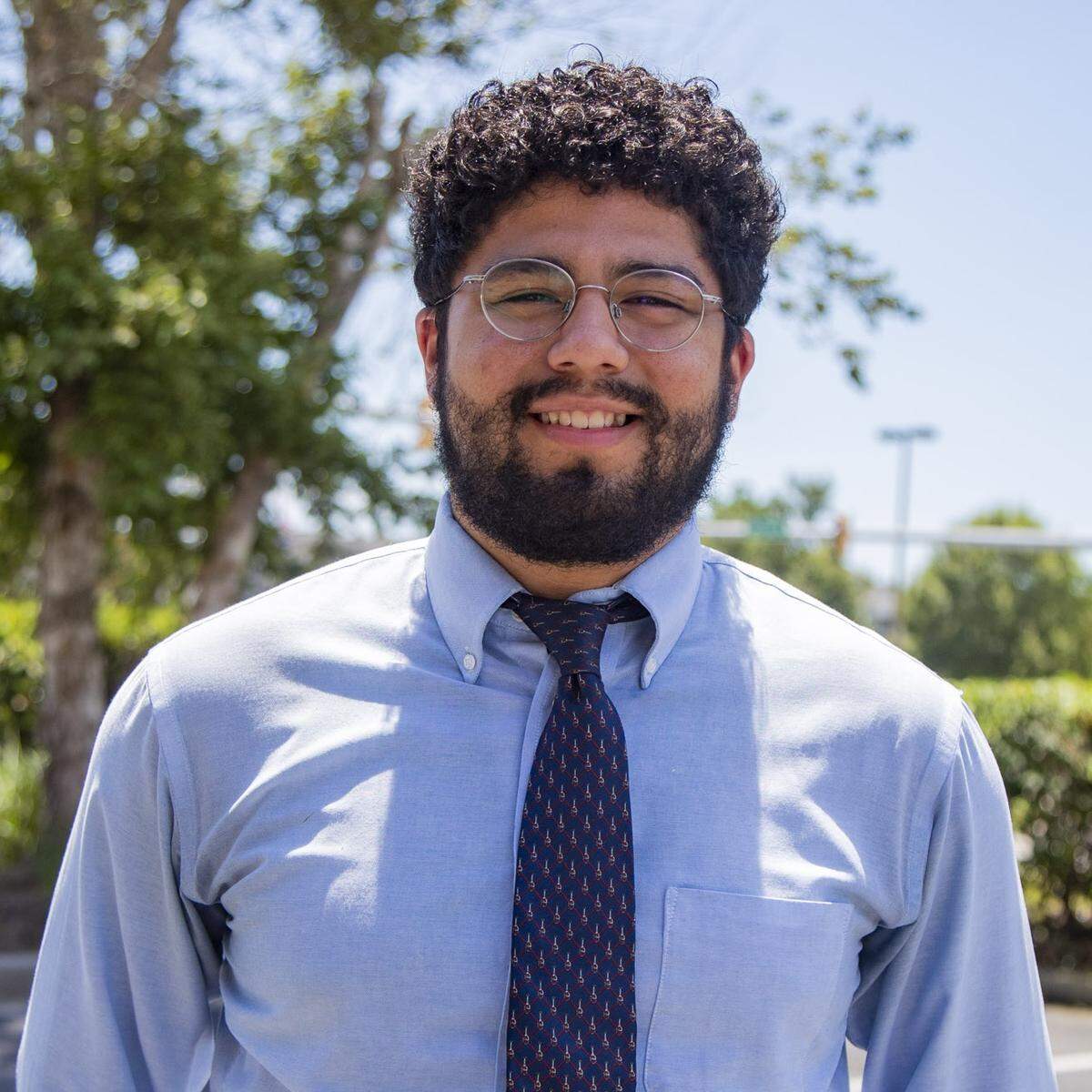
The discussion, led by Mia Angelo, covered a wide range of topics. She asked about community policing, civilian involvement in policing and the 13th Amendment, but the conversation livened up when she asked the chiefs about police reform.
Chief Hill, who is Black and was first to answer most of the questions, said a big problem is bias.
“We all have implicit bias, it could be color, it could be gender, it could be where someone lives,” Hill said. “The best way to address that is to have a dialogue.”
But dialogue only goes so far and Hill recognized the need for training which he says his department already does. He also told the panel that police aren’t perfect.
Police shootings in Horry County often end with few officers facing criminal charges. One notable police case gained national attention for use-of-force questions and fervor over no knock warrants.
In 2015, the 15th Judicial Circuit Drug Enforcement Unit raided the Myrtle Beach home of Julian Betton and shot him several times. They went to the home over a small amount of marijuana. The unit is a multi-jurisdictional task force that operates in both Horry and Georgetown counties.
Video surveillance showed officers approaching Betton’s door and using a battering ram to force their way inside.
Officers told investigators Betton fired at them, but testing showed his gun was never fired. Betton was left paralyzed in the shooting.
A civil suit against the city, the DEU and the officers involved ended in a multi-million dollar settlement.
“We are all human beings, we make mistakes,” Hill said to the panel. Hill was not yet working in Horry County when Betton was shot and wasn’t talking directly about the case. “When we make a mistake we own it, we work hard to correct it so it doesn’t happen again and that’s how you evolve law enforcement.”
Fox echoed that statement, calling police policies and procedures are a “living document” that is constantly changing.
“Normally policy changes are made because of mistakes that are made,” he said while listing county policies like duty to intervene and banning chokeholds. “We reform our police department through the change in policies.”
The Horry County Police policy states “any officer present and observing another officer responding to active resistance or performing a show of force that is clearly beyond that which is objectively reasonable under the circumstances will, when in a position to do so, intercede to stop the unreasonable response to active resistance in order to prevent unnecessary injury.
An officer who observes another officer or employee respond to active resistance or perform a show of force that exceeds the degree of force permitted by law will promptly report these observations to a supervisor.”
North Myrtle Beach and Myrtle Beach Police both have similar policies.
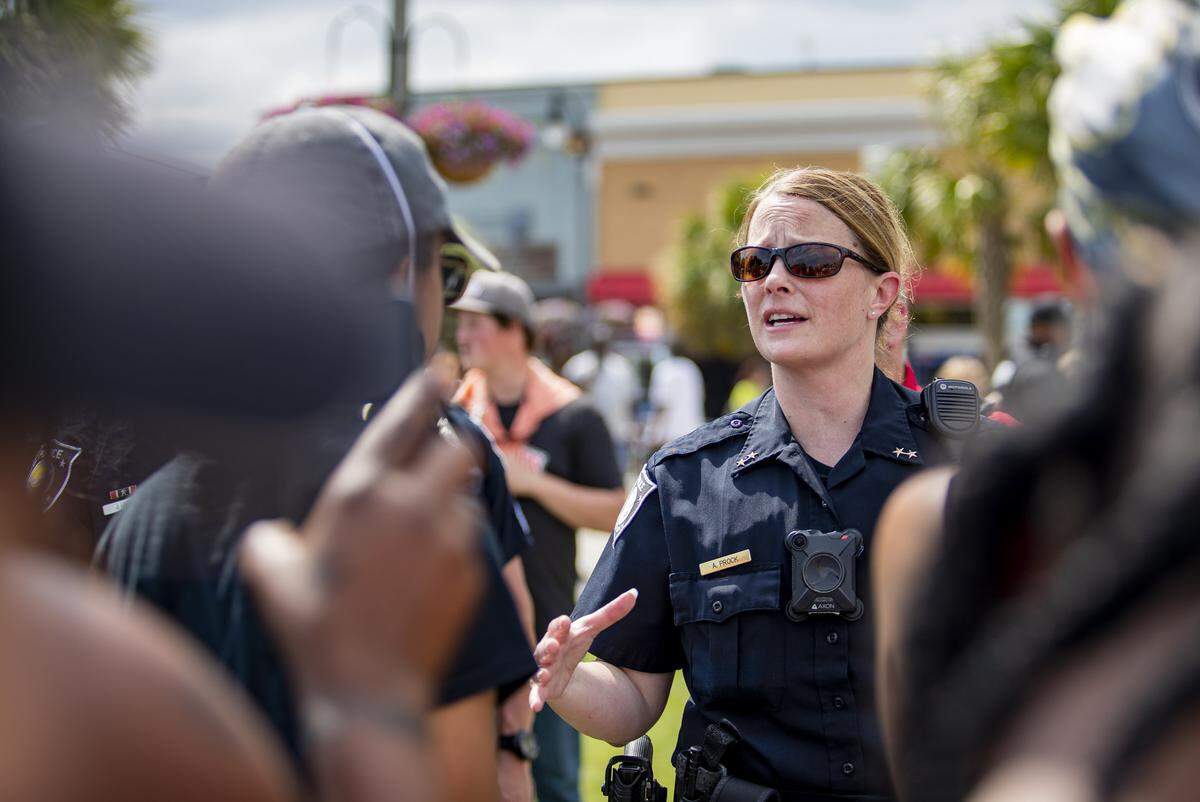
Prock and Dennis both agreed that reform is ongoing and comes from the community.
Dennis added, “When we don’t listen to other viewpoints, we aren’t doing anyone any good.”
The Peaceful Protest was only founded a few months ago during the protests that followed the May 25 death of George Floyd, who died while a Minnesota police officer put his knee on his neck. Angelo met other activists at protests and decided to take it a step further. During protests it’s easy to get swept into an “us vs. them” mentality but for Angelo it’s more about what happens after the streets settle down, she said.
“Protests are just an attention grabber, it’s what you do afterwards that truly matters,” Angelo said.
For the recent Coastal Carolina grad, talking to police is an important step in moving toward a safer future for Black people.
“In order for anything to get changed we have to be willing to listen to both sides,” she said. “We want to be able to sit at the same table.”
Angelo credited Myrtle Beach police with being very involved in the community and building trust.
“We got lucky,” she said.
Prock told the panel partnering with community members allows communities to be safer. She noted the Crisis Intervention program that assists police with deescalation and people with mental health issues.
“It has been very instrumental in addressing ongoing issues in our community with those that are challenged with mental health and substance abuse issues,” she said.
The panel later brought in Conway Mayor Barbara Blain-Bellamy and State Representative Terry Alexander who encouraged members of the community to vote if they want to see change.
They stressed voting locally, telling the panel that local elections will impact day to day life more than national elections.
“I think it’s a bit of a sacrilege when people don’t see their place in our electoral process,” Bellamy said.