Accountant: Myrtle Beach using ‘questionable practice’ in Market Common spending
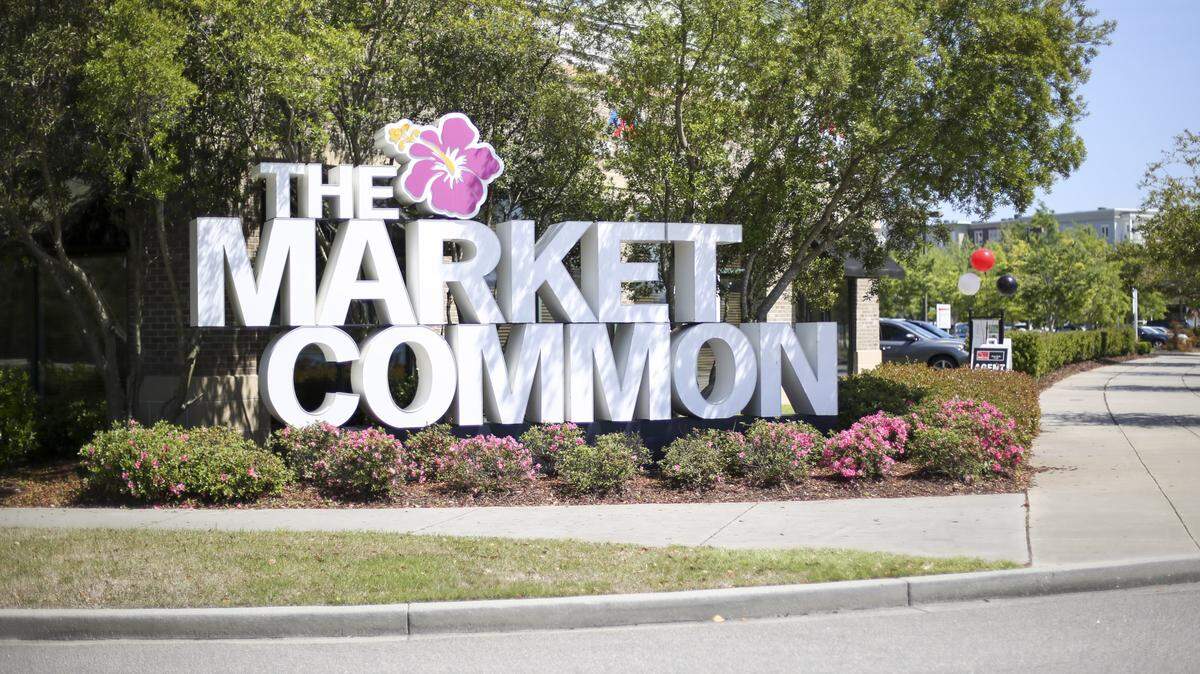
A detailed review of Myrtle Beach’s spending related to the redevelopment of the former Air Force base has revealed millions in potentially misspent funds among other issues, according to an accountant hired in a lawsuit against the city.
The lawsuit, which has been ongoing for more than a year, centers around the redevelopment of the area that includes Market Common. Horry County and Horry County Schools allege the city and Myrtle Beach Air Force Base Redevelopment Authority are misusing tax increment financing and taxpayer funds on a project that has already been completed.
The county and school district retained McAbee, Schwartz, Holliday & Co., a Spartanburg-based accounting and consulting firm, to audit the city’s spending as part of the suit.
Tax revenues have been frozen on properties within the former Air Force base area since 2004 while the assessed value of the land has increased from about $4.2 million to more than $38.2 million, according to court documents.
Quincy Halliday, a CPA with the firm, previously testified in a November affidavit that his firm had identified several problems, including the use of $1.6 million in TIF funds on unrelated debt, but he needed more documentation from the city to confirm those suspicions.
After reviewing more documents provided by the city, Halliday submitted a new affidavit into court records Tuesday confirming those previously identified issues while also detailing additional issues.
Halliday notes that records appear to show the city spending its own money on projects within the TIF district and then reimbursing itself with TIF funds, which he describes as a “questionable practice,” especially considering the TIF accounts contain enough money to pay for those projects at the time.
“Based on the information produced to date, it is possible that the City is attempting to evade accountability for management of its own revenues by using the TIF account as an expense fund,” he said in the affidavit.
Halliday points out that Michael Shelton, the city’s chief financial officer, claimed in a separate affidavit that the city chooses to spend its own money to assist with the redevelopment project and is then entitled to recover that expense.
Records also show two reimbursement payments to the city from the TIF fund totaling about $140,000 that don’t have any explanation or supporting documentation, Halliday alleges.
The TIF general operating account also ended with a negative balance each year 2015-2019, according to Halliday, which suggests the city is overspending those funds. The negative balances ranged from about $85,000 in 2016 to $678,000 in 2018, the affidavit states.
Halliday also takes issue with documentation that appears to show expenses for a multi-part project being moved from one phase to another. He specifically cites the Grand Park project, as documentation shows the city spending $1.2 million on Phase 4 of the project in 2012, while that money appears to have been for work on Phase 3 after the contractor changed the scope of its contract from $4.8 million to more than $6 million through change orders.
This appears to be an attempt to evade the city’s procurement code to solicit bids for work that was supposed to be Phase 4, Halliday alleges. Accompanying documentation shows that work was completed by A.O. Hardee and Son Inc.
Halliday concluded his affidavit by pointing to more documents his firm still needs from the city to complete its analysis.
Mark Kruea, a city spokesman, responded that “these latest claims show either a misunderstanding of the facts or the law, and possibly both,” alleging that that that the plaintiffs have no actual case.
Kreua cited several examples of Halliday’s misunderstanding, including that the city spending its own money of TIF-related projects is only because there was insufficient revenue in the TIF fund to support implementation.
“By the affidavit’s own admission, the City has spent, at minimum, $3,463,924.36 on that project and has recovered to date only the $1.2 million referenced,” he wrote in an email to The Sun News.
Kruea also noted that the city doesn’t make disbursements from the trust account where all TIF funds are accumulated, but rather it must file for reimbursement from the trustee of that account based upon its documentation of funds it spent on redevelopment projects.
The lawsuit remains ongoing with no court date set. In August, the judge denied the plaintiffs’ motion for preliminary injunction, which would have required the city and authority to stop using the TIF fund beyond what was necessary to pay debt service on the 2016 bond. The judge also is still considering the defendants’ motion to dismiss the case.
The public agencies involved have spent more than $500,000 combined in legal fees, according to multiple open records requests from The Sun News.