
‘Lucky to have these lands’: How changes to Waccamaw Refuge affect flooding, wildlife
Ninety-eight billion gallons of water sat on the Waccamaw National Wildlife Refuge at the peak of the flooding following Hurricane Florence in 2018.
It was almost the same amount of water that the Grand Strand Water and Sewer Authority processes in seven years, Refuge Manager Craig Sasser said. But as the devastation of the record-breaking flood destroyed houses and upended lives, the protected wetlands at the reserve were filtering water and keeping it out of more homes.
The Waccamaw National Wildlife Refuge is integral to the environmental heritage of Horry County. It protects native forests, flood mitigating wetlands, endangered animals and historical sites dating back to the Revolutionary War.
Its border runs from Conway all the way into Georgetown County. Sasser, who works for the National Fish and Wildlife Service, said flood mitigation is just one of many ways the refuge helps the Pee Dee region.
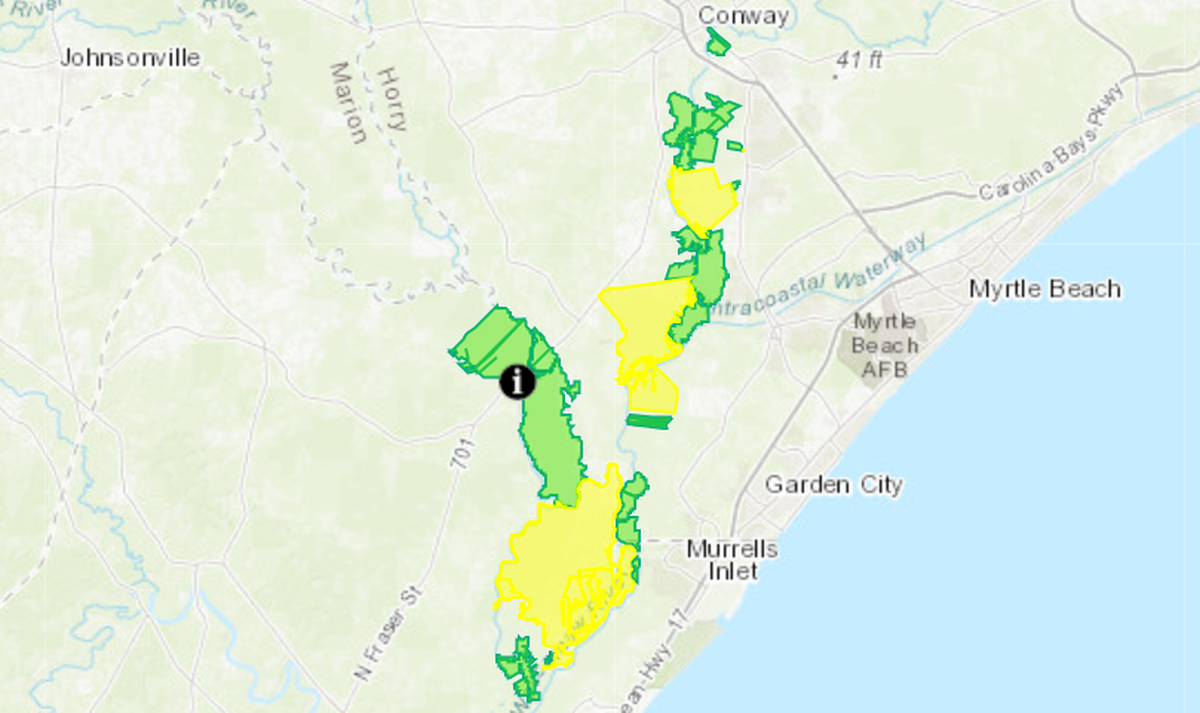
“It is some of the most diverse freshwater systems in the Southeast,” Sasser said. “There is also forest wetlands and really unique habitats like Sandy Island. You’ve got multiple rivers, tidal influence and all of that combined makes it a really unique place.”
In the near future, Sasser wants to exchange some of the refuge’s land to help it further its environmental mission. While some land will be taken out of the refuge’s boundary, he believes the new land will open up further possibilities for Horry County’s largest tract of environmentally protected land.
Why the refuge exists
The refuge was founded in 1997 with a mission to “protect habitat for wetland-dependent wildlife associated with the floodplain basins of the Waccamaw and Great and Little Pee Dee Rivers.”
It has an acquisition boundary of nearly 55,000 acres in Horry, Georgetown and Marion counties. It owns or leases 34,000 of those acres. Sasser said people without a boat might not even realize the refuge is there, but most boaters recognize the refuge as the stretch of the river without many homes.
A key purpose of hindering development near the refuge is to protect the native trees and keep our drinking water safe. Waccamaw Riverkeeper Cara Schildtknecht said it’s hard to give a value to all the refuge does for the river itself and the occupants of Horry County.
“Putting a dollar value on it is nearly impossible,” she said.
A healthy river is safe for people to swim in, is used for drinking water and is a safe habitat for fish, Schildtknecht said.
For the Waccamaw, all three are possible, and a lot of the credit belongs to the protected land on the refuge. It helps keep runoff and pollutants from getting into the river.
GSWSA pulls the Grand Strand’s drinking water from a creek just off the refuge, filters it and then sends it out for consumption to all housing developments and hotels. Sasser said protecting this supply is important for the well-being of the community.
“The drinking water is the goose that laid the golden egg,” Sasser said.
In addition, the refuge is home to many species and gives wildlife scientists plenty to study. People have seen monarch butterflies breeding on the refuge and many threatened species call the refuge home, like the red-cockaded woodpecker, which is on the federal endangered species list.
It is also home to hogs, turkeys and deer. When land is added, Sasser said it is his goal to preserve the hunting and fishing grounds many people grew up with while also protecting its habitats.
There are also 1,000-year-old trees on the land and other rare plants on the protected refuge boundaries.
A lot of the land the refuge is looking to purchase contains some of the most biologically diverse ecosystems in North America like the hardwood wetlands. A report compiled by the refuge said there has been a 70 to 84 percent decline in the hardwoods as development in coastal areas has grown.
While butterflies get Sasser excited, most people seem interested in the flood-mitigation opportunities the refuge provides.
But you don’t get the same type of flood mitigation without protecting the land. The trees and wetlands act like a sponge — they can store and filter water that would otherwise go into developed areas.
Modification plans
Keeping the conservation together is ideal for migratory birds, according to the official planning document to change the refuge’s borders. The land chosen to be added to the refuge was picked based off its habitats, flood-mitigating properties and proximity to the current refuge.
The modification plan is to remove 6,849 acres of land from the reserve’s acquisition boundary and replace it with 6,638 acres in different areas along the Waccamaw River.
Being placed into the acquisition boundary does not mean the refuge immediately has to buy it. In fact, Sasser said the land being removed is largely not owned by the refuge itself. A lot of this land is already well protected by the South Carolina Department of Natural Resources or in use by the Grand Strand Water and Sewer Authority.
For example, the land owned by GSWSA was clear cut in 2010 with the intent of putting a marine industrial park, so it does not need to be in the refuge.
The land being added to the boundary can be purchased by the refuge in the future if the property owner is willing to sell. Sasser said conversations are already beginning with landowners who might be willing to sell.
If the refuge bought all the lands added into its acquisition boundary, it would cost the refuge over $8 million at fair-market value, according to the report.
One big addition will be Carvers Bay, the largest Carolina bay in Georgetown County. According to the modification plan, this bay is considered to be one of the most important American black bear preserves in the area.
Old logging roads allow for folks to see inside the habitats of a Carolina bay, Sasser said. Signs of bear life are everywhere, with many of the electric poles along a canal having massive scratch marks from male bears marking territory.
Hasty Point Plantation sits on the banks of the Great Pee Dee River and connects the Plantersville Scenic Byway to the river, which Sasser believes will be a great draw for tourists. It also has a boat landing, historic rice barn and scenic views on the landscaped lawn.
“It is the beauty queen of our boundary acquisition,” Sasser said.
The modification plans just went through a public comment period. It must now be approved by the Fish and Wildlife Service before the acquisition boundary will officially be changed. Sasser hopes to have approval by November.
The benefits
The land in the refuge, both currently and in the future, have a direct impact on the Grand Strand.
A part of the modification is to mitigate the impacts of sea-level rise, development of wetlands and routine flooding. The protected land of the refuge helped many Horry County residents get 15 percent off their federal flood insurance rates.
The refuge is primarily a safe haven for nature, but it also serves as an educational center and tourist area. The welcome center on U.S. Highway 701 in Georgetown County has a nature trail and an exhibit about the Pee Dee region.
A refuge-owned trail is also close to Coastal Carolina University and is popular among students and Conway residents.
Sasser also helps facilitate hunting kids for disabled veterans, kids and a variety of other charity events. He wants his refuge to be a place anyone can come and engage with nature.
Sasser wants his refuge to be a place anyone can come and engage with nature. He often facilitates hunts for kids and disabled veterans along with a variety of other charity events.
Coastal Conservation League Director Erin Hardwick Pate said these conservation lands are a result of public support. Horry County has fewer acres of conservation lands than the other coastal SC counties, so protecting and expanding conservation land here is important, she said.
“It is a critical part of the green belt around areas that are growing and becoming more urban,” Pate said. “It really provides a conserved, well-managed tract of land right in the middle of our growing area.”
Schildtknecht said the way to contribute to conservation efforts is to use them and show that people want to see more natural areas like the refuge.
“We all work together to protect lands along the Waccamaw River and in Horry County to protect the floodplain and wetlands,” Schildtknecht said. “We’re really lucky to have these lands.”