
With Horry County projected to nearly double in population, here’s the plan for growth
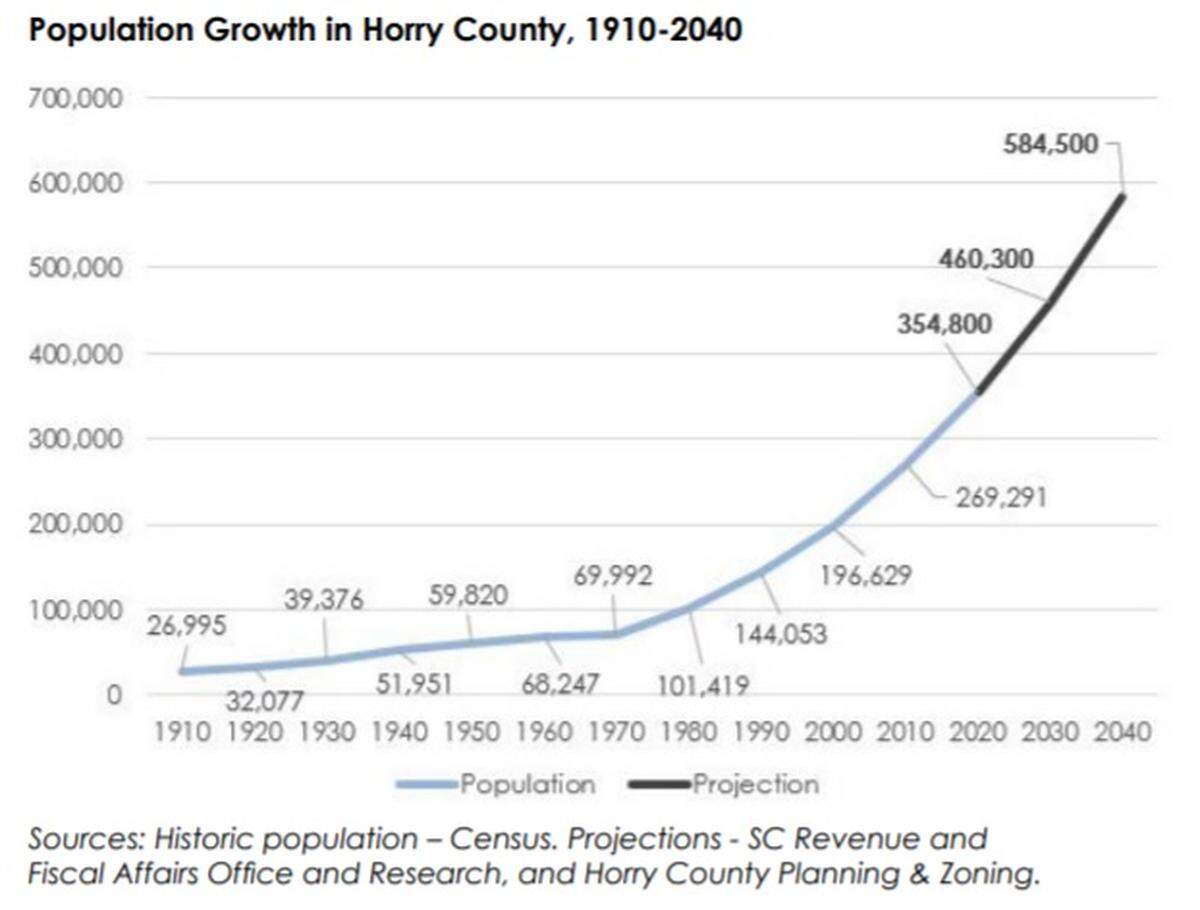
Horry County could welcome nearly 300,000 residents in the next 20 years.
On Monday, Horry County Council unanimously passed the first reading of a plan to deal with the growth. Once implemented, the plan will provide a roadmap for development over the next decade in unincorporated Horry County.
“What took 100 years of population growth is going to happen in the next 20 years,” said Horry County Planning Commission Chair Steven Neeves. “And we don’t get to stop it. … The best we can do is to manage it and manage it smartly.”
Imagine 2040 will have to pass two more readings until it is formally adopted by the county. At council’s Sept. 3 meeting, there will be a chance for the public to address any concerns in public comment.
The plan is hundreds of pages long and can be found on the Horry County website, and the Horry County GIS Map also lets people see how the plan will affect their individual property.
Here is a summary for what development you can expect across Horry County’s communities.
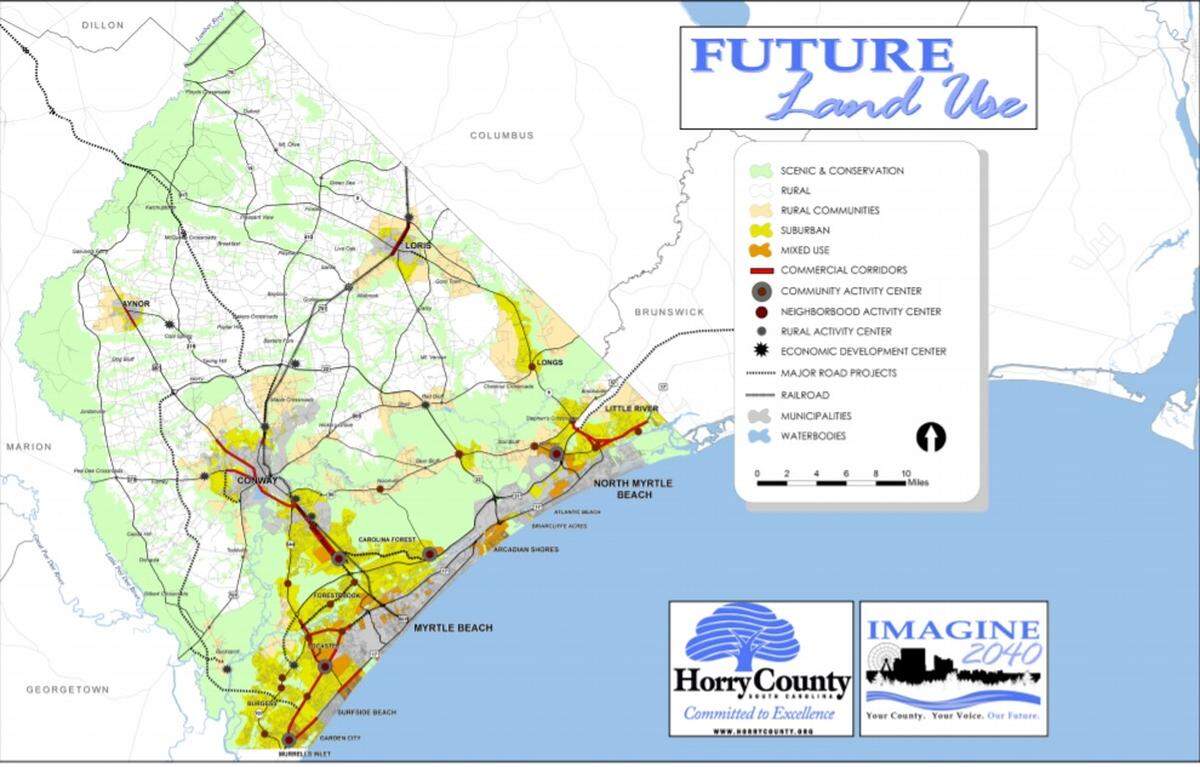
High population areas
A majority of people moving to the area live in unincorporated Horry County, Principle Planner Leigh Kane said.
“The stress is on the county,” Kane said.
The suburban are close to the Atlantic Ocean and Intracoastal Waterway with some exceptions. The more obvious areas include Burgess, Forestbrook, Socastee and Carolina Forest. In addition, Longs and the unincorporated outskirts of Conway also are considered suburban.
In these areas, housing subdivisions are the main type of development allowed with opportunity for businesses to move in closer to where people live. The hope is to avoid urban sprawl, which leads to congested roads.
“High density is going to be our friend, sprawl is going to be our enemy,” Neeves said.
Within the plan, it states that any building in these areas will be higher density single-family and multifamily living that are inclusive to healthy living and environmentally conscious construction. Typically, it will be required that any new neighborhood build recreational green space and retention ponds.
To help get businesses closer to homes, there is also area set aside for neighborhood/community centers like the Town Center in Carolina Forest.
A key part for both is making walking and driving easier through infrastructure improvements that make the areas look cleaner. This includes walking paths, revamped roads and renovating aging buildings to look more like a “downtown” storefront area even along commercial corridors like U.S. Highway 501.
One final key element for the more urban areas is using less space to build more by allowing business and residential to share buildings. The mixed-use sections are typically in the most urban parts of the county.
It looks like a high-rise apartment complex with stores on the first floor, parking garages and apartments/condos on top.
The benefit of building vertically is that it can contain the development to the eastern part of the county, preserving the rural communities west of the Waccamaw River. It can also lead to people walking, biking or taking a golf cart to the store instead of clogging up roads.
The hope is to make traveling Horry County easier and faster by giving people less of a reason to drive long distances. And by keeping populations contained to areas closer to the beach, Horry County can help preserve its more rural areas.
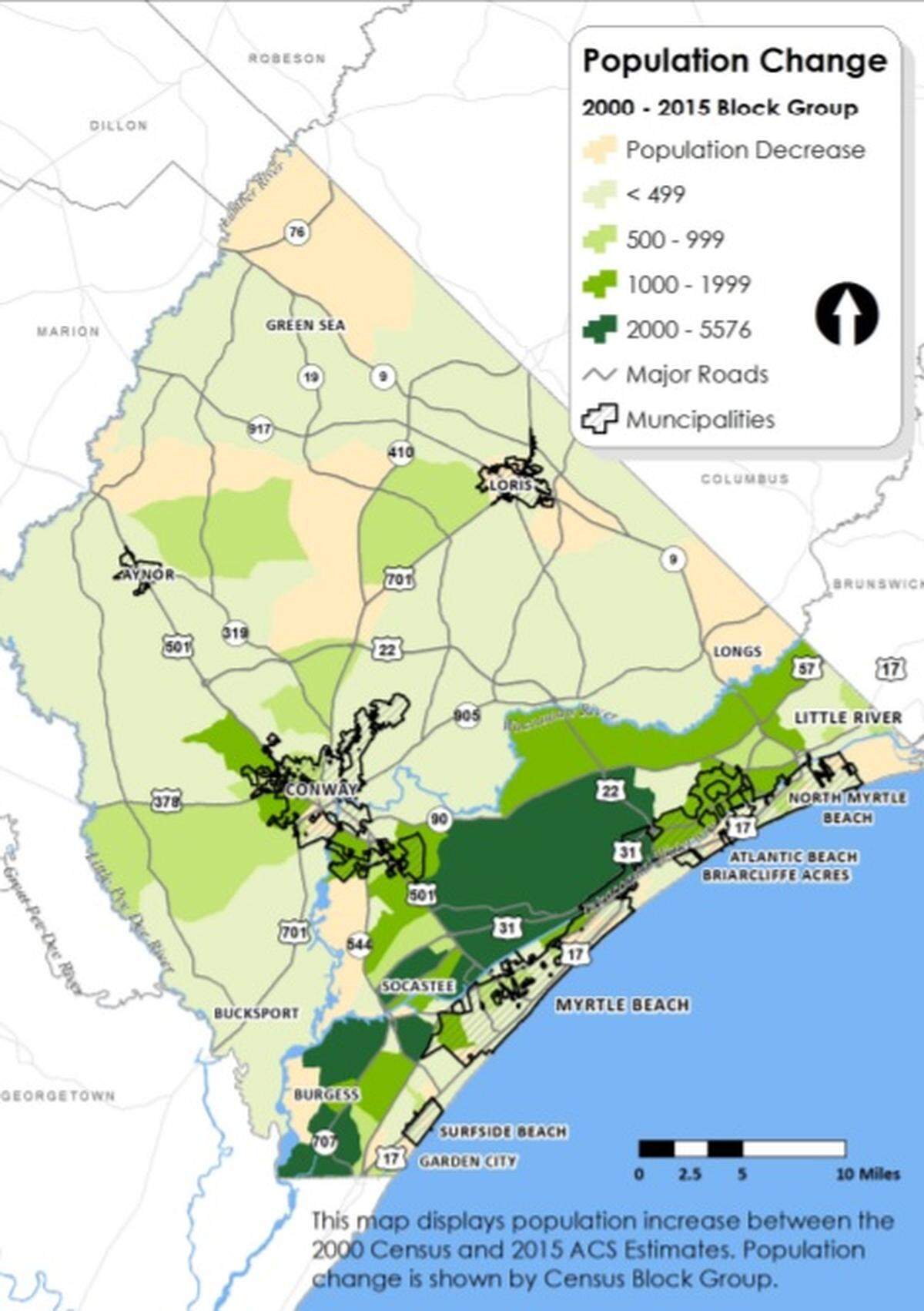
Low population areas
For the less populated areas of the county, the 2040 plan includes areas for rural, rural activities and rural communities. Protecting the culture in these areas is a priority of the plan, Neeves said.
“If we want as a community to see rural community last, then we are going to have to do a really good job of managing our growth,” he said.
The aim of the plan is to make sure the history and character of these communities are not ruined by the rapid growth, so the types of development will be limited.
In the rural areas, folks can expect to see primary uses include low-density housing and wide open field designated for farming and farm-related services. Some secondary uses include eco-tourism sites for camping, shooting ranges or mining.
Rural areas are typically located west of Conway, outside of the Loris and Aynor city limits, and away from any major roads.
The plan also addresses communities that are transitioning into “rural communities” that may require more services than remote farm land.
These areas are all over the county and typically found along major roads like along S.C. Highway 90. These are areas that are seeing development but not at the density of the suburban areas of the county.
In a rural community, medium-density housing is allowed on the condition it doesn’t threaten the character of the community or damage environmentally protected areas. Other conditional land uses include shooting ranges, campground or mobile home parks.
Just like with the more urban areas, the hope here is to encourage more local shopping close to homes.
While some businesses can operate in rural communities, the plan recommends businesses stick to rural activity areas. This would look like shops to get the basic necessities, restaurants and gas stations.
Scenic and environment
In all portions of the plan, flooding is a concern that future developments must address. The plan specifically says climate change is leading to higher oceans and bigger rain events, leading to more record-breaking floods.
“One of the major components of flood resilience is discouraging development within the floodplain and along river corridors. By avoiding increasing the number of communities at risk, while still meeting housing, services, and facilities needs, the County can improve flooding resilience,” the plan states.
To be clear, this plan cannot change the location of existing or already approved housing developments along waterways. It will, however, influence where homes are built in the future.
The 2040 plan designates 38 percent of the county as scenic and conservation areas, which typically means they are wetlands. Unlike the rural areas which are almost all in the western half of the county, much of the scenic land is east of Conway.
Typically, scenic land’s uses are outdoors with limited impacts on the nature surrounding it. Primary uses include recreation, forestry and agriculture. Secondary uses include educational facilities and eco-tourism like Thompson’s Farms.
Some environmentalists have taken issue with the conditional land-uses which could allow mining or some housing developments. One of the policy guidelines states if a developer can prove a piece of land is not environmentally sensitive, then some development may be allowed pending County Council approval.
Many of the critics see it as a loophole developers will exploit. Kane said to council it makes sure the plan’s recommendations are accurate to each piece of land. In order to get an exception, she said it would require lots of information to prove the ground is sustainable to build on.
If approved, the policy guideline will allow planning commission and county council the ability to entertain building homes near environmentally sensitive areas. This does not mean any board has to approve it.
Affects all of us
Imagine 2040 is more than just land use. It’s about making sure Horry County doesn’t get overwhelmed by its growth.
If approved, the plan will help set the priorities for county council in terms of what is needed to accommodate the growth, which includes county-wide recommendations to help improve quality of life and safety for all residents.
“These are not merely wish lists, it’s keeping up with the growth occurring,” Kane said.
These improvements include more public safety officers, quicker response times, safer roads, higher paying jobs and making sure people have healthy resources. The plan goes in-depth into the current state of Horry County and what changes need to be made in order to meet a growing demand.
Making these changes are going to require further action than just approving the Imagine 2040 Plan. Kane said it’s going to take working with residents, neighborhoods, engineers and planners to make sure the appropriate changes occur to keep up with growth.
It’ll also mean changing the plan to address unforeseen concerns moving forward.
“If it becomes static, it serves no purpose to council or the people of Horry County,” Planning Director David Schwerd said.
This story was originally published July 29, 2019 at 5:28 PM.