SC officials raised concerns about this vaccine sign-up system, but DHEC still chose to use it. Why?
The pressure was mounting on South Carolina’s top public health official.
CEOs from the Palmetto State’s major hospital networks, including Prisma Health, had just blasted the Vaccine Administration Management System, or VAMS.
VAMS, an appointment scheduler for COVID-19 vaccinations and a data reporting tool used by the S.C. Department of Health and Environmental Control, was clunky, ineffective and difficult to navigate, the hospital leaders argued, even though the federal system was advertised as easy to operate.
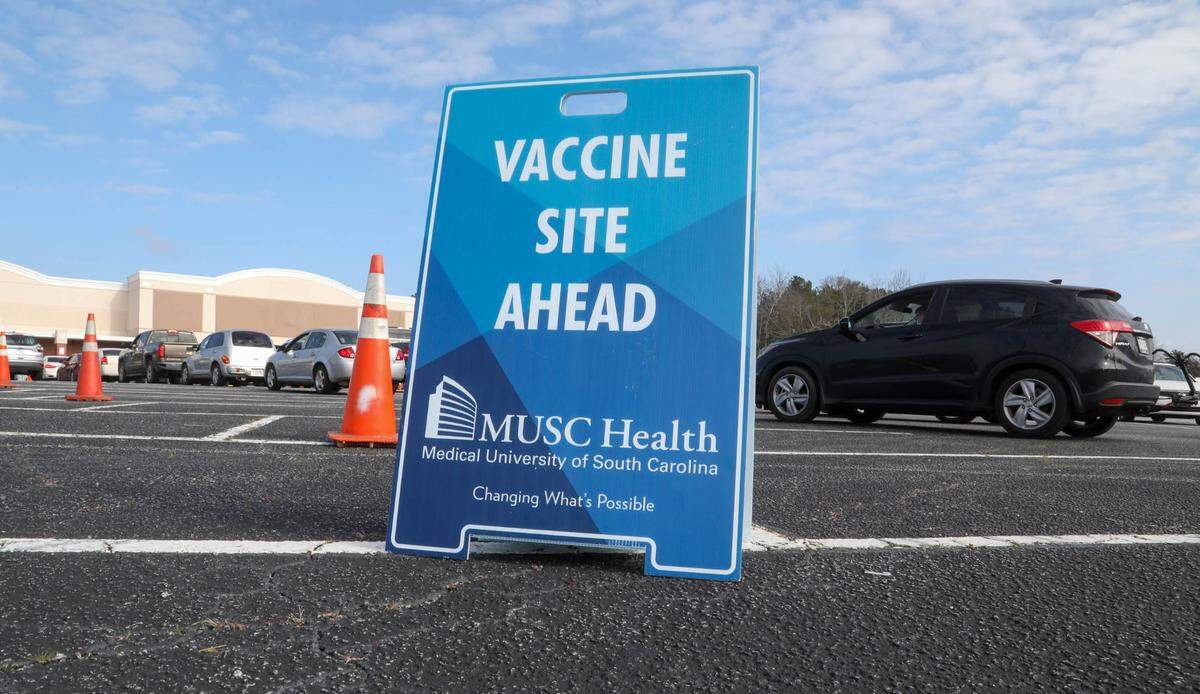
“Get rid of VAMS,” said Dr. Patrick Cawley, CEO of MUSC Health, during a January meeting in Columbia with the DHEC board.
The system, Cawley said, was slowing down the vaccine rollout amid a record-breaking COVID-19 surge.
Marshall Taylor, DHEC’s acting director, figured he should acknowledge the problem.
“We don’t like it either,” Taylor said.
But he failed to mention that DHEC had decided to use VAMS even after high-ranking agency officials raised concerns about the system in fall 2020, weeks before the vaccine rollout began, according to a new review by The Island Packet and Beaufort Gazette of roughly 11,000 pages of internal emails that provide an unprecedented look into some state leaders’ previously unreported hesitancy about deploying VAMS.
Additionally, Taylor did not tell the frustrated group of hospital CEOs that South Carolina was an outlier: Only nine states and one territory, as of this past summer, had ever used VAMS, according to a federal list that the newspapers obtained.
While it has now been months since that fiery DHEC meeting, looking back at VAMS and its initial shortcomings could help government officials better prepare for the next pandemic, which scientists fear is inevitable. Computer systems will surely play crucial roles in the national response to that future outbreak.
“There’s more that we can do. ... Let’s use the technology to the best of our ability,” said Cimarron Buser, founder of The Appointment Scheduling & Booking Industry Association.
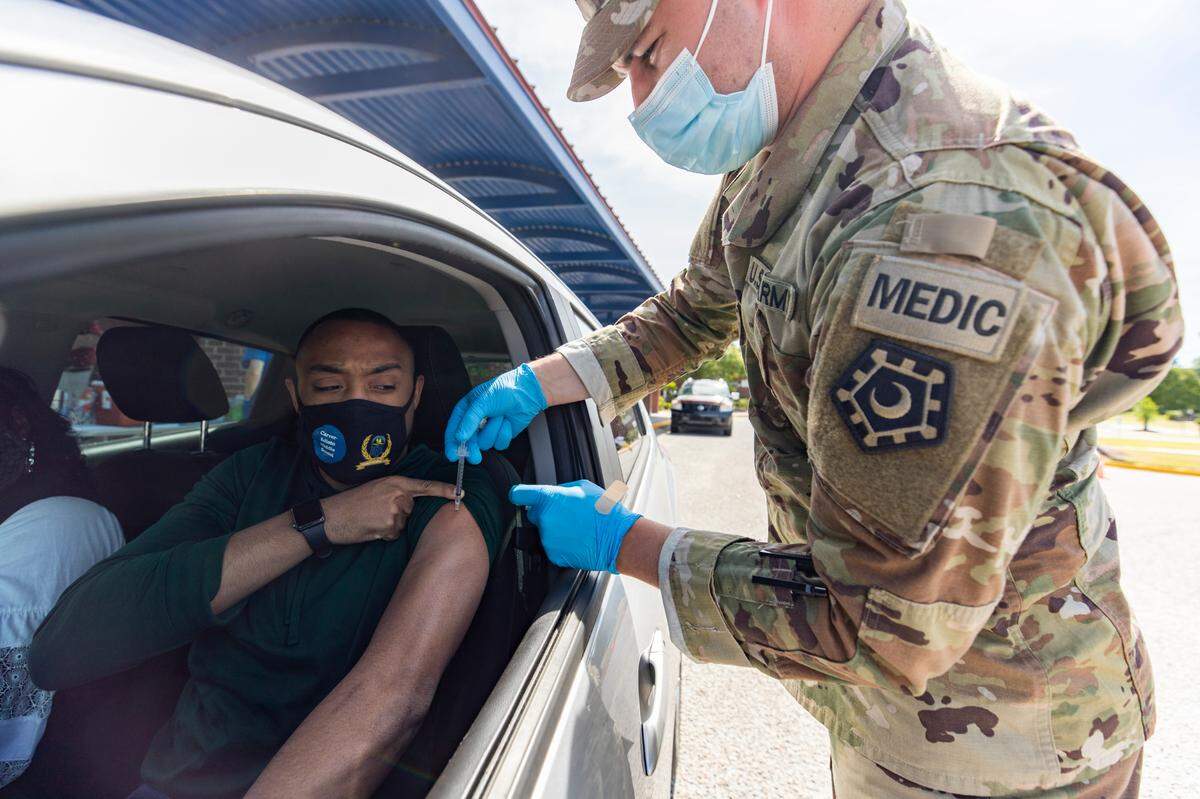
The newspapers’ review of DHEC emails also shows how complicated and contentious it sometimes is for health officials to settle on a way to assist desperate vaccine hunters during a crisis.
Dr. Linda Bell, South Carolina’s chief epidemiologist, for example, at one point in 2020 suggested that DHEC should avoid VAMS and instead use its new $5.7 million vaccine registry, a database on inoculations, and ReadyOp, an emergency operations system, to help people book appointments for the life-saving shots.
“I’m concerned that VAMS will create an additional burden for providers,” Bell wrote in an email to Taylor and others.
Her idea was rejected.
Stephen White, DHEC’s vaccine director, in a recent interview defended the agency’s choice to stick with VAMS, which is still used today.
The U.S. Centers for Disease Control and Prevention, he said, had touted VAMS as free software that overwhelmed health officials could deploy to battle the coronavirus. And South Carolina’s vaccine registry needed upgrades last year for the looming campaign against COVID-19.
“I don’t know what other option we would have had, to be honest with you,” White said. “I don’t think that we regret the decision. ... We worked with the information that we had at the time.”
He did admit, though, that VAMS had “some pain points.”
The system in early 2021 was panned by befuddled South Carolinians who criticized its bureaucratic sign-up process for vaccinations.
“If you go to any state and ask them if they could do something over again, they’d probably find something they could tell you,” White said.
“I think everybody was learning and growing.”
‘Nobody likes it’
Robert Ennis was fed up.
The 87-year-old Navy veteran in Aiken had spent at least six hours in January trying to navigate VAMS and book a vaccine appointment.
It was the beginning of the rollout, so the supply of doses was limited and reserved for health care workers and elderly residents like Ennis.
But Ennis was furious because VAMS “never gave you enough information.”
“I thought it was the worst system that I have ever used in my life, as far as being user-friendly,” he said in a recent interview. “It just kept saying, ‘Try another date.’ It could have just said, ‘We’ve got no dates available for the next six months.’ Give me some kind of clue. I kept trying and trying and I finally quit.”
Ennis and a neighbor drove south to get Pfizer-BioNTech shots at a Department of Veterans Affairs medical center in Augusta, Georgia. The department, as of October, had never used VAMS, a spokesperson confirmed.
“I gave up on the VAMS system,” Ennis said.
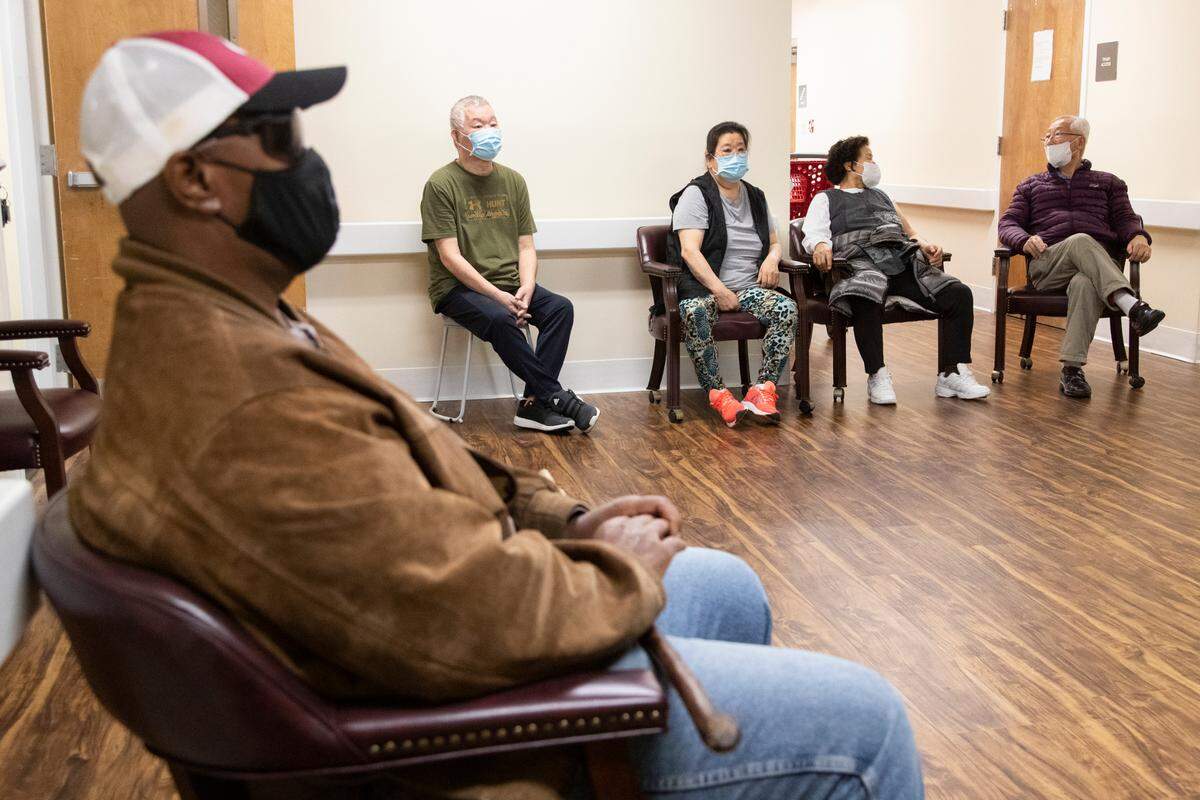
The Aiken man’s frustration was common in the Palmetto State earlier this year as hundreds of thousands of seniors became eligible for vaccines on Jan. 13. DHEC was quickly flooded with complaints about VAMS from some of South Carolina’s most vulnerable residents. (Almost 82% of COVID-19 deaths recorded in the state between early 2020 and this past February were among people 65 or older, DHEC reported at the time.)
Seniors who already struggled to use the internet faced a byzantine scheduling process within VAMS, which providers could voluntarily use as an appointment registration tool if they had not previously launched their own. People initially needed an invitation to search for available appointments in VAMS, so some hospitals would put residents’ email addresses into the system, and then the CDC would send out links so recipients could register in it. Lexington Medical Center, for example, used VAMS as a scheduler, but the Charleston-based MUSC Health system did not. (Pharmacies like CVS and Walgreens, which had existing vaccine scheduling portals, started to play a larger role in the vaccination campaign later in 2021.)
The situation was urgent, as South Carolina confronted a surge of COVID-19 cases after the holidays, averaging 4,000 confirmed infections per day.
Hospital leaders, meanwhile, were upset with a new DHEC policy that required all state-enrolled providers of the coronavirus vaccines to input patients’ inoculation information into VAMS — even the health care facilities that had opted to use their own scheduling setups and had medical records systems that were automatically feeding patient data into South Carolina’s vaccine registry, which is called the Statewide Immunization Online Network, or SIMON.
(A separate DHEC regulation had previously mandated that hospitals and pharmacies submit patients’ vaccine data to SIMON, the state’s confidential repository for immunization records. DHEC had launched SIMON last September so it could more easily assess vaccine uptake across South Carolina, among other things.)
“With sites like MUSC, which are giving 3-4K vaccines a day, it is requiring 50-75 man hours a day to input into VAMS ... which we can’t sustain, and need to use that manpower elsewhere,” wrote Dr. Danielle Scheurer, chief quality officer at the 14-hospital MUSC Health system, in a January statement.
DHEC officials took note and Taylor, then-acting director, sharply criticized VAMS during testimony before state lawmakers, referencing the email issues and “labor-intensive” data entry.
VAMS, he added, was “spontaneously” canceling some appointments. (A CDC spokesperson has attributed such reports to user error.)
“It is a clunky system,” Taylor said in late January. “Nobody likes it. The hospitals don’t like it, the providers don’t like it, the users don’t like it, DHEC doesn’t like it.
“VAMS has become a cuss word.”
Even Dr. Edward Simmer, a mild-mannered psychiatrist who was hired as DHEC’s new director in February, took aim at the software during his confirmation hearing with a key state Senate committee.
‘A leap of faith’
Eight months, though, before Ennis and others condemned the system, CDC officials saw VAMS as the best way to help state leaders manage their ambitious vaccination campaigns during the pandemic, which had already claimed thousands of American lives, including more than 460 South Carolinians.
In May 2020, the CDC awarded Deloitte, a national consulting firm, a $16 million no-bid contract to build VAMS, an online platform where vaccine providers could send patient data to health authorities, order more doses, schedule appointments and coordinate clinics.
The agency later gave the company another $28 million for the software project.
But some states grew worried because Deloitte was essentially creating VAMS “out of thin air,” said Noam Arzt, president of HLN Consulting and an expert on health care data systems.
“As best as anyone in the IIS (immunization information system) community could tell, there was no one involved in VAMS development who had been involved in the IIS community,” Arzt said. “We were sort of collectively scratching our heads at how they were going to pull this off and maintain quality.”
“VAMS in the early days was so nascent,” he added, “that it sort of took a leap of faith to even believe that it would be ready when they said it would. ... That made people nervous.”
State health officials, Arzt said, found themselves with a limited opportunity to “even understand what (the) CDC was intending to do.”
Claire Hannan, executive director of the Association of Immunization Managers, agreed with Arzt.
“You couldn’t test it,” Hannan said, “until October.”
“That was one of the key issues,” she said.
(The system became available for testing at most state health departments on Oct. 26, less than two months before the Pfizer and Moderna vaccines were authorized for use in December 2020, according to Deloitte.)
It was not crazy, Arzt said, for jurisdictions to “turn away” from VAMS.
“My overall impression,” he said, “is that VAMS was a pretty bad application developed quickly.”
A CDC document obtained by the newspapers under the Freedom of Information Act revealed that only seven states initially decided to use VAMS: Connecticut, Hawaii, New Hampshire, South Carolina, Vermont, Virginia and West Virginia. Delaware, Utah and the U.S. Virgin Islands later went live with the system, according to the list, which was released in April and then confirmed in July.
The CDC did not respond to a request for comment. A Deloitte spokesperson in a statement wrote that VAMS has “proven to be reliable and stable, performing as designed with no unscheduled downtimes since it launched.”
“While a small number of appointments were affected by system issues early in the implementation, we resolved them quickly,” she wrote.
“The use of VAMS for multiple phases of vaccine distribution was not originally envisioned and VAMS has been enhanced, at the direction of the CDC, to support states’ new uses of the system,” she wrote.
The newspapers in a recent survey of health departments (32 states and one territory responded) found that many government officials avoided VAMS and upgraded state vaccine registries while relying on providers’ own scheduling systems; launched new state-run web pages for scheduling; used appointment registration software from Microsoft; and/or deployed PrepMod, a product similar to VAMS.
Tiffany Tate, the creator of PrepMod, in a September interview said that 28 states and jurisdictions chose to use her system.
A plan takes shape
In South Carolina last fall, DHEC opted to eventually deploy VAMS in a limited capacity, according to emails obtained under the S.C. Freedom of Information Act.
Why?
The agency wanted to offer VAMS up as a free appointment scheduler available to health care facilities. SIMON, the state’s vaccine registry, lacked such a tool.
DHEC also figured that it should initially require state-enrolled vaccine providers to input patient data into VAMS, White confirmed in a statement.
Health officials were focused on “expediting data tracking,” White wrote.
Envision Technology Partners, a Colorado-based company that had won a $5.7 million contract to build SIMON in 2019, was busy upgrading the state database for the roll out of coronavirus vaccines. DHEC thought its providers should first use VAMS for patient data reporting, then could “move away” from the federal system and solely rely on SIMON for dose documentation once SIMON became “COVID ready,” emails show. (Data in VAMS was able to flow into SIMON, but not vice versa.)
Additionally, DHEC wanted hospitals to order vaccines via VAMS.
“We were trying to pull off the best, all-inclusive system that we felt could manage scheduling, ordering, documentation and electronic submission to SIMON,” White said in an interview.
A CDC employee, he added, at one point implied that VAMS might be required in all states.
And South Carolina could use the software for free.
(North Carolina avoided VAMS and built its own data reporting and appointment scheduling system, which cost the state roughly $2.6 million to set up and has yearly operating costs of $9.2 million, according to a spokesperson.)
“We made the best decision based on the best data that we had at that time,” White said. “It’s easy to go back and say, ‘Oh, you could have maybe done this differently, done that differently.’”
When a reporter asked him if budget concerns were a factor in DHEC’s choice to deploy VAMS, White replied, “I don’t know that we thought that.” He added that the agency always tries to be a good steward of taxpayer money.
Buser, of The Appointment Scheduling & Booking Industry Association, or TASBIA, sympathized with White. There was no “gold standard” for vaccine scheduling systems last year, Buser said. Health officials who rejected VAMS, he noted, were not spared from fierce criticism in early 2021 as their appointment registration systems also buckled under the country’s overwhelming demand for shots.
PrepMod, for example, was more user-friendly than VAMS, Buser said, but never was meant to handle such a large volume of patients. A PrepMod-operated website for Massachusetts residents crashed in February as nearly 1 million people became eligible for vaccines. And California clinics reported a litany of technical issues with the system.
“I don’t know,” White said, “that there was any one, singular software solution that would have solved all the problems.”
But DHEC in January also quickly acknowledged that VAMS had serious shortcomings. The agency paid $145,000 to use software developed at the University of Mississippi Medical Center to launch its own vaccine scheduler, records show. (That DHEC web page was piloted “on a very small scale” in early February. County health departments and state clinics have almost exclusively used it since. Some of South Carolina’s biggest vaccinators previously confirmed that they had no interest in the agency portal.)
DHEC also set up a phone line with dozens of operators to help seniors book appointments.
The ReadyOp debate
As fall began last year, companies started to pitch their vaccine scheduling systems to DHEC.
But White in an email to other agency officials wrote that the North Carolina health department thought it would cost up to $1 million to use a product other than VAMS.
White had seemingly settled on deploying the Deloitte software.
A slide show from the S.C. Emergency Management Division listed VAMS training as a priority. And DHEC figured that ReadyOp, an emergency operations system, could be used as a backup scheduling tool if VAMS ever crashed.
Those plans, though, were thrown into question on Oct. 23.
Bell, the state’s chief epidemiologist, in an email to Taylor and White, among others, wrote that she was worried about VAMS.
VAMS “will have a short-lived use,” Bell wrote, so why not couple SIMON and ReadyOp for the duration of the vaccine rollout?
“Going with SIMON and ReadyOp,” Bell wrote, “will put an additional burden on DHEC but I think we should plan to absorb that” rather than force the state’s health care workers to learn “yet another system,” which would not be ideal, she wrote, “as we move into flu season and a possible upsurge in COVID.”
Dr. Brannon Traxler, then-interim director of public health, who later filled that role permanently, wrote in a follow-up email that she shared some of Bell’s concerns.
Taylor, the agency’s acting director, who has since returned to his job as DHEC’s general counsel, decided to schedule an Oct. 26 meeting to figure out what to do.
The leaders ultimately stuck with VAMS, emails show.
White in an interview argued that Bell’s idea was impractical because ReadyOp, as a scheduler, would not have fed patient data into SIMON. Vaccine providers, he said, would have needed to manually enter that information into SIMON.
A connection between ReadyOp and SIMON, he admitted, “could have been developed,” but there was no “official timetable” for that upgrade, he wrote in a statement.
Taylor, under questioning from state lawmakers in January, said the agency “really didn’t have another choice” and had to use VAMS.
SIMON, he said, “didn’t have the proper applications to be able to roll this vaccine out.”
‘I tried very, very hard’
This much is clear: VAMS has dramatically improved since it first launched, given the passage of time. An email address, for example, is no longer required to access the system.
More than 1 million vaccine appointments in South Carolina, as of Nov. 10, had been scheduled in VAMS, according to White. Roughly 726,230 of those had been completed. Others had been canceled. The state, as of Monday, had 2.8 million vaccine recipients with at least one dose.
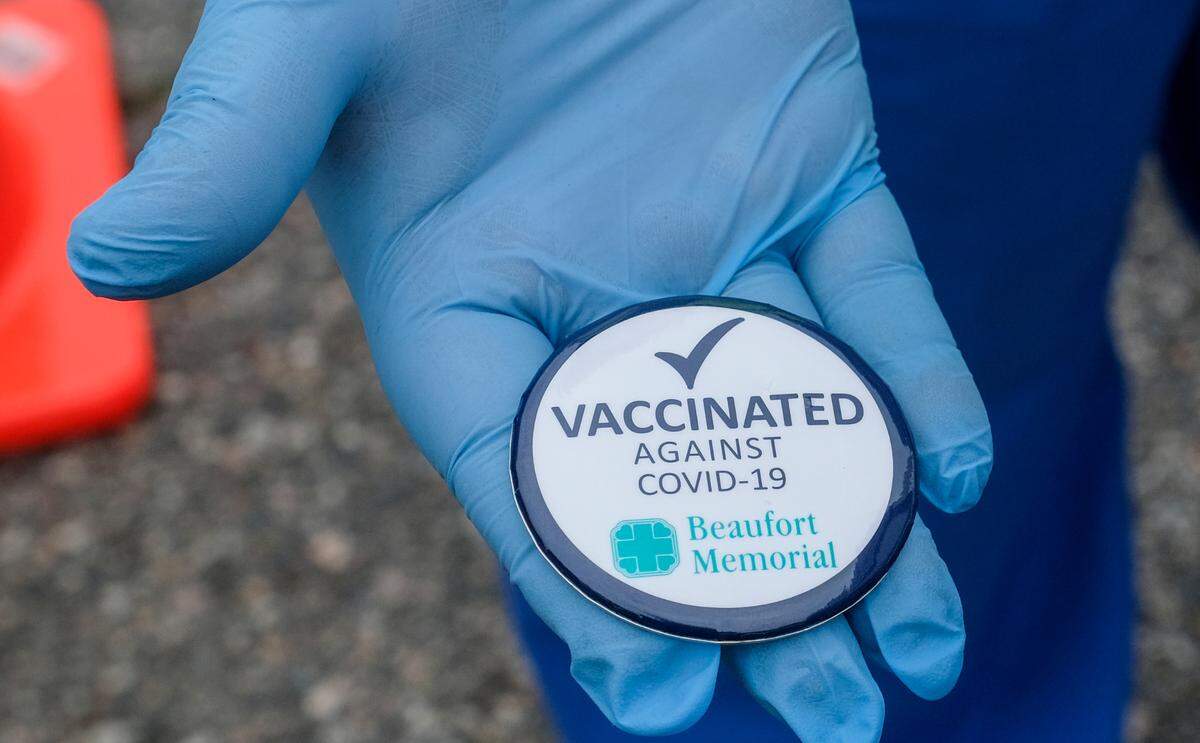
“I like (VAMS) a lot better than I did in the beginning,” said Ashley Hildreth, corporate director of quality at Beaufort Memorial Hospital, a medical center in the state’s Lowcountry.
But that’s because VAMS was met with scorn in December and January when Cawley, CEO of MUSC Health, said the software was slowing down the vaccine rollout.
Seniors could not figure out how to use VAMS, said Buser, of TASBIA.
The system, Buser said, “required a significant amount of registration work, and then you finally got an account, and then maybe you heard back.
“It required the people managing it to really know what they were doing, and a lot of them didn’t.”
The issues did not stop there.
Kelly Bouthillet, president of the S.C. Nurses Association, used to tell seniors to only use Google Chrome to access VAMS because the software worked poorly in the Firefox and Microsoft Explorer web browsers, she said.
Hospital networks that already had their own scheduling setups and medical records systems connected to SIMON, meanwhile, were forced to input patients’ inoculation information into VAMS due to DHEC’s initial data reporting requirement, which the state later relaxed after providers raised concerns about the process. (White in an interview indicated that the agency in fall 2020 had rejected Bell’s ReadyOp and SIMON idea because the proposed configuration would have saddled providers with the need for time-consuming data entry.)
“VAMS was a nuisance and causing havoc all over,” Bouthillet said.
Residents also were aghast.
Ennis, the Aiken veteran, said he could “try forever and not get anywhere” within VAMS.
Warren Stern, a 77-year-old retiree on Hilton Head Island, started the sign-up process for VAMS in mid-January and later found the registration email in his spam folder.
And Mamie Brown, 72, who lives in rural Jasper County, ditched the system earlier this year and scheduled an appointment over the phone to receive her first Moderna shot at a local health department.
“I tried very, very hard to register on that VAMS website,” Brown said.
“I wasn’t able to.”
This story was originally published November 30, 2021 at 5:00 AM with the headline "SC officials raised concerns about this vaccine sign-up system, but DHEC still chose to use it. Why?."