Where have all the Canadians gone? How Myrtle Beach tourism weathered the COVID winter
Myrtle Beach roads look a little different this winter. For one, they’re perpetually wet from seemingly never-ending rain.
There’s also a distinct lack of Canadian license plates. The Grand Strand’s snowbirds have gone aflutter this year.
Those two factors served a blow this winter to the golf and long-term rental economies in the Myrtle Beach area that help the region survive until spring, when most tourists return.
Ever since the U.S.-Canada border closed last March, vacation rental agency CondoWorld has seen wave after wave of cancellations, chief marketing officer Alex Husner said.
“What we’re seeing right now is a lot of Canadians that had planned on coming last spring, that they moved their reservations from spring 2020 to spring 2021,” Husner said. “We’re now getting those cancellations. I think they’ve wanted to wait until the last minute to see what’s what, if the border was going to be reopened. But obviously that’s not what’s we’ve seen.”
Closed border
CondoWorld manages 600 properties in North Myrtle Beach and serves as a booking platform for others across the region. Nearly a year into the pandemic, Husner said they are still seeing cancellations from Canadian visitors who either booked before last March or had pushed their planned vacations back by a year, hoping that the U.S. would be reopened by then.
Those hopes for reopened borders have been continually dashed. The federal government last week extended the closure of land border crossings to nonessential travel until at least March 21. There are fewer restrictions on air travel from Canada, but both countries have stringent COVID-19 testing requirements for anyone entering or existing.
The closure of the land border cuts off a major access point for Myrtle Beach’s Canadian visitors because many of them drive, rather than fly, here for their weeks-to-months-long stays.
It’s difficult to know how many Canadians still made it here by flying if they met the requirements for “essential travel” because most international flights go to airports in Charlotte, Atlanta and Dallas first, U.S. Customs and Border Protection said in an email.
Husner said the lack of Canadian travelers has been partially made up by American travelers, many of whom live in regional “drive” markets from Georgia to Pennsylvania and Virginia.
“Canadians are a small portion of our business, not something we rely on, but it’s made an impact for sure in the winter monthly rentals,” Husner said. “On the other hand, not having that business, we also got different business that we’ve never had. A lot of shorter term, very, very last minute, same-day arrival, weekend bookings or ... people coming to the area to work here.”
For golf, local play has been able to fill some, though not all of the gap, said Chris Hendrick, vice president of operations for East Coast Golf Management.
At Barefoot Resort and Golf, local play can’t fill one gap — golf villa rentals. Barefoot general manager Dave Genevro said it’s easy to see the impact of Canadian visitors’ absence because they often buy months-long membership packages and play three to five times a week and rent out dozens of short-term rental properties onsite.
”You don’t make that up with the local play,” Genevro said. “That’s business that is hard to catch up.”
Bad weather
Myrtle Beach has always been a place for last-minute travelers. Tourism officials say that trend has become more clear this year as remote-work and school has untethered people from their homes.
However, this winter’s frequent cycles of rain, even in small amounts, have devastated the golf industry.
Golf flourished earlier during the pandemic because it is played outdoors and allows for practically infinite social distancing. Golfers can be hundreds of feet — not just six — away from fellow players.
“People view golf as a safe outlet, being outside. We’re thankful for that,” Hendrick said. “Golf is one of the places that people look at across the country as the perfect getaway to be a little bit socially distant, get some exercise in, get some sunshine and just enjoy a respite from their day.”
Yet, even those willing to brave the chilly weather haven’t been keen on playing in the rain, Hendrick said.
The weather has been so bad this season that Genevro said it could be hurting Barefoot’s bottom line far more than the lack of snowbirds. He questions how much better business would be even if the border was open.
“Even if they were here, they wouldn’t be playing as much as they normally do because of the weather,” Genevro said. “Coming from Canada, they don’t think it’s ever cold here. They play on colder days where a lot of people that have been here for an extended period of time and their blood is thin, they might not play on a day that is only 45 degrees, but that won’t usually stop these people.”
Rain, however, is a nonstarter even for those accustomed to the cold, he said.
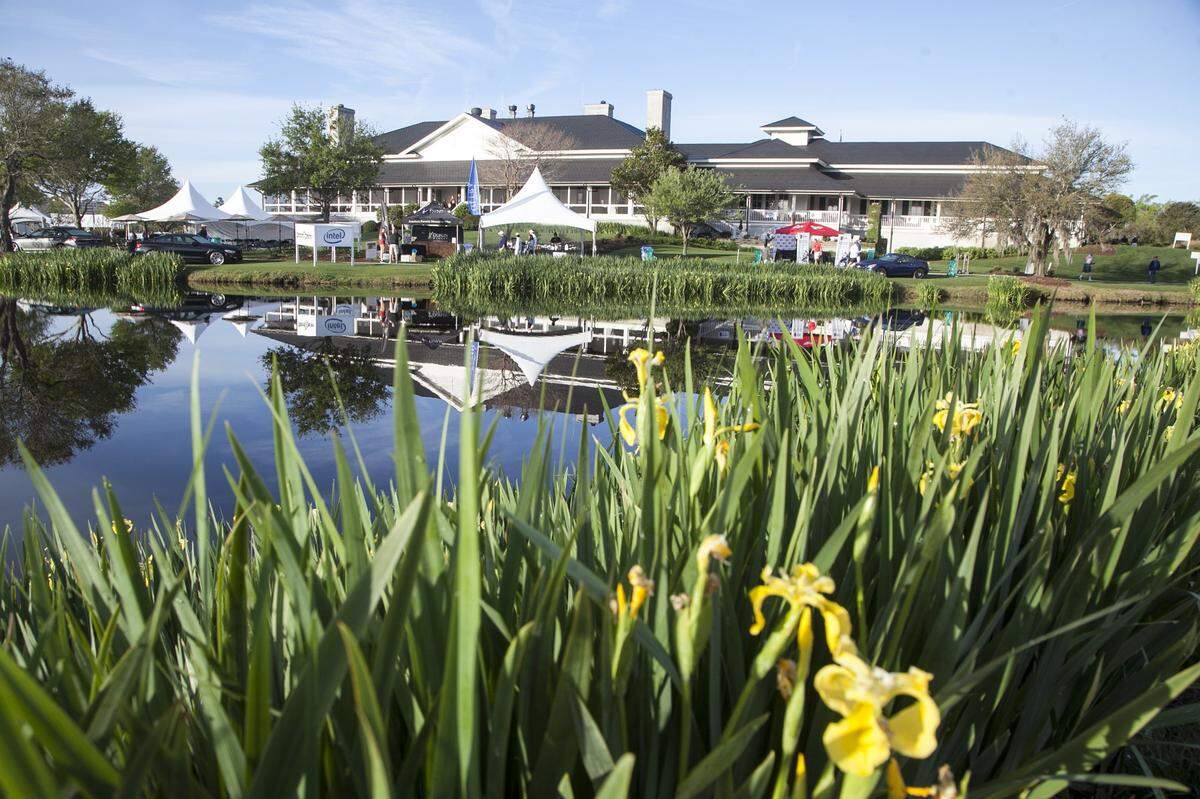
He’s not a weatherman, but Hendrick said he can tell that the weather fared better in past years simply because his business had more bookings.
“It‘s obviously an outdoor sport, so we need the weather to guide our side to be successful,” he said. “Certainly, we had better weather, better conditions in the first six weeks of last year than we have this year. ... The weather pattern, this year, is not one that we’re accustomed to.”
The rain hasn’t hurt CondoWorld as badly, however. Americans who’ve been stuck at home for months seem willing to ignore the weather if it means getting out of the house for a few days, Husner said.
“Surprisingly ... many properties have been at near to full capacity each weekend despite the rain. Valentine’s Day weekend was sold out at all of our properties in Myrtle Beach,” Husner said.
Spring vacation?
The latest extension of the border closure brought another round of cancellations at golf courses and rental properties. Husner hopes it’s the last one they see.
“There’s going to be a lot of pent up demand that I think now we’re going to see come to fruition,” she said. “Vaccine or no vaccine, I think people are just ready to travel.”
The spring looks to be an OK season at Barefoot, East Coast Golf Management and CondoWorld, the companies say. The summer looks even better for all three. Students in many areas will be fully free of school, remote or otherwise, and the weather will be warm enough to encourage more people to head to the beach.
Thanks to last-minute travelers, Husner said CondoWorld has been up year-over-year for every month since September. The spring looks likely to be stronger than 2020, but still weaker than 2019. Part of the problem is canceled events like the North Myrtle Beach St. Patrick’s Day Parade that would normally be a big shoulder-season draw.
Myrtle Beach also relies a lot on spring vacationers from New York and New Jersey, states with stringent coronavirus testing and quarantine requirements for those who travel. As a result, Husner expects there to be a lot fewer of them than usual.
Hendrick, of East Coast Golf, said he expects to see more last-minute bookings in the spring, with people calling the day before they plan to arrive in town.
“We’re optimistic that we’re going to have a good spring, and we’re going to see all of our package guests and all of our seasonal visitors back again,” he said. “They just might book a little bit later than they normally do.”
Every bit of positive vaccine news has served as a big boost for bookings. However, news about coronavirus variants have had the opposite effect in recent weeks, Husner said.
“Liiterally, it just follow the news,” she said of bookings.
Tom Barkin, the president of the Federal Reserve Bank of Richmond, which oversees South Carolina, said in an interview that Myrtle Beach has a lot to hope for with the spring.
The vaccine rollout will be the biggest limiting factor for the growth in tourism, but he said “a lot of the uncertainty of six months ago is behind us” and that consumers are feeling more confident about making future plans with each passing day.
“There is a lot of savings and in the pocket of Americans right now,” Barkin said. “How quickly do those savings come back into the economy? How much pent-up demand is there?
“I know when I finally get vaccinated, I’m looking forward to a good meal out at a restaurant, take a nice vacation. I think a lot of people are going to think like that.”
Genevro, of Barefoot Resort, said he believes that next year will be “bigger and better.” He’s heard from people, including Canadians, who had to cancel their trips this year but are determined to come back as soon as it’s safe.
“Sometimes you don’t realize how much you miss something, how much do you enjoy something, until you miss it for a year and then you come back,” Genevro said. “That seems to be what most of them are telling us. They can’t wait. They hate that they’re missing this year, but they’re already looking forward to 2022.”
This story was originally published February 26, 2021 at 5:00 AM.