Myrtle Beach tourism survived hurricane season. The real storm was the coronavirus.
Hurricane season starts in June, but Myrtle Beach never really had to worry about any storms until September, after tourist season had already begun to wind down. Meteorological storms, that is.
This year, however, the coronavirus pandemic wrought catastrophe upon the Grand Strand tourism industry in a way not even hurricanes could.
The pandemic brought widespread business shutdowns starting in March, the likes of which often are only seen during evacuation orders for a Category 4 or 5 hurricane. Even some of the panic buying resembled the days just before a hurricane, when grocery stores run low on food and essentials because of decreased shipments until the storm passes.
Now, as hurricane season has officially passed, the area’s tourism industry is still picking up the pieces from the pandemic storm. Its aftershock might not end for a long while.
The pandemic served catastrophic blows to the entire hospitality industry, from hotels to restaurants to in-person retail.
Fewer people in hotels has meant fewer tourists spending money at restaurants and shops, small and big business alike. It means less money coming into local restaurants that many in Myrtle Beach say give the region its character, and it means less money in sales taxes and parking revenue to support government services, like the years-long redevelopment of downtown.
Any other year, the biggest issue Logan’s Roadhouse owner Chuck McWhorter faces is trying to stay open for locals, the few tourists who stay and first responders when hurricanes arrive. His two biggest problems tend to be keeping the restaurant staffed and whether the business has power. No electricity means no cooking.
“Obviously, (hurricanes) could be devastating,” he said. “We try to stay open as long as we can to service the people that are here, but also to make sure that I take care of my kids. And, that if they want to get out of town, they have the opportunity to do that.”
So long as the business never lost power, even if tourists fled, McWhorter said his business usually did well.
But COVID-19 didn’t need to cut off electricity to cut off business for his restaurants — and the rest of the hospitality industry.
By mid-April, lodging occupancy rates reached their lowest levels of the year, below 2%, according to data from Coastal Carolina University’s Center for Resort Tourism. Even at their worst, during Hurricane Matthew in 2016 and Florence in 2018, average hotel occupancy never dipped below 20%. In a normal year, April should see weekend occupancy rates of 75% or more.
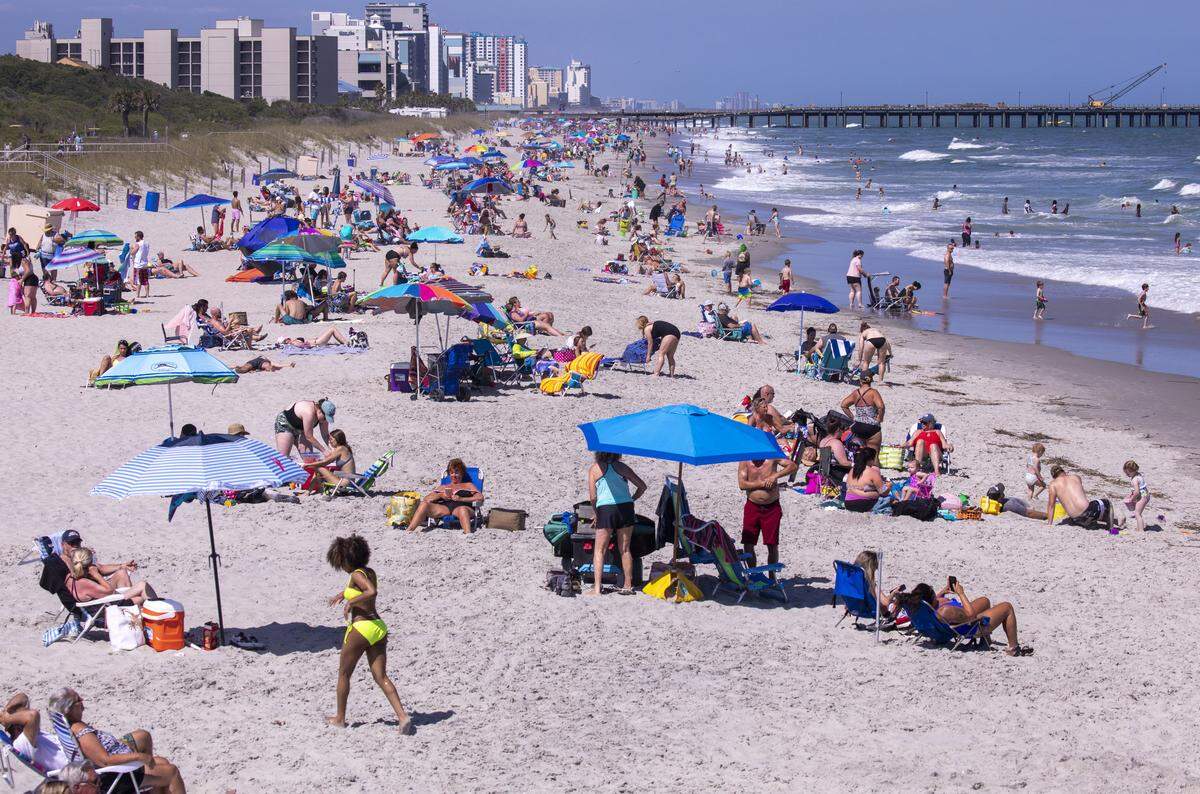
April wasn’t the only time the Grand Strand experienced a major dip in tourism. At its summertime height, average hotel occupancy reached 78.5% for the week of June 21-27. But right around that time, Myrtle Beach found itself labeled as a coronavirus “hotspot” by public health experts and national media outlets, again causing tourism to tank, though not as badly as in April.
Hotel occupancy fell to near 60% within a few weeks, a level it did not recover from until the fall, when an opposite trend would occur: The region saw unprecedented levels of tourist traffic, with occupancy outpacing previous years by 15% the week of September 6-12, according to CCU data.
However, hotel occupancy began to slow again the following week, falling to 61%, seven points below last year.
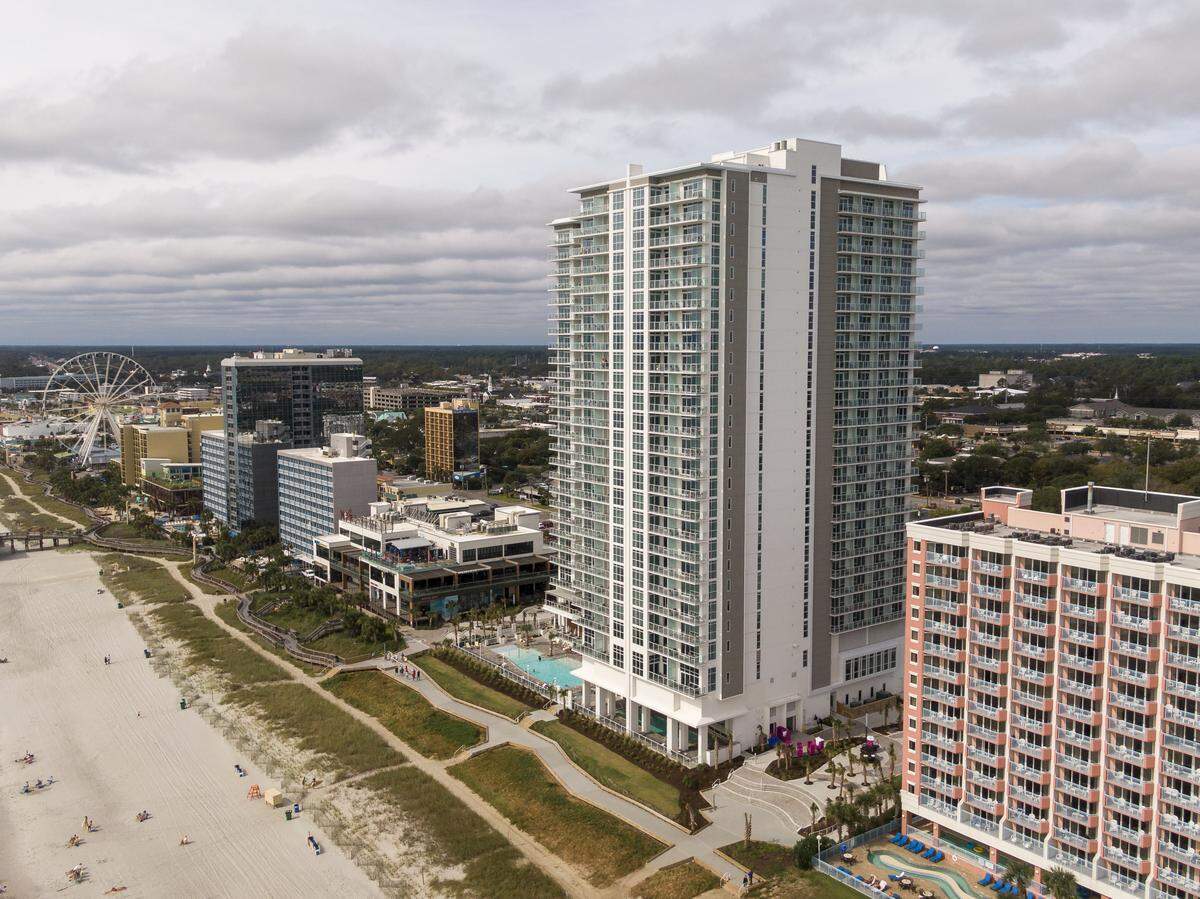
But that didn’t mean tourists weren’t coming to town.
Instead, they were filling up vacation rentals like AirBnB or Vrbo, which became popular during the pandemic as people sought to avoid hotels and the crowds they attract. The third, fourth and fifth weeks of September all saw these non-hotel vacation rental reservations at 70-80%, 20 to 30 points higher than the year before.
Vacation rentals did so well during the fall, in fact, that they made up almost all of the ground lost during the spring.
Hotels, though, never recovered. In July, they had a 14.4% drop in reservations compared to 2019. That drop worsened to 20% in August before settling at 23% in November.
Calm(er) hurricane season
For all the damage COVID-19 did to Grand Strand tourism, the region got lucky, as hurricanes seemed to find more interest in terrorizing other parts of the U.S.
Hurricane Isaias in early August was the only storm to make landfall nearby, landing in North Carolina, about 15 miles north of the Grand Strand. Isaias brought storm surges, hurricane-force winds and a few tornadoes to the Grand Strand region. Storm surges combined with high tide on Aug. 3 to destroy the part of Sea Cabin Pier in Cherry Grove. Streets flooded with a foot of water in many places, and some low-lying homes were flooded.
The region did see indirect effects from other tropical weather. Tropical storms Arthur, Bertha, Fay, Kyle and Beta each brought a few inches of rain with them, but damage and flooding were limited. Hurricane Delta, even after crossing hundreds of miles from its landfall in Louisiana, brought four tornadoes to the Conway area.
Hurricane Zeta blew over some trees in Georgetown and Little River, with gusts of 48 mph or more in some areas. And Hurricane Eta brought flash flooding to Surf City in Horry County and strong wind gusts to Murrells Inlet.
But the impacts of this hurricane season were minimal compared to 2018, for example, when Hurricane Florence flooded the Carolinas for more than a month.
However, the damage wrought by indirect hits to the Grand Strand shows why it’s important to consider more than a storm’s categorical strength (the Saffir-Simpson Hurricane Wind Scale), said Steve Pfaff, a meteorologist for the National Weather Service in Wilmington.
“You have people that are so dead set on deciding to evacuate based on the Saffir-Simpson scale instead of the individual impacts that a storm can bring,” Pfaff said. “It’s just so challenging trying to teach people that you can have a Category 1 like Florence was at landfall and yet still have a catastrophe.”
Fewer named storms made landfall in South Carolina this year, which is what typically scares people off. But Pfaff said if the Carolinas see future years like this one, it’s important for people to remember that even low-category storms can wreak havoc. In 2018, an unnamed tropical wave flooded the southern tip of Texas in a few hours. It didn’t need 100 mph winds to bring devastation.
How restaurants, hotels weathered Hurricane COVID
McWhorter, the Logan’s Roadhouse owner, has to prepare for hurricanes that land anywhere from Savannah to the northern coast of North Carolina.
His restaurant has five locations along the Atlantic coast, and the start of the pandemic hit him harder than any hurricane ever could. Business evaporated.
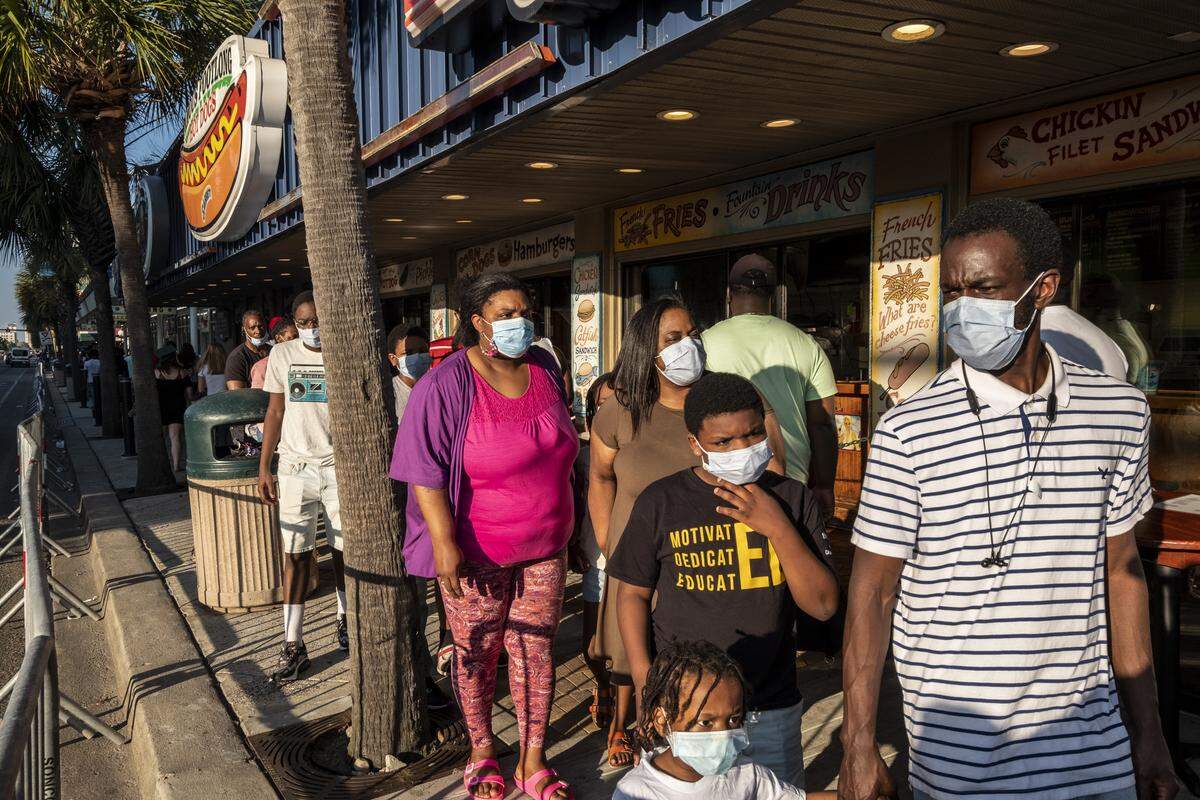
From shifting to take-out only to limited reopening to mask requirements, there was always something new to address. Lately, his biggest challenge is pandemic fatigue, getting customers and employees to keep wearing masks so everyone can stay safe while still working or enjoying their meals.
Looking back, McWhorter said he’s thankful he didn’t have to deal with a hurricane “on top of everything else,” adding that fall traffic has been especially strong, as seen in other hospitality sectors.
“Our sales are pretty good considering we’re down against last year, but still doing good under the circumstances we’ve got,” he said. “We’re just trying to get through it, waiting for the shot,” referring to the COVID-19 vaccine. “If I could get it early, I would get it early.”
Even with a light hurricane season, the DoubleTree by Hilton Myrtle Beach Oceanfront hotel still prepared for Isaias like it would for any other. Employees placed sandbags along the walls of the hotel in case of flooding. The biggest change this year brought was that the hotel never closed like it would during a traditional evacuation. It even had about 50 rooms occupied during the storm.
The timing of the storm, during the height of the summer, and how short-lived it was, helped the hotel recover quickly. DoubleTree’s general manager Mike Frits has often seen how hurricane wariness can easily run off tourists.
“You can you can basically count on if there is a major storm twisting in the Atlantic that even looks like it could head toward the Carolina coast, we will see our numbers drop off in the lead up to it,” he said. “Then, if we’re impacted by it, it can be weeks or even months of of slow down as a result. People just have this perception of … there is always significant damage, even if there is no damage or very, you know, very limited damage.”
The complete shutdown of the hotel at the start of the pandemic in March and April looked eerily similar to a hurricane evacuation for the DoubleTree. Some days it would only have four people onsite to monitor the property. They even used many of their operations plans typically reserved for major hurricanes.
“A shutdown is a shutdown,” Frits said.
Hurricanes typically only last a few days, though, and with Florence they were back in operation in less than two days after the worst passed.
COVID-19, by contrast, shut down operations for weeks.
The pandemic also killed one of the hotel’s biggest moneymakers: corporate travel and conventions. While there might be more people than usual staying at the hotel in the fall, they can’t balance out losses in other areas that might not recover until a vaccine becomes widely available next year.
Myrtle Beach tourism’s other dip, in late June, only “softened” the number of visitors for a few weeks. While the region was one of the first places to be labeled a hotspot, many other vacation spots earned that title as well as the pandemic’s second peak grew. The nation moved on from thinking about coronavirus in the Grand Strand.
“It’s just negative PR for the market, even if it’s not deserved. I look at Hurricane Florence as just a prime example. When that came through, it pretty much torched our fall season. Yet, at the same time, the market itself here was just fine,” Frits said. “Negative PR is always going to have a downturn effect on your market, your business. And let’s be honest, sometimes it’s justified.”
Life without a damaging fall hurricane
The rise in vacation rental reservations this fall gives a glimpse of what life would be like without an intense hurricane season.
From 2015 to 2019, regardless of whether a strong hurricane made landfall or damaged the Grand Strand, the simple presence of one scared off many tourists for the remainder of the season.
“Even barring a complete evacuation, there can be substantial impact,” said Taylor Damonte, director of CCU’s Clay Brittain Jr. Center for Resort Tourism .
For weeks after a storm, Damonte said many travelers might consider “going somewhere else that’s not so high risk.”
After each hurricane in recent years — Joaquin, Matthew, Irma, Maria, Florence and Dorian — lodging failed to recover completely until the following year.
But there weren’t any hurricanes to scare off fall tourists this year.
Fall in the Grand Strand also benefited from other vacation trends this year. People were more drawn to the outdoors — mountains and beaches — rather than crowded cities where they were more likely to be exposed to COVID-19.
Pandemic-related shutdowns also caused many people to stockpile vacation days until they were forced to use them as the year drew to a close. Finally, remote work and school made it easier for families to travel beyond summer and travel for longer periods of time.
Pandemic factors aside, this year might have seen the fruits of years of marketing from the Myrtle Beach Area Chamber of Commerce, which has been trying to improve the strength of tourism during the spring and fall “shoulder seasons.” More visitors during those months help balance out the sharp increases and dropoffs experienced at the beginning and end of summer while raising overall business revenue and making the winter season, where tourism dies from Thanksgiving until the first week of February, easier to survive.
Winter is coming. Or is it?
In some ways, winter already showed up this year. The coronavirus pandemic killed tourism in a way that’s worse than most hurricanes. It brought the dead of winter eight months early.
The middle of November is typically when tourism in Myrtle Beach would finally sputter out. Fall festival season ends. Cloudy skies and colder weather make the beach less and less appealing.
But as health officials begged people to not travel for Thanksgiving, the appeal of the beach and getting away from home for the holidays held strong. The region saw record visitation during a time that would normally be dead.
Lodging occupancy looks much weaker for the next few weeks, staying within a few percentage points of last year’s reservation rate. However, Christmas and New Year’s may bring another spike in tourism, a spike not normally seen during the end-of-year holidays, CCU lodging data shows.
Frits, the DoubleTree hotel manager, said he’s cautious about saying there might be any kind of boost in reservations, however. Myrtle Beach has always had a lot of last-minute bookings and cancellations, and factors like the weather or coronavirus case counts could easily upend any projections for Christmas and New Year’s.
Then, there’s next year to think about.
“I suspect by next spring, we’re going to start to see things turn around. If we can believe, have hope of the vaccine actually being distributed ... by that time,” Damonte said. “We can see life beyond, and we can see things improving by the beginning of March, if not earlier.”
As for hurricane season 2021, the Carolinas typically see a major hurricane every 23 years or so, and the last one to hit the Grand Strand was in 1996 with Hurricane Fran, a category 3.
Predictions about the next hurricane season are due out in April or early May from the National Weather Service.
“We’re overdue for a major hurricane,” said Pfaff, the NWS meteorologist.
Long before Myrtle Beach has to worry about hurricanes again, though, it just has to survive winter.
More tourists in the coming weeks, if lodging reservations hold, could provide another economic boost. But rising COVID-19 case counts could mean that a gust of wintry tourism could bring a tsunami of coronavirus cases with it, overloading rapidly filling hospitals.
Predicting what will happen, though, is about as difficult as predicting the weather.
“The thing you have to always remember in Myrtle Beach any given weekend can swing dramatically” at the last minute, Frits said, depending on “what the weather forecast is.”
This story was originally published December 8, 2020 at 5:00 AM.