
Mask confusion: While science says they work, some Horry County councilmen disagree
A proposed ordinance that would have revoked Horry County’s mandatory face mask mandate brought spirited debate from County Council members Tuesday night, as members invoked their faith, the founding fathers and science to argue for and against the mask requirement.
Some members questioned the very science and research state doctors and experts have been citing throughout the coronavirus pandemic.
“Masks are not effective from a scientific standpoint, from my investigation,” said Council member Johnny Vaught, who represents parts of Conway.
As the first member to speak during council’s debate, Vaught set the tone for those members opposed to the county’s mask mandate. Both he and Councilman Al Allen, who represents western, rural Horry County, questioned the scientific research that public health officials cite for why people need to wear a mask as they argued against the county’s mask mandate.
South Carolina’s Department of Health and Environmental Control (DHEC), meanwhile, as well as local physicians and other research, suggests the two councilmen are off on their facts.
The Horry County Council, through an emergency order, enacted the measure requiring residents and visitors to wear masks, or other face coverings, July 3. The mandate requires residents and visitors to cover their noses and mouths with a medical or cloth face mask, or other face covering, before entering grocery stores, pharmacies and other businesses.
There are some exceptions to the mandate, including whether a religious practice or medical condition prevents a person from wearing a mask, and people aren’t required to wear a mask while eating in a restaurant or exercising in a gym.
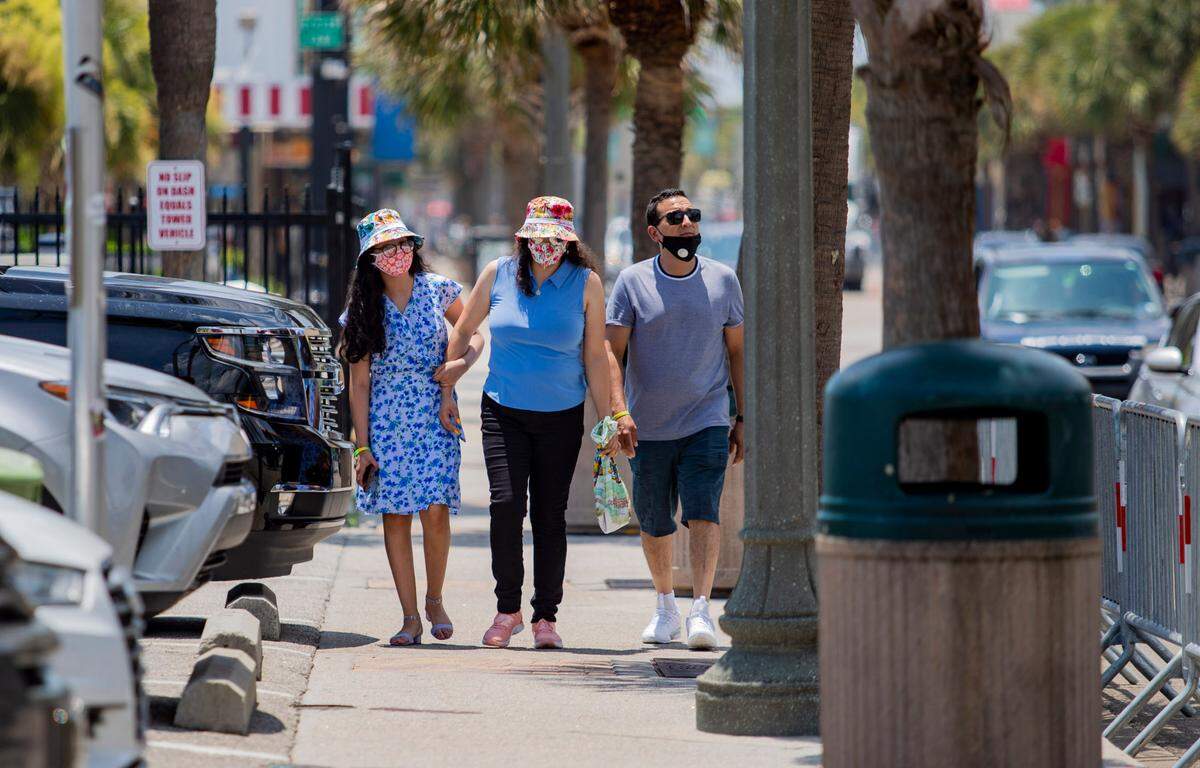
During his speech, Vaught argued that the stitching of masks is too loose to truly prevent virus particles from being transferred from person to person.
“The science says that the weave of a mask is so big that you could drive a semi truck through it if it was a virus,” he said.
Experts at South Carolina’s DHEC, though, have stated that while masks can’t prevent every virus particle from entering a person’s body, they greatly reduce the likelihood of that happening.
“DHEC’s analysis of mask ordinance data in South Carolina aligns with the national data and reporting that face masks effectively limit the spread of COVID-19,” Dr. Michael Kacka, a DHEC physician and chief medical officer of the agency’s COVID-19 Response Team said in a statement Wednesday. “It is understood by medical and science experts across the state and across the nation that masks work and remain critical in our fight against COVID-19.”
Vaught, a former engineering professor at the Horry-Georgetown Technical College, said Wednesday he stands by his statements.
“All viruses are not contained in droplets, they travel in the air. Masks don’t slow those down,” he said.
Vaught also argued Tuesday night that masks cause the wearer to breathe in dangerous amounts of their own carbon dioxide (CO2), causing adverse health affects.
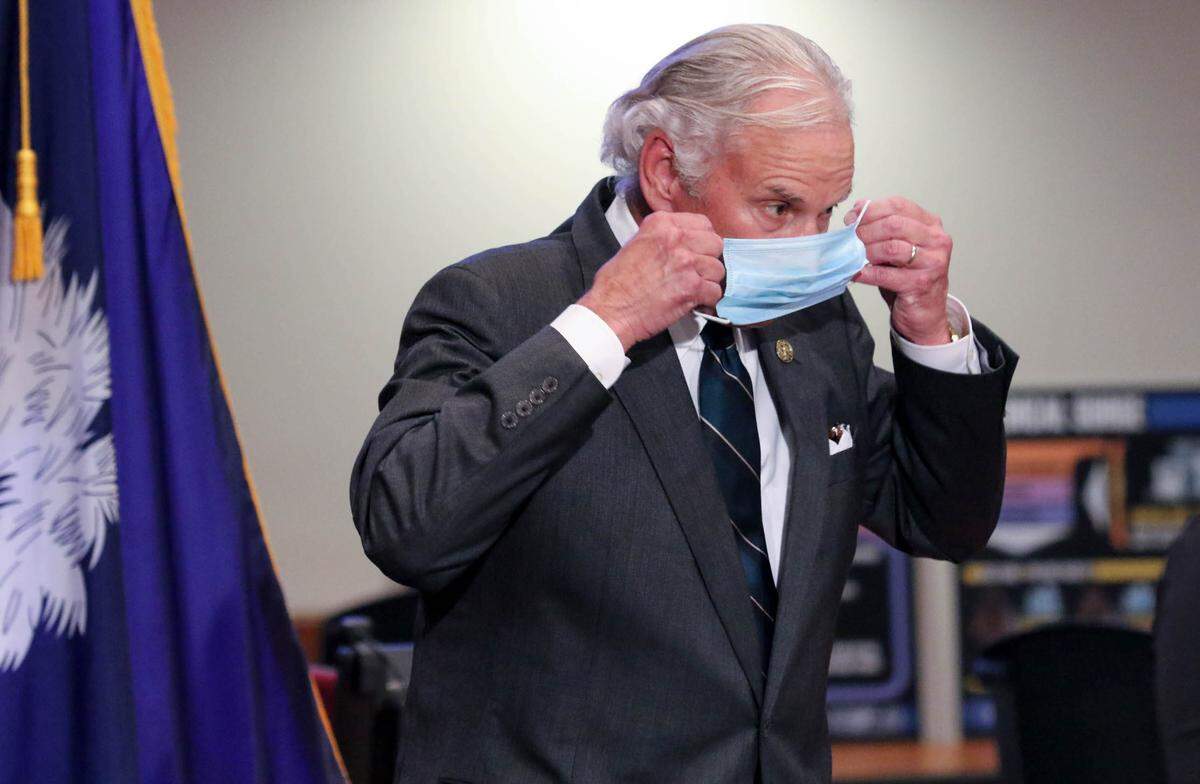
“Masks have been proven to make you breathe your own CO2 over and over again,” Vaught argued. “It gives people headaches.”
In his statement, Kacka noted that people should follow guidelines from the Centers for Disease Control and Prevention when selecting a mask for themselves and noted that a properly-fitting mask “poses no health risks from re-breathing carbon dioxide.”
The World Health Organization, too, has stated that wearing a mask for long periods of time, though uncomfortable, does not cause oxygen deficiency or carbon dioxide poisoning.
On Wednesday, Vaught said that if a person has a mask or respirator that seals around their face and prevents them from breathing in what they just breathed out, then masks work well. It’s paper and cloth masks, he said, that he doubts.
“If it’s a true sealed mask, then sure, they work great,” he said. Otherwise, he added, “You breathe all those viruses up into your eyes.”
Finally, Vaught argued that prolonged mask wearing was causing a new illness in and of itself: Mask eye.
“There’s a new disease out now, I think it’s called mask eye because people’s eyes are getting so dried out from wearing masks and breathing through (them),” he said.
Vaught is right that dry eyes can be a side effect of wearing a mask for prolonged periods of time, but those effects can be mitigated by taking short breaks from wearing a mask if it’s safe to do so, and taking breaks from computer and phone screens.
Kacka noted that anyone experiencing dry eyes should contact their doctor.
“Much like the rebreathing of carbon dioxide, this does not present an important risk to an individual’s health while masks are a key component to reducing spread of this virus,” he said in a statement.
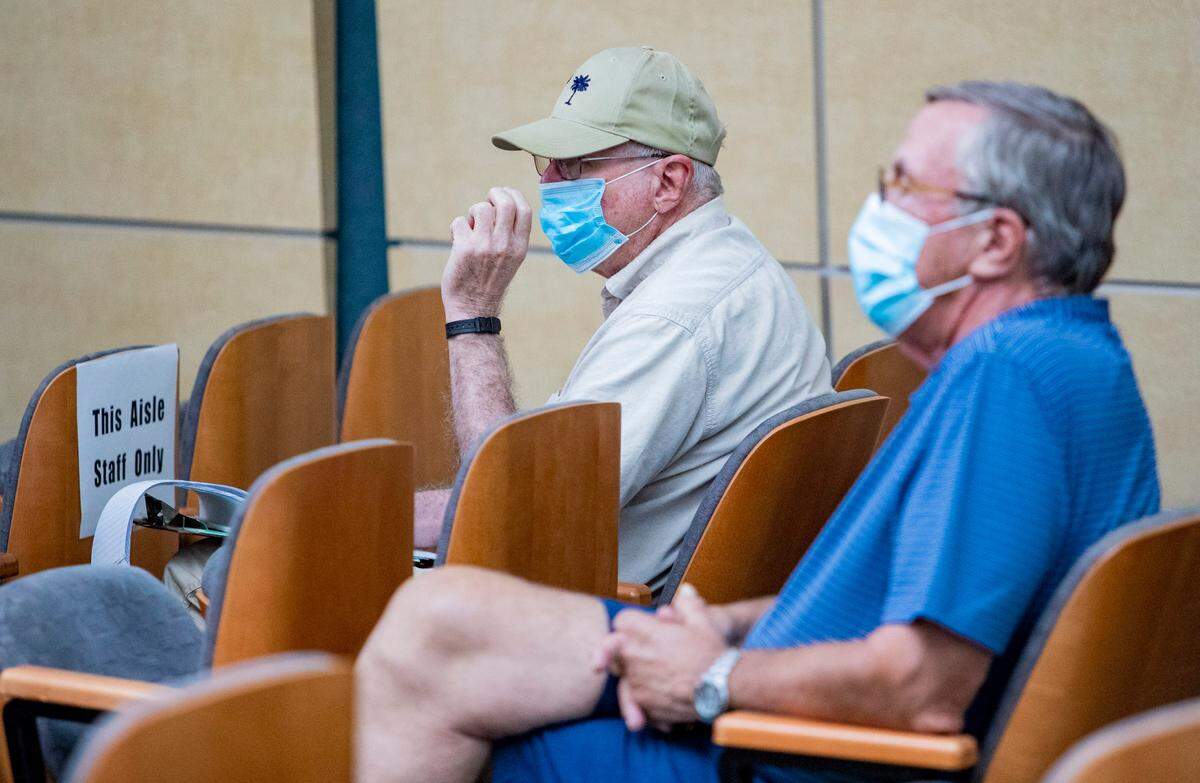
Allen also questioned scientific research during his arguments against the county’s face mask mandate.
During his speech, Allen pointed out that only 11 counties in South Carolina, including Horry, mandate that residents and visitors wear masks and claimed that those counties without mandates had similar infection rates.
“There is science on both sides, you can go and look, and those (counties) who have not had the lockdowns are faring just as good as those that have,” Allen said. “Just as good.”
Data published by DHEC contradicts Allen’s claim. Of the eight counties with the highest rate of COVID-19 infection, only Richland County currently has a mask mandate in place. Even though those counties have lower numbers of total cases than Horry County, people there are getting sick at higher rates than they are elsewhere.
And, in August, DHEC released a study showing that the parts of South Carolina that adopted mask mandates had fewer cases of COVID-19 than those that didn’t. Comparing jurisdictions over a four week period in July and August, DHEC found that those with mask mandates showed a 46.3% greater decrease in the total number of cases during the study period, meaning masks were preventing people from getting sick.
“This new data shows us what we already knew, wearing face masks works,” Dr. Linda Bell, S.C. State Epidemiologist, said in an August statement. “We’re strongly supportive of these local leaders’ initiatives that are centered on protecting the health and well-being of their communities.”
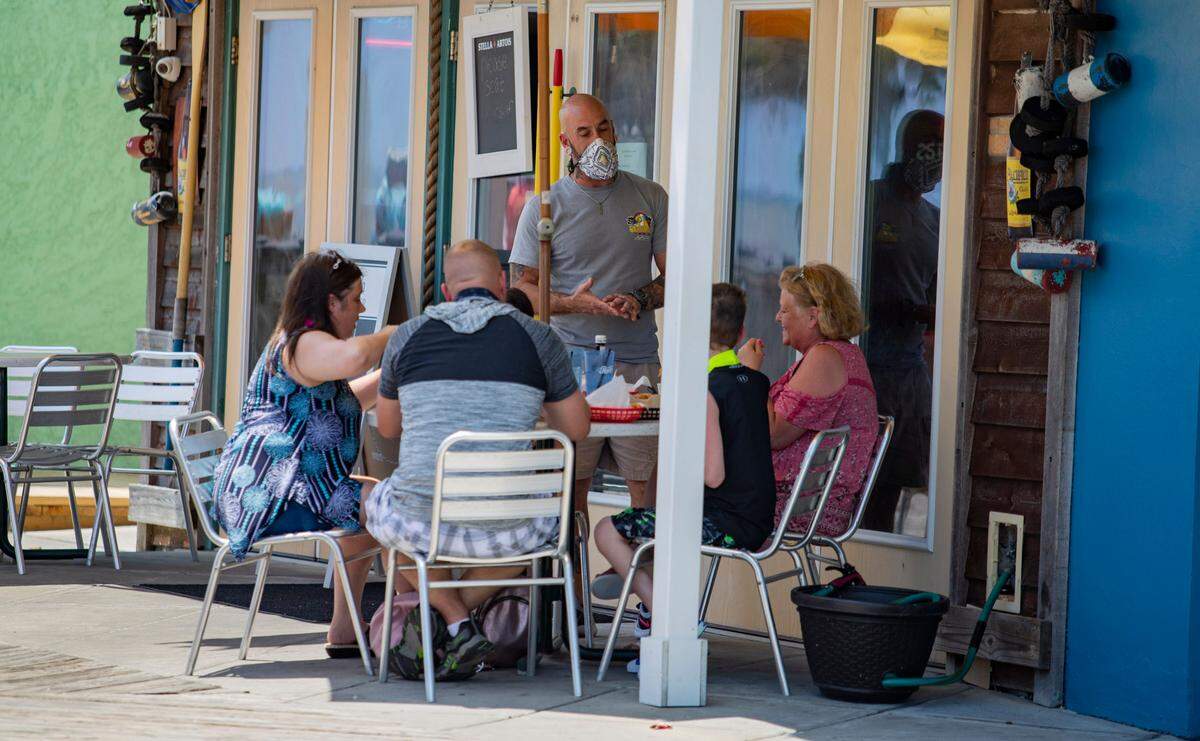
On Wednesday, Allen said he stood by his comments and questioned DHEC’s data, saying that turnover in leadership at the agency in recent years has caused him to lose trust in its work.
“These numbers have been skewed at times to be able to support the present or the current narrative,” he said. “The science is constantly changing, opinions are constantly changing.”
So, do masks work?
“Absolutely,” Kacka wrote. Local doctors agreed.
“Conway Medical Center stands with the other hospitals in our area asking everyone to wear masks to slow the spread of COVID-19,” Allyson Floyd, a Conway Medical Center spokesperson, said in a statement.
Vaught and Allen both said if people feel more comfortable wearing a mask, they don’t have a problem with it. However, both men agreed the government shouldn’t be allowed to mandate whether a person wears one.
“I’m not trying to tell anyone whether to believe in masks or not,” Vaught said. “My stance is that the government shouldn’t have the ability to mandate masks.”