Lifeguard shortage, crowds down: A snapshot of Myrtle Beach coast safety amid COVID-19
As the ocean waves started to pull a young swimmer away from Myrtle Beach’s coastline, Grayson Bondurant was ready for the moment.
“I see it happening,” Bondurant recalled, “it all clicked in my head, the training.”
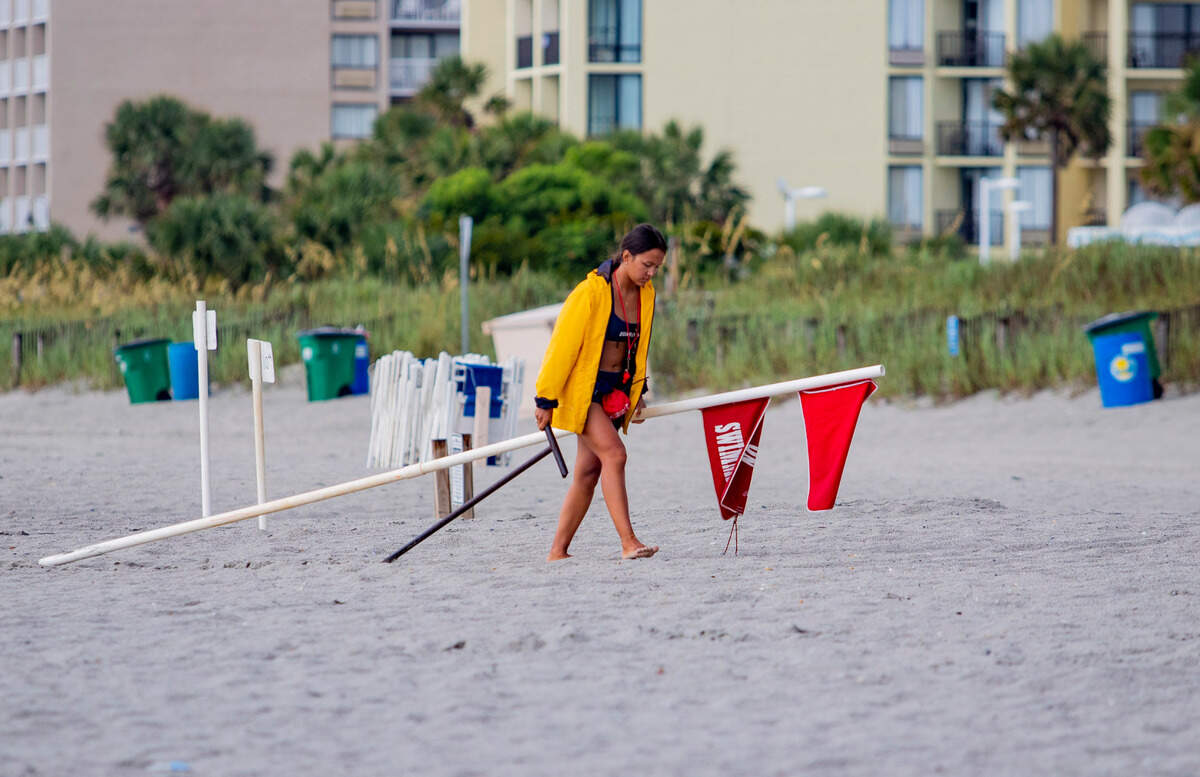
Bondurant is one of the lifeguards who spent the summer in Myrtle Beach watching the shores. The summer warmth was still in the air as he packed up beach chairs and umbrellas on a mid-September day. For him, summer in Myrtle Beach will be nothing more than a memory as he recounted the first time he had to rescue a swimmer.
As the boy was being pulled away, Bondurant said he sprinted to the water, his adrenaline pumping, and pulled him back to shore. The youngster was relatively unscathed and his family more than glad to see him safe.
“They were very thankful,” Bondurant said of the boy and his family.
The two even grabbed a picture afterward to commemorate the moment.
Bondurant’s rescue was one of dozens by Myrtle Beach lifeguards and first-responders this summer in Myrtle Beach. While crowd sizes were down because of the COVID-19 pandemic, there were still as many swimmers needing rescue as in previous years.
Rescuers enter the water
Drownings were up this year in Horry County, though the data doesn’t indicate where the drowning happened, such as a pool or the ocean. Between Memorial Day and Labor Day 2020, there were 12 drownings, up from eight in 2019 and six in 2018.
Myrtle Beach Fire Rescue Beach patrols saw a drop in the number of people they needed to rescue this year, going from 40 to 29.
“It can vary year to year too,” said Brian Mitchell, the battalion chief with the beach patrol unit, as he noted the drop can be due to natural changes and not just smaller beach crowds.
This year occupancy rates in the Myrtle Beach area started to ascend around Memorial Day and peaked around the Fourth of July. While the area saw more visitors than many other beach destinations, the totals were still fewer than previous years as people feared coronavirus’ spread.
While the number of people rescued was down for Myrtle Beach patrol, fire department swimmers entered the water just as many times as previous years. In 2019, swimmers went in the water 60 times and it was 55 this year.
When rescuers assist people, they also try to teach about water safety so it doesn’t happen again, Mitchell said.
There are times where crews go in the water when someone isn’t rescued, Mitchell said. For example, someone from a hotel balcony could report a floating raft in the water, thinking it is a person. Swimmers will go into the water to get the raft to avoid future confusion.
While Mitchell said there were fewer lifeguards to help the beach patrol, the people out worked to ensure visitors were safe.
“They did the best they could,” Mitchell said.
Beach Services adjust to COVID-19
Lack’s Beach Service provides lifeguards in the most popular stretches of Myrtle Beach’s coastline and thought the year would be like others. The business had about 140 lifeguards, mostly foreign, young adults on J-1 Visas, ready for the summer season.
“When coronavirus first came, we were set,” said Weslyn Lack Chickering, operation manager with Lack’s.
Restrictions changed those plans as J-1 Visa holders were denied entry into the country, sending Lack’s and other Myrtle Beach businesses scrambling for summer help. Chickering said they turned mostly to American young adults to serve as lifeguards.
They were able to fill most, but not all their spots, with Chickering estimating they had about 75 lifeguards this summer. They also continued to recruit throughout the season.
The drop in lifeguards forced Lack’s to change its procedures and duties on the beach. In past years, lifeguards were responsible for watching the water and renting beach equipment. This year, the guards focused on the waters, while others sold the equipment.
“There wasn’t a day that went by we didn’t say, “water came first,” Chickering said.
Lifeguards were also out in the water more to educate swimmers on potential dangers, such as when it was single-red flag to make sure nobody went more than waist deep, Chickering said.
The “odd year,” as so many have described it, has led Lack’s to look at keeping some of its changes for future years. Chickering spoke of trying to recruit more American students to serve as lifeguards.
It won’t have to look far for one.
“I’m totally coming back,” Bondurant said.
This story was originally published September 17, 2020 at 6:00 AM.