Meet the newest adorable addition to Myrtle Beach’s Ripley’s Aquarium
He’s fluffy. He’s adorable. He’s grown 10-fold since hatching. He’s the brand new baby penguin at Myrtle Beach’s Ripley’s Aquarium.
Ripley’s announced the yet-to-be-named baby African penguin Wednesday morning. Born on Oct. 7, 2020, he weighed just 2.5 ounces, a wee little fella.
Aquarium staff have been anxiously keeping an eye on him for weeks. He spent more than a month growing inside of his egg, and it’s not until he hatched that they really knew he would make it.
“We try not to get overly excited, but we always do,” said Kristen Forquer, his lead caretaker and the aquarium’s senior agriculturist. Using a special light to see inside of his egg, though, “We’re able to track it throughout its incubation period, make sure it’s in there and doing OK. So, we were pretty confident in this one.”
It took him a day and a half once he started hatching to break out.
Now, six weeks old, he weighs nearly 10 times his birth weight, at just under 2.4 pounds. They grow up so fast.
“Usually if it does hatch, that’s a pretty good thing for us,” Forquer said. “We usually kind of let our guard down a little bit once it does hatch, and then we just kind of have to monitor it once it reaches two weeks. And it’s another milestone, another great step and then so on. ... He’s six weeks today. So we have no doubts that he’s probably going to be just fine.”
The rapidly growing little guy is the first penguin to be born at the aquarium’s new Penguin Playhouse, which Forquer said has been their biggest ever expansion. The facility now has 20 penguins, including their new hatchling.
“We’ve actually been waiting for this for quite a while and were finally able to make it happen,” Forquer said.
The chick’s parents, Maggie and Jimmy, came from the Ripley’s Aquarium in Gatlinburg, Tennessee, which has had a penguin exhibit for about a decade.
Maggie and Jimmy took care of their egg and, after it hatched, the new baby for about a month before the aquarium stepped in to help hand-rear him.
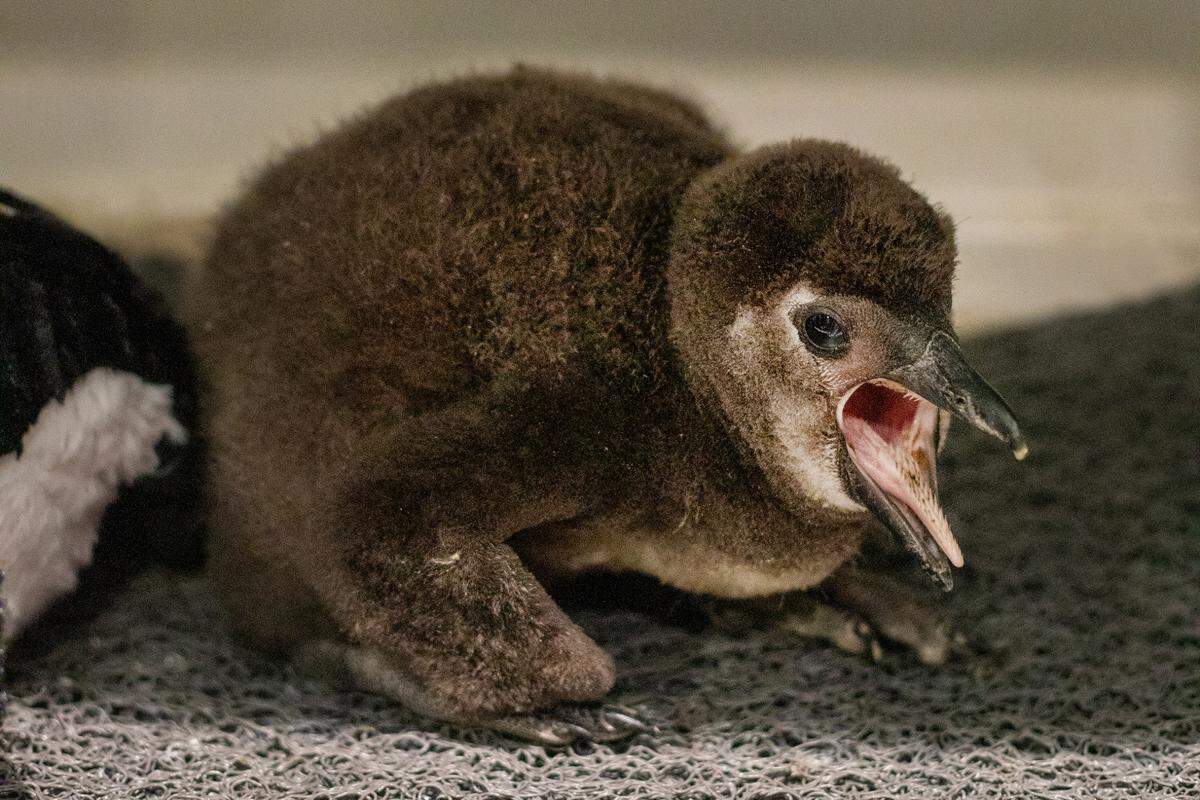
He eats about 30% of his body weight per day, a diet of smelt and herring to help him grow even faster. Right now, he’s a little on the skinny side, but Forquer said they hope he starts to bulk up soon.
“The herring is actually kind of to help him get a little more fattiness and to help him grow a little bit more,” she said.
Species conservation
Forquer said the aquarium staff was ecstatic at being able to breed and hatch a baby penguin so soon after the exhibit opened. She said it’s likely a sign that the penguins are acclimating well to their new environment.
“It’s amazing that we had a chick in less than a year,” she said. “That’s just got to mean that they’re happy.”
The aquarium hopes to be able to hatch two more penguins in the next two years or so to help with the Species Survival Plan for African penguins. The aquarium serves as part of a network helping the Southern African Foundation for the Conservation of Coastal Birds grow the African penguin population at aquariums around the world. That includes not only protecting and raising new penguins, but also raising money to support the foundation.
In Myrtle Beach, Ripley’s sells “penguin paintings” where the birds step in some paint and go wander all over a canvas.
.
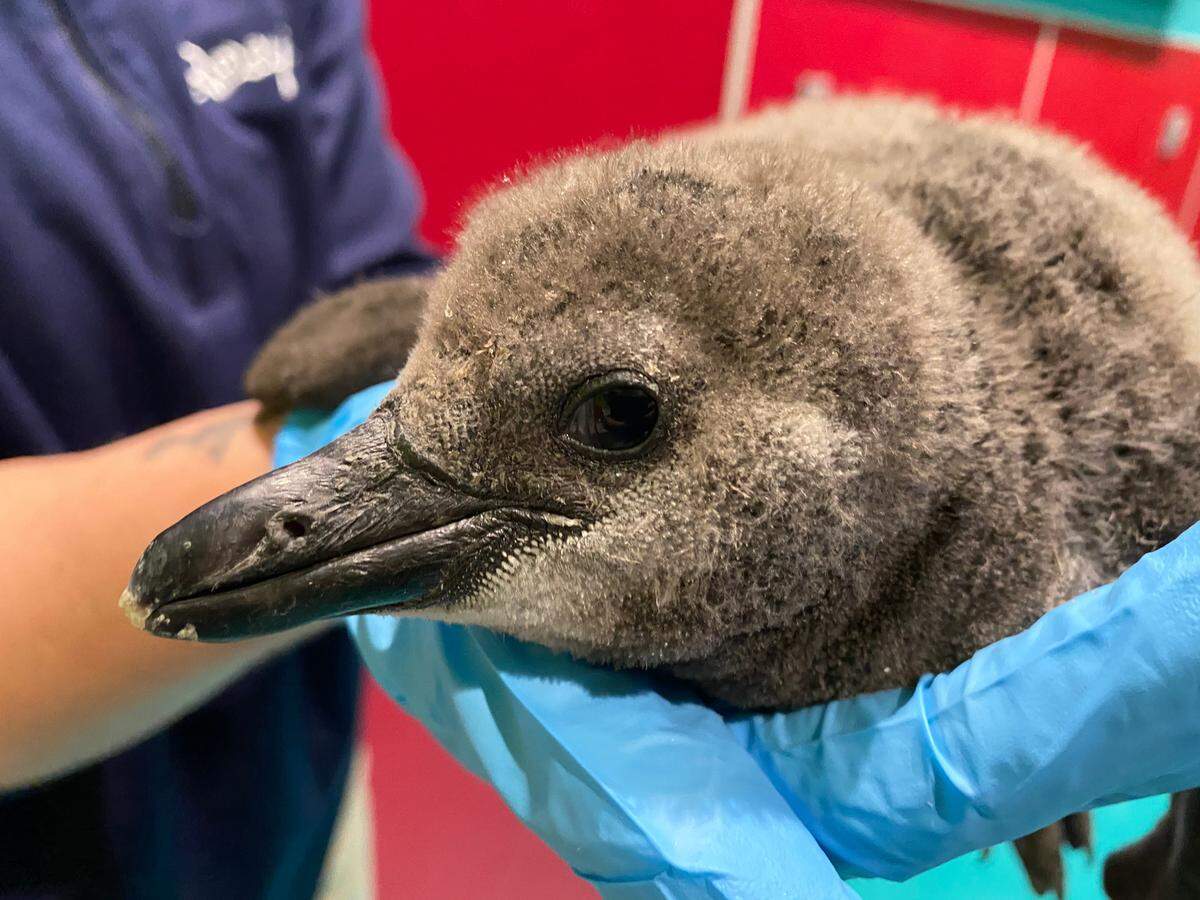
Despite being related to the cold-weather penguins of Antarctica, African penguins live in much warmer climates. Their habitat in Myrtle Beach stays at about 65 degrees, and their feathers and bodies are adapted to deal with even higher heats they would normally experience in South Africa, Forquer said.
“A lot of people don’t realize that penguins are not all cold animals,” she said.
When will he be named? And when can people visit him?
Soon, you can help name him. Next month, Ripley’s Aquarium will announce a naming contest for the rapidly growing seabird.
He will reach his full size in the next month and a half or so. He’ll also soon start to lose his baby feathers, which consist of mostly fluffy down right now. Then he’ll have his juvenile feathers that will allow aquarium staff to begin swim lessons.
Early next year, aquarium staff will begin slowly introducing him to the rest of the colony, where he will continue to mature. And he’ll start to get his signature white and black adult feathers after he reaches about 12 months old.
Forquer said she’s excited to watch him grow but even more excited that the aquarium doesn’t have to keep him a secret any longer.
“He’s healthy and we’re very happy. We’re very excited. And it’s hard for us to to keep it in,” she said. “But it’s been very exciting.”
This story was originally published November 19, 2020 at 5:00 AM.