Former TD Ameritrade CEO and CCU coach Joe Moglia weighs in on the stock market calamity
Former TD Ameritrade CEO and chairman Joe Moglia sat down with The Sun News reporters Alan Blondin and Chase Karacostas on Monday to discuss the state of the stock market and recent unprecedented events on Wall Street.
Moglia is a Myrtle Beach resident who was head coach of the Coastal Carolina football team from 2012-2018 – with a medical sabbatical during the 2017 season – and holds the positions of chairman of athletics, executive director of football and executive advisor to CCU’s president.
He was CEO of TD Ameritrade during huge growth for the online brokerage firm from 2001-2009 and served as the company’s chairman of the board from 2009-2020, resigning following the completed merger between Charles Schwab and TD Ameritrade late last year that will carry Schwab’s name.
The stock market is experiencing a financial battle between hedge fund managers who have shorted several stocks, including GameStop and AMC Entertainment, and individual traders, also known as retail traders, who have banded together on online discussion forums including Reddit’s WallStreetBets message board to buy those stocks and push their stock prices significantly.
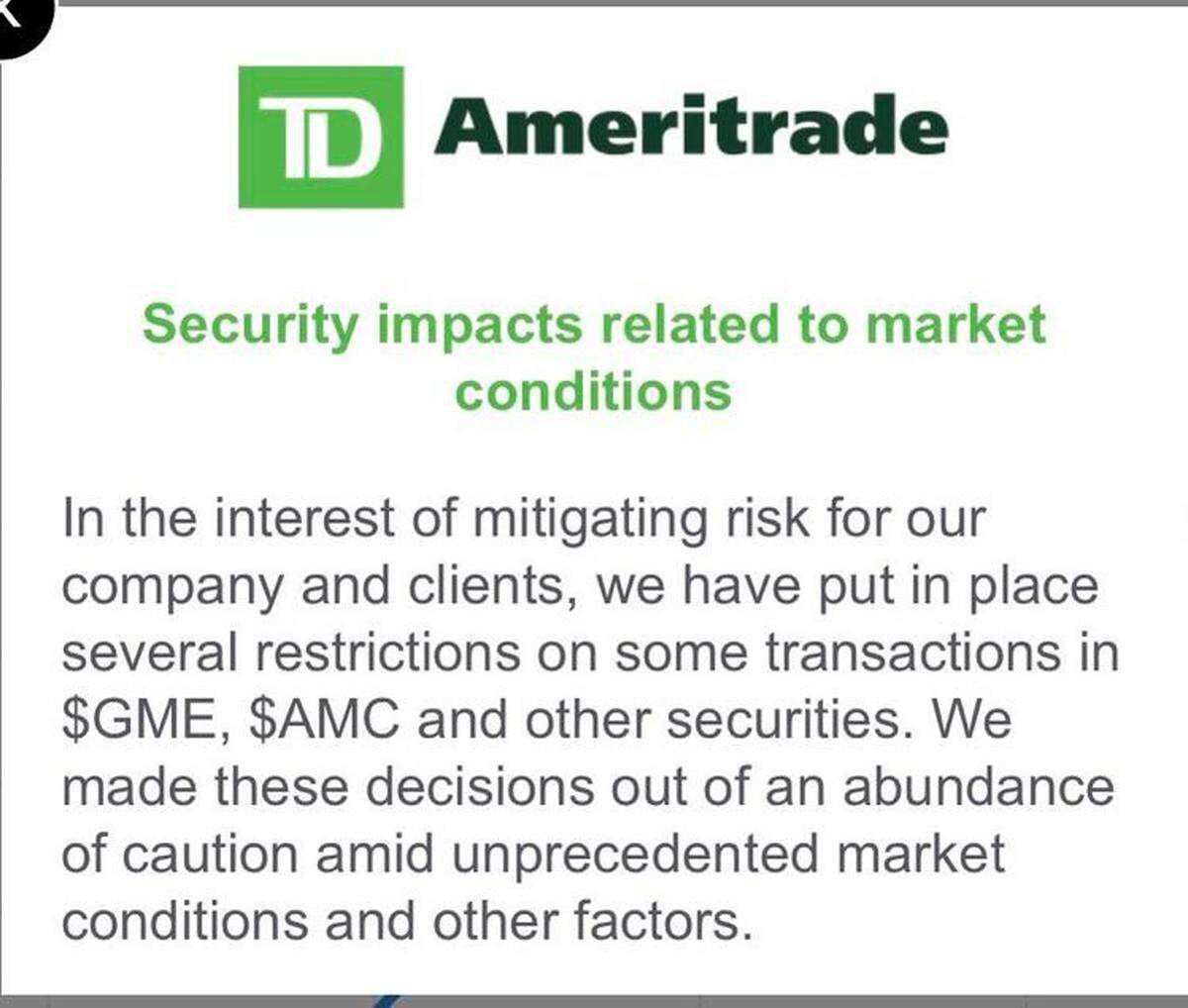
As a result of the volatile trading, several brokerage firms restricted the sale of many of those stocks for individual traders Wednesday and Thursday, and some including Robinhood shut users out of buying their shares. The moves and announcements halted the rising prices of many of the stocks and possibly caused some traders to lose money – both real and potential.
Question: How do you see the battle that is going on in the stock market right now between hedge fund managers and retail traders in stocks such as GameStop and AMC Entertainment?
Answer: “Right now we’ve had a pretty strong environment for four years so there’s more and more day traders coming into the market. The difference this time compared to last time [during the 1990s dotcom boom] is you’ve got guys like [Barstool Sports founder David] Portnoy and your chat rooms like Reddit where they’re really doing a pretty good job where everyone is communicating. Portnoy and Reddit did their homework on this trade. So they recognized there was such a significant short position in GameStop that they were able to take advantage of it by getting everyone that follows them to buy the stock.
“On the institutional side somebody really believed that this stock is probably not going to do well and will go out of business, and shorted it. But the shorts became immense, far too much. On the day trading side they said this is short here, and it’s so significant, it’s so out of whack we might be able to take advantage of it, but only if we band together and start to buy together. That’s what happened. You had your day traders united with a strategy to squeeze a particular stock that had far too much of a short.
“Now if the objective was to hurt the establishment, OK you hurt a handful of the institutions that were short, one specifically. But you’ve also given them an education, because they’re probably not going to be that short again going forward. Any institution going forward that has like 100 percent short in a stock, they deserve to get hit on that because it has already been proven they can be taken advantage of.”
Q: How does shorting a stock work, and why are these hedge funds in such financial trouble because of it? Some have already been bailed out with billions of dollars.
A: “If you think something is going to go down you can short it, which means you’ve sold it but you don’t own it yet. You’ve sold it with the hope that it’s going to go down, which means you’ve got to borrow the stock and at some point you’re going to buy it so you can cover your short, and you hope you can buy it at a lower price. In this case, the institutional investors, using GameStop as an example, they created a short but then the short got bigger and bigger and bigger. Any time you hear margin – think of margin as a mortgage, you borrow money to buy the house – in the stock market you have margin, you’re being loaned money so you can buy the stock. If you short the stock you don’t have it. So the brokerage firm needs to make sure that when the trade settles, you’re going to need to buy that stock to cover the short [and the price is significantly higher than the loan].”
Q: Do you think the mass organizing of individual investors on forums such as Reddit is a good thing or a bad thing for the stock market moving forward?
A: “I think in general what they’re doing right is they’re doing homework that they’re getting the individual investor to participate in. That homework is smart. So you’re getting more and more individuals of younger ages getting in the market earlier than what they normally would have been. Hopefully if they enjoy it and start to learn something they’ll become longer term investors, not day trading like crazy every day. They’ll figure this out when the market tuns against them. I think that part is a plus. I’m not talking about all the drama, the emotion and the noise that goes on in the chatrooms. But the Reddits and Portnoys of the world need to make sure their investor base is educated, because they need to understand the power of leverage, which goes both ways. In 2008 the financial crisis happened because of too much leverage by the brokerage firms. In a down market environment this is not as easy, this is more difficult, and they need to be able to understand that.”
Q: Do you consider what the organized investors have been doing - boosting the cost of a stock well beyond its presumed value - manipulating stock prices, or is that part of the free market?
A: “That’s part of the free market. Manipulation in a regulatory sense means you are taking advantage of something that nobody else is aware of and in fact you have inside information, and you are either putting on a trade or giving the wrong impression to the marketplace. In this case the hedge fund is short, the stock has a 140 percent of short in it. That’s common information. Because of the chatroom and these people have followers, they said I’ve done the homework, here’s the deal, I’m going to put on this trade, why don’t you join me. So that’s not manipulation in terms of the definition of the word.”
Q: Why do you think the brokerage companies restricted and in some cases even halted the purchase of certain stocks?
A: “When you make a trade it settles in two days, and there are clearinghouses that make sure that trade settles. The clearinghouse makes sure you as a brokerage firm have enough capital on hand to be able to pay for a stock. So as the institutional investor is starting to get squeezed and the price starts to skyrocket, the market has more volatility and the clearinghouse has higher margin requirements, so the Robinhoods of the world have to put more and more money up because there is more and more uncertainty as to what’s going to happen two days from now when it has to settle. You’ve got to be well-capitalized to be able to do that. That’s what happened at Robinhood. They were forced to stop trading in those things. They needed to come up with more capital and they pulled on a line of credit and were able to get more investment from their investors. That’s when they had another billion dollars or so come in from their investors. . . . If you don’t stop trading that stock, potentially the fed comes in and says you can’t trade at all. They did that for survival. They had to do that.”
Q: Is this volatility a sign that the stock market may be headed for a crash, and could these trading wars even contribute to one?
A: ”Keep in mind this is a handful of stocks and you’ve got 5,000 stocks or so that are traded on the New York Stock Exchange. I don’t see that having necessarily a major impact on the overall market. Now for a brokerage firm that gets caught with not enough capital and has to stop trading, that could become more of an issue for them. Not because they stopped trading, but because they don’t have enough capital to take care of what the regulators expect and demand them to take care of. So you could have a business get in trouble because of this, but with regards to the stock market itself, that normally moves on what’s going on with the economy. Unless this was happening with 50, 60, 70, 100 stocks, I don’t see it having any negative impact on the market.”
Q: Many consider this to be a battle of big Wall Street bullies against the little guys. Do you see it that way?
A: “In this particular case, all that happened was individuals were given advice from a technical perspective on a particular stock they thought could do well if they squeezed the short, which is what they did and it kind of moved on from there. I don’t see that as a major issue or problem going forward, other than they need to be educated because things can work against them as well.”
Q: Do you see shorts becoming less of a practice in the stock market now that this is starting to happen?
A: “No, but I think there will be greater thought and wisdom put into making a short too big. I think the institutions will learn from this and they will be wiser when they actually put on a trade similar to this, but in general, other than greater wisdom in the marketplace, I don’t see a big impact on how people short or why they short.”
Q: What impact does this volatility have on the actual company that is being traded?
A: “It should not have much of an impact on the business. In terms of the company itself, the fundamentals don’t change. If GameStop is losing money as a business and they don’t have a plan to fix that, it doesn’t matter where the stock is, eventually they’re going to go out of business and eventually the stock is going to go down to zero. At some point that stock is coming back. If they own a lot of their stock, unless they’re restricted, and they could sell it – and I don’t know why that would be wrong because they didn’t intentionally force the price of the stock up, the market did – they may be using their own stock for collateral. . . . If they wanted more capital they could sell the stock and raise more money and bring in more investors. But if the company is weak, let’s say GameStop, and they’re not doing well fundamentally, I don’t know who would be coming in to buy their stock at $300 (per share) if they’re not doing well.”
Q: What advice do you have for investors who might be trading in these volatile stocks?
A: “You can take something off the table. I would suggest if you get a double on a stock sell half of it. You will never lose money in that stock, and you can sit back and watch it.”
This story was originally published February 1, 2021 at 3:02 PM.