‘Their bones tell us a story:’ After decades of disturbance, slave remains laid to rest
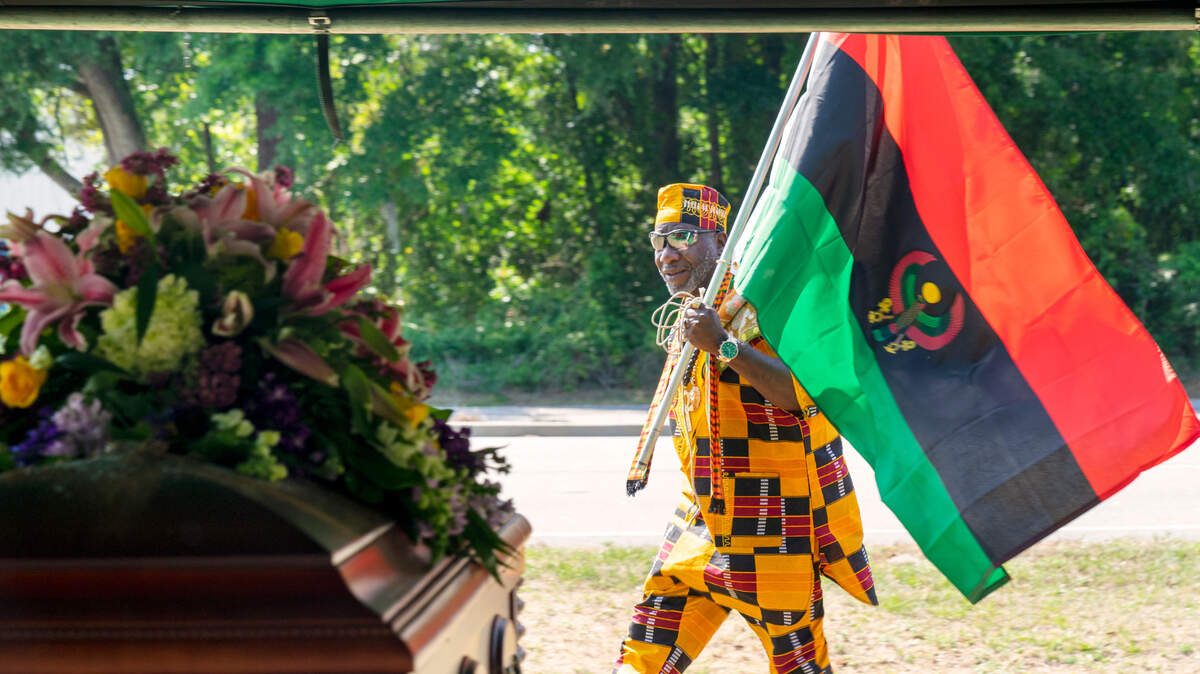
Dozens of people crowded under tents and willow trees at the Holy Cross Faith Memorial Church cemetery Sunday afternoon to watch as the remains of 22 enslaved people were buried.
The formerly enslaved and members of their family, researchers say, were ancestors of the Gullah-Geechee community and was originally buried on Hagley Plantation. They came mostly from rice-growing regions of West Africa near Sierra Leone and Ghana.
Their original headstones were bulldozed sometime in the 1970s and the remains were mixed together when they were unearthed by developers in 2006. The work to identify them began the next year.
“The names of these individuals and the full stories of their lives are unknown. But they are not forgotten. It’s time to lay them to rest again, with all the dignity and respect they deserve,” said Angela Christian, Georgetown County Administrator, to the crowd.
Some at the ceremony wore suits and ties, others, traditional African clothing as they packed the cemetery, avoiding headstones and trying to find refuge from the hot sun. Some said “amen” during the service, others said a similar Gullah word, “ase,” a positive reaffirmation.
Religious leaders from Holy Cross spoke, pointing out the significance of it being Pentecostal Sunday in the Christian faith. Gullah-Geechee religious leader John D. Henry said the event brought him mixed emotions.
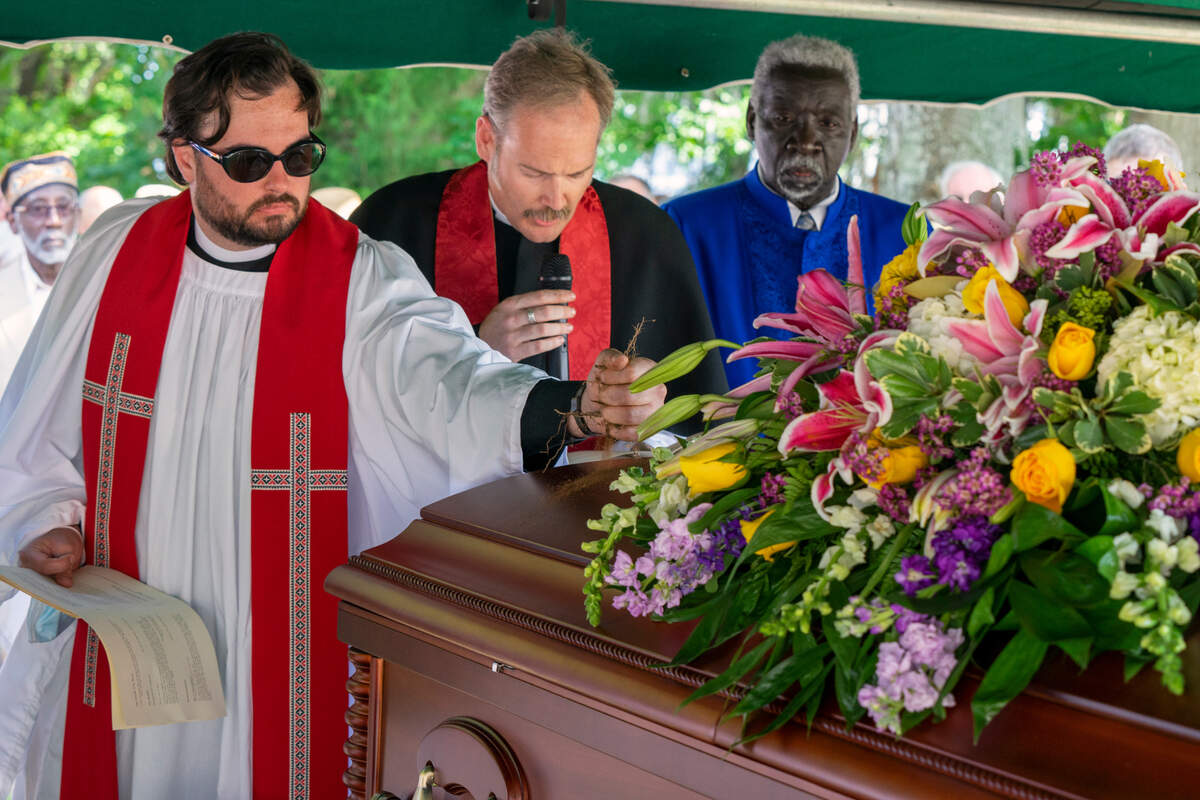
“I felt a rejoice in spirit. I also felt an unease in spirit as well,” Henry said. “Because there’s many more. Where are they laid to rest?”
The burial ceremony comes at a time when many museums in the nation are reassessing collections of human remains, many of which include the bones of former slaves.
The Georgetown remains, however, are different in that they were preserved only due to the work of researchers, who for over a decade, worked to find as much information as they could from the bones.
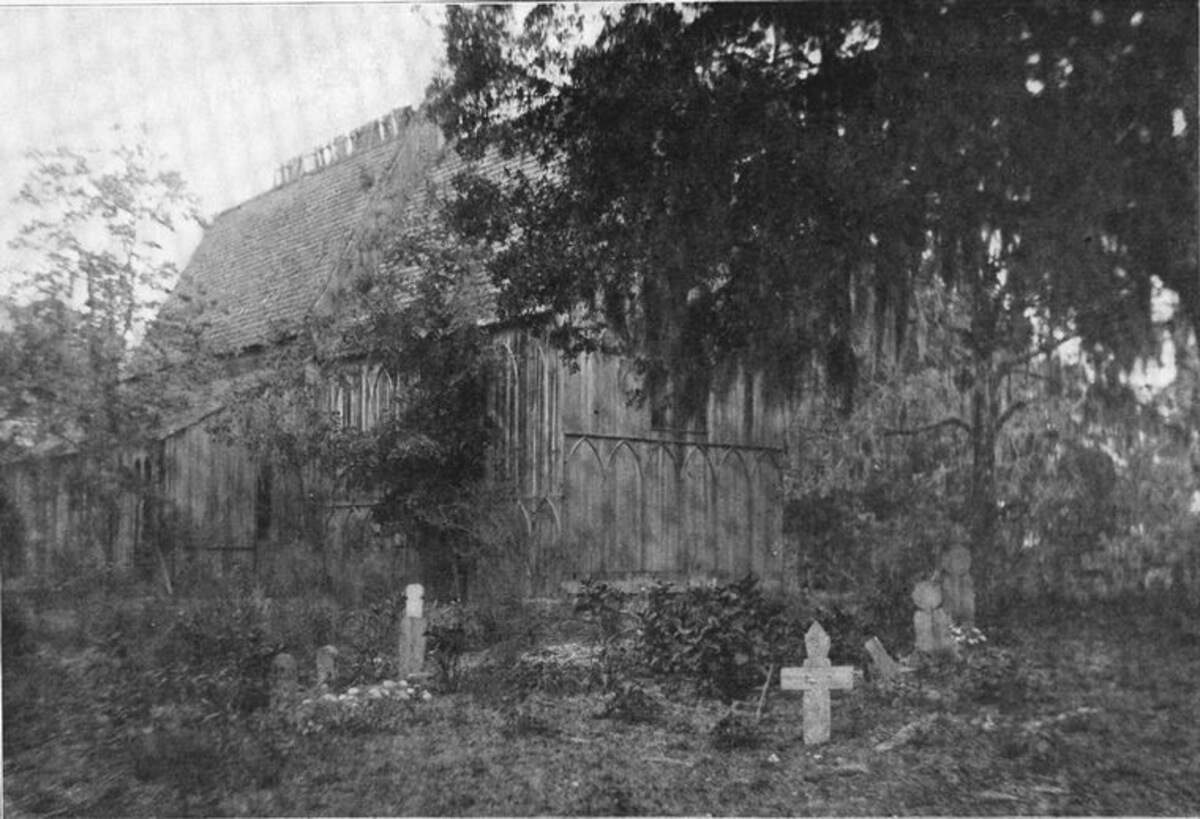
The remains are believed to have originally been laid to rest at the cemetery at St. Mary’s Chapel, which once stood on the grounds of Hagley Plantation, where it was constructed for the African-Americans enslaved there.
The original graves were unearthed during residential construction in 2006 and, as a result, were mixed together. They were turned over to the Georgetown County Coroner’s Office. The coroner at the time, Kenny Johnson, requested assistance from a forensic anthropologist, Richland County Deputy Coroner William Stevens in analyzing the remains.
“Enslavement during life followed by disturbance from rest after death is a compounded insult to the dignity of these individuals,” Stevens said during the ceremony describing the physical toll rice farming took on the bodies of the slaves. “Their bones tell us a story of early death, childhood mortality, bodily injury and disease burdens of malaria, malnutrition, fever, and infections such as tuberculosis.”
In early 2007, Stevens transported the remains to the Biological Anthropology Laboratory at the University of South Carolina for further study. He conducted extensive research to determine their origin. It was believed that all individuals buried at St. Mary’s had been previously relocated.
The funeral home contracted for that duty had been long closed and the funeral director had passed away, so further information on the relocation was unavailable.
However, the location where the remains were discovered, as well as their age and genetic information obtained from them, led Stevens to conclude the remains had originated at St. Mary’s and belonged to African-Americans who were enslaved at Hagley to work the rice fields there prior to the Civil War. As part of his research, Stevens also contacted descendants of the individuals after genetic analysis was complete.
According to the research, the cemetery where the remains were originally located was bulldozed in the 1970s. It was located about 400 feet southeast of Hagley Landing on the Waccamaw River.
St. Mary’s Chapel was one of 13 chapels constructed in the area for use by enslaved people and was noted to have been of “unusually pleasing design and furnishings.”
As noted in Stevens’ report, “the ceiling and pews were of cypress, with stained glass windows and Gothic arches adding to the dignity of this chapel high above the Waccamaw River.” St. Mary’s fell into disuse in the early years of the 20th century and burned in July of 1931.
The church was believed to have been constructed in 1859 by an enslaved man named Renty Tucker, but it is likely the cemetery dates back farther, according to Stevens. The slaves would have “endured great hardship [including] heavy disease burden, poor nutrition and inhumane conditions of forced labor,” Stevens said, based on his findings.
“It is the start of healing in this community,” said Christian, who was relieved after working for months to put the ceremony together and restore dignity to the dead. “When you can take something that had gone awry and you can make it right.”
This story was originally published May 25, 2021 at 11:30 AM.