
Tackling the politics of the World Cup
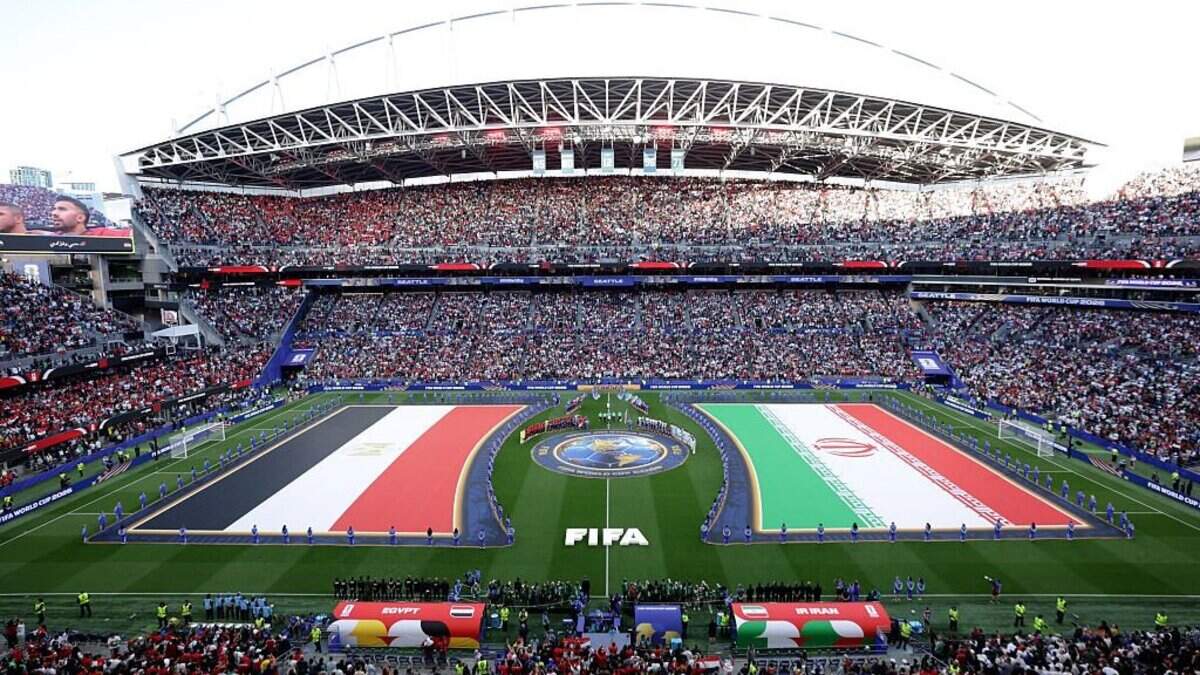
The 2026 World Cup, which hit its halfway point this week, has brought a flood of political storylines.
How much would President Donald Trump and his policies hover over the soccer tournament? How would the Iranian team be treated during a war with their country? Will the U.S. do enough to leverage all the soft power it can get from hosting the event?
First, a step back. The World Cup, which is held every four years, is the biggest sporting event on the planet. Nothing draws more eyeballs on television or traveling hordes of fans to support their teams, period. (No, not even the Summer Olympics.)
While Mexico and Canada are also co-hosting this year’s tournament, 78 of the tournament’s 104 matches will be played in the United States. It should be a prime opportunity to showcase the country at a time when people around the globe have an increasingly negative view of U.S. foreign policy, according to a report released by the Pew Research Center this week.
Before the World Cup, though, many thorny questions loomed. Would Trump attend Team USA’s opening match against Paraguay on June 12? (He didn’t, sending Secretary of State Marco Rubio instead.) Would Immigration and Customs Enforcement officers try to check immigration papers at stadiums? (Apparently not.) Would police officers let the big party that is the World Cup breathe? (Apparently yes.)
Trump does plan to attend the final at MetLife Stadium in New Jersey on July 19, according to Gianni Infantino, the president of FIFA, which organized the tournament. Infantino confirmed the appearance on “Fox & Friends” Tuesday.
Infantino has bent over backward to court Trump in recent years. But fans loudly booed Trump when he appeared last year at the FIFA Club World Cup final, which was also held at MetLife.
The tournament’s politics have leaned international and have centered on the denial of entry of a highly regarded Somali referee and the war with Iran.
My New York Times colleague Tariq Panja has reported on how some Iranian team staff members were denied visas, how the team’s training camp was moved at the last minute to Mexico from Arizona, and how stringent travel restrictions gave Iranian players little time to prepare for matches. Some of those restrictions were eased this week.
Perhaps that is why Americans -- and American politicians -- have been so taken with foreign visitors who have embraced Americana, from Buc-ee’s to baseball games to Bass Pro Shops. At a time when our politics are so polarized and dark, their joy in mundane discoveries like Costco has felt like a balm. And is there a better organic ad for a city than Norwegian fans “rowing” in Times Square or Dutch fans marching on Kansas City, Missouri?
On Wednesday, Gov. Josh Shapiro of Pennsylvania, who is widely seen as a potential 2028 Democratic presidential hopeful, offered a welcoming message for a German fan known as Freddy. (Freddy’s posts on the social platform X about his American World Cup road trip have gone so viral that he has scored invitations to NASA and the White House.) “Your 13th state, but first Commonwealth,” Shapiro wrote on social media. “Welcome to PA, Freddy. Let freedom ring.”
Not to be outdone, Gov. Ron DeSantis of Florida, a Republican who could also have 2028 ambitions, posted on X that he had met in Miami Beach with Shaun Alexander, a Scot whose U.S. travels have also taken social media by storm.
Perhaps the best example of America’s soft power that I saw in my reporting on the World Cup came from Donnie MacNeil, a 69-year-old from Scotland, who was in Miami before his country’s match against Brazil this week. Next week, he said, he will be in New York -- to my surprise, to celebrate America’s 250th birthday.
This article originally appeared in The New York Times.
Copyright 2026 The New York Times Company
This story was originally published June 26, 2026 at 8:01 PM.