
Take a few tips for planning Rome getaway
Looking for a quick getaway before summer? Rome is one of my favorite spring escapes. All of the wonderful sights, flowers and trees are just beginning to bud as if the ancient town is awakening from a winter slumber.
Bonus features are that it is less crowded, and hotels and flights are usually lower in price. Be sure to pack a raincoat, even though on my last trip, the weather was delightful.
What to see
There are two major categories to see: ancient Rome of the emperors, and Christian art and history. I strongly advise that you book a tour to take in the highlights of these two branches of Roman history — one for the Colosseum and Forum, and one for St. Peter’s and Vatican museums, including the Sistine Chapel.
Book what is called a skip-the-line tour, because no matter what season it is, long lines of more than two hours are likely to gobble up your vacation time at either of those locations. I like the Viator service, which allows you to book from the United States and pay in dollars (saving exchange charges). If you prefer to wait until you get there, simply ask your hotel for a reliable local company.
Beyond the big two
There are plenty of museums and churches to see other than the Colosseum/Forum and the Vatican.
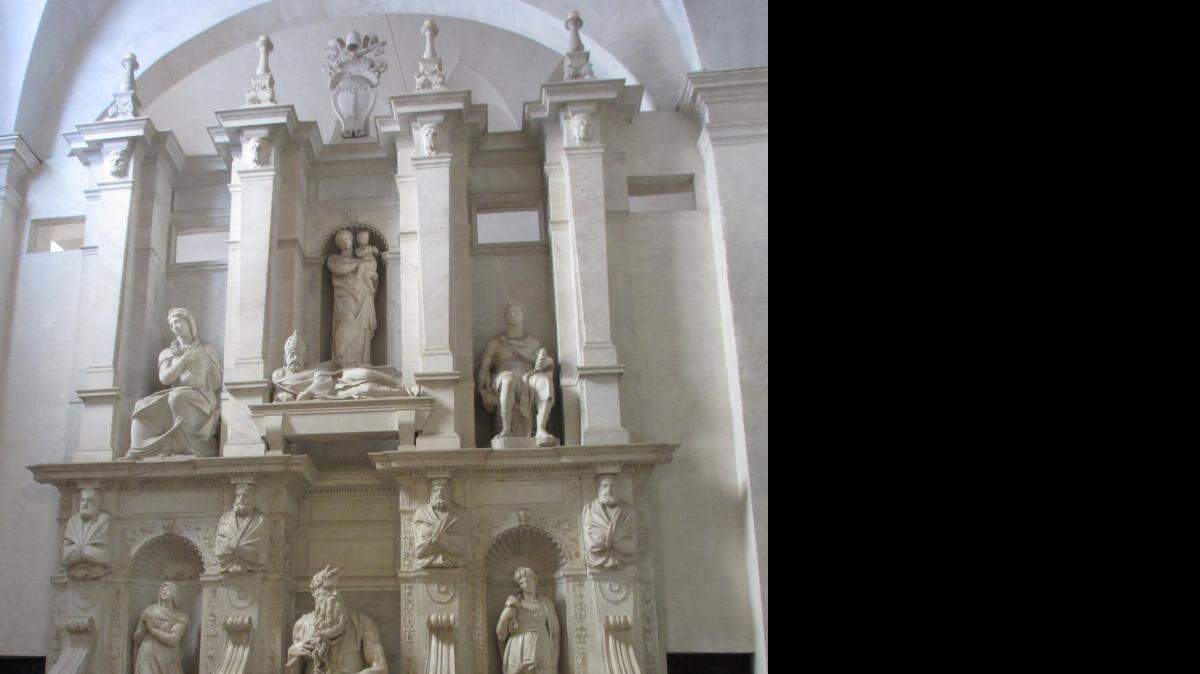
Choose from among your own preferences for art, music and history from ancient Etruscan days, to modern times and people-watching. One of my favorites is the Church of St. Peter in Chains, which offers an uncrowded look at one of Michelangelo’s marble masterpieces, the Moses. There are no admission fees; it’s a church. The Pantheon is also a wonderful structure, once a Roman temple, now a church (and its square or piazza is home to a lovely fountain and some great ice cream spots and cafes). Look for the Borghese Gardens and the Borghese Museum, on the Via Veneto side of the gardens, which has an amazing sculpture collection. (You can purchase tickets online to save time in line.)
Wonderful views are yours for the snapping from the Lighthouse on the Gianicolo or all the way at the top at Piazza Garibaldi. (Late afternoon offers a warm golden glow over Rome’s terracotta rooftops.) Piazza Napoleone, a few blocks from the Spanish steps (Piazza di Espagna), looks beyond and out onto Piazze del Popolo, a hot spot with some delightful cafes that are perfect for a mandatory Roman activity — far neinte (to do nothing).
Romans have raised that activity — or inactivity — to an art form, but it’s not lethargy or laziness. Part of far niente is people-watching and appreciating what’s around you. Some of my favorite places to practice this art are Piazza Navonna with its twin fountains, Piazza di Espagna with its newly renovated fountain and Campo dei Fiori, where there is still a morning vegetable and flower market for local residents. Also, I enjoy simply walking down the Via Veneto, home of the American Embassy.
Of course, the queen of fountains (for visitors) is Fontana Trevi. It’s partially hiding behind the ironwork of restoration at the moment, but don’t miss it. City officials have a walkway up to allow for the mandatory coin toss to ensure you will return to this wonderful place.
What to eat
You will want to try some Roman specialties, in addition to whatever your favorite Italian foods may be. Try puntarelle, a chicory family green that Romans adore. It often comes dressed with anchovies as well as vinegar and oil. Artichokes are a particular specialty in Rome; be sure to order them Roman-style or fried, which is the style of the Roman Jewish ghetto.
Lamb is another Roman treat. Ristorante Otello (Otello alla Concordia Via della Croce, 81) near the Spanish steps excels at all of these and at making specialty Roman pasta dishes such as tonnarelle cacio e pepe and bucatini a la amatriciana. Tonnarelle is a slightly thick, usually homemade spaghetti, and bucatini is a thick spaghetti with a hole down the center.
A gelato a day is the rule I like to follow when in Italy. One of my favorite gelateria stops is Della Palma (Via della Maddalena, 20/23), which offers more than 100 flavors. In Italy, pay first and then take the receipt (scontrino) to the counter to order your gelato. Be advised: Italian cafes and gelateria charge one price for standing and take away, another for sitting, and the highest is for sitting at an outdoor table.
After you have admired the fruits and flowers in Campo dei Fiori, stop for lunch at Da Pancrazio (Piazza del Biscione, 92). It’s built on top of the Theater of Pompey where Brutus stabbed Julius Caesar. I had a marvelous lunch there with great pastas, fish, and artichokes, and possibly the best pear tart I have ever tasted. The hospitable staff gladly led my husband and I downstairs while we waited for our food. There we walked on the stones that Caesar trod, marveled at the columns, niches and walls, and saw a model of the original theater.
No need for me to mention more spots — just check out the street-side menus in the city’s many eateries. You will surely find something great to eat. I can honestly say I have never had a bad meal in Rome.
Be sure to leave time to sit in a cafe and have a cup of coffee. Take a walk along the Tiber under the sycamore trees. It’s a wonderful route to get from Piazza Navonna to the Vatican.
Where to stay
If you want to stay in the heart of downtown, I recommend the Hotel San Carlo (Via delle Carrozze, 92)near Piazza di Spagnaspa. If you would rather be a short metro ride away from the hustle and bustle of the pedestrian-only historic areas, try the Mercure in Piazza Bologna, (Mercure Roma Piazza Bologna Via Reggio Calabria 54), about a five minute metro ride to center city. Your hotel concierge will willingly explain the easy-to-use metro system to you. The area is residential, with plenty of restaurants and cafes within walking distance and usually a bit less expensive than those in the historic center.
There is beauty everywhere you look in Rome, from its people to its food, and its monuments and art. Once you have walked her streets, you will surely understand why all roads lead to Rome, and why she is known as the Eternal City — for Rome is eternally fascinating.
This story was originally published April 25, 2015 at 8:00 AM with the headline "Take a few tips for planning Rome getaway."