
Bringing only the best
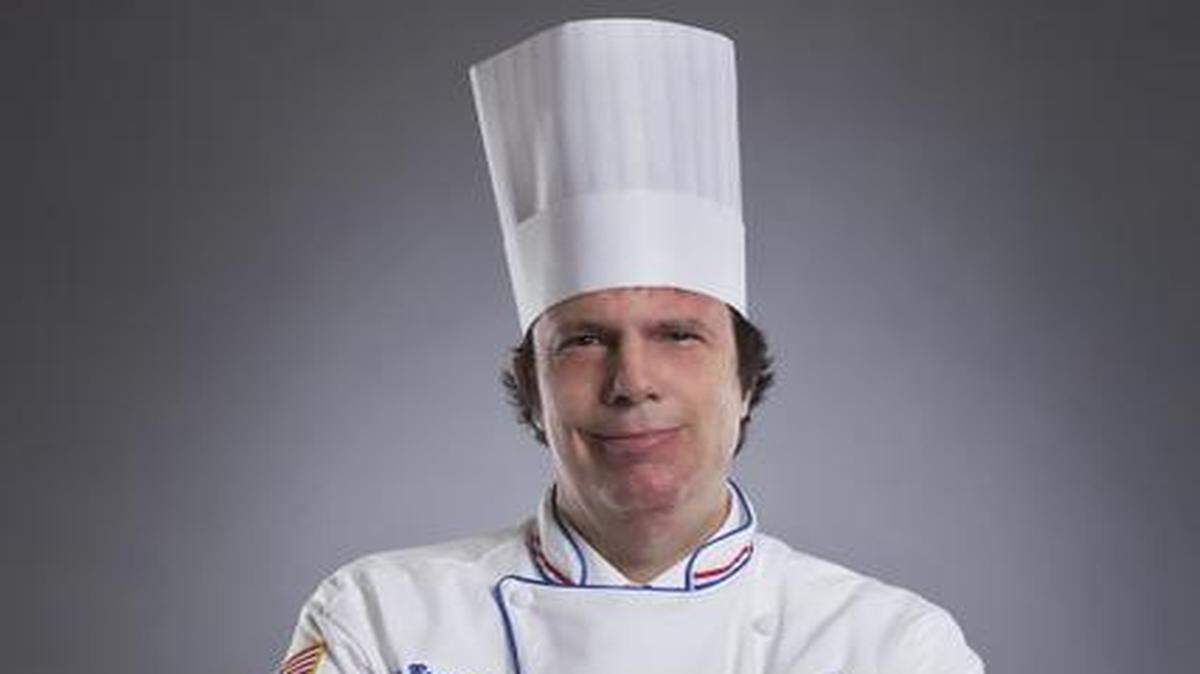
Leaders provide a vision for the future. Great leaders also work to actually build the ladder that leads to that vision. Chef Joseph Bonaparte, executive director of the Horry-Georgetown Technical College Culinary Arts Program, is that kind of leader.
“Chef Bonaparte’s vast knowledge, experience and expertise in culinary arts made him the perfect candidate for us,” said Marilyn Fore, HGTC’s senior vice president. “We had a great traditional and solid foundation – we are looking forward to expanding the program regionally and to help to enrich the entire culinary experience in the region. In addition to his own award-winning work as a chef, he has worked in educational institutions that specialize and develop curriculum for training chefs.”
Bonaparte came to HGTC with an impressive resume as a certified culinary educator and certified Chef de Cuisine. Among his worldwide experiences are cooking and presenting dinners five times at New York City’s James Beard House, the Gold Medal, 2005 Chinese Food Festival, Guangzhou, China; the Certificate First International Award of Bolognese Cuisine, Bologna, Italy; and the Certificate 2012 Culinary Olympics, Erfurt, Germany.
“Our goal (at HGTC) is to build a program that is at the quality level of the finest programs in the country,” Bonaparte said, “to build a world-class program that serves the community by providing excellent culinary education for an affordable price.”
Bonaparte sees HGTC as a force in promoting good food and nutrition along the Grand Strand.
“We hope that as we (at HGTC) develop and grow, our students and graduates will have a greater impact in the industry in the region and help to raise both the professionalism of the work environments, and the quality of products and services available to both the locals and visitors to the region,” he said. “It is important to have a holistic view of positively impacting people’s lives, the community and to the culinary and hospitality professions.”
HGTC already opens to the public with the Fowler Dining Room on the Conway campus and Beach Bistro 354 on the Grand Strand campus, but will have a new school — the International Culinary Institute of Myrtle Beach — which is projected to be completed by 2017. Bonaparte is presiding over the new facility, which will be on the Grand Strand campus and will accommodate triple the number of students currently enrolled in the program, making HGTC one of the biggest culinary schools in the country.
“The building will be beautiful and have all the amenities that a chef or student could desire,” Bonaparte said. “In total, there will be six kitchens. Two of these will be hot food teaching kitchens. There will also be a bakeshop, a pastry shop, an auditorium kitchen and a working restaurant kitchen.
“The school will also have a barbecue training center, greenhouse, gardens, climate-controlled, meat-curing chamber and a chocolate/confection room. There will also be a small retail area.”
The auditorium kitchen will provide a staging area for guest chefs to teach, offer cooking classes to the public, and it will have broadcast capabilities for local television stations.
Regional impact and more
“We have a great sense we are going to be recognized regionally,” Fore said. “I cannot say enough about Chef Joseph’s talent and creativity.”
Fore said among Bonaparte’s efforts to expand the influence and impact of the HGTC culinary arts program are the creation of a competition for high school students, his efforts to help found Slow Food USA’s newly minted Waccamaw Chapter and work with farmers markets.
The global Slow Food network links more than 100,000 members in more than 150 countries who are committed to linking the enjoyment of good, clean and fairly grown food while protecting the community, culture, knowledge and environment that make such pleasure at the table possible. More information on Slow Food USA can be found at www.slowfoodusa.org.
“Joe attended Terra Madre in Italy, founding center of the Slow Food movement,” said Kimberly Busse of The Local Table-Myrtle Beach (www.facebook.com/TheLocalTableMB) and founding member/secretary, Slow Food Waccamaw. “Given that experience and his talents and expertise with cooking philosophies, and his willingness to be involved, I knew the time was right to pursue the founding of a local (Slow Food) chapter. We are very lucky to have him.”
Bonaparte said he believes in the importance of local farmers markets, and he has been involved in local food communities in Texas and North Carolina seen the benefits to individuals and to the area.
“Food tourism is huge,” he said. “I would like to work to have more local vendors in the markets with a greater variety of locally grown produce and have spoken with farmers like Miracle Lewis about the possibility of growing a greater variety of tomatoes, okra, greens and more.”
Tony Hirsch, former president of the local chapter of Chaine des Rotisseurs, an international gastronomic society, said Bonaparte is “transforming the school’s curriculum to better reflect the need for today’s restaurant menus to reflect and cater to the interests of guests and customers who want fresh, local ingredients, healthily prepared and flavorful.”
Hirsch, who now presides over the group’s eight-state Provincial South Central Region, said he met Bonaparte at a Chaine des Rotisseurs’ Young Chef’s Competition in Charlotte about five years ago. At the time, Bonaparte was affiliated with the Art Institute’s culinary program and supervised its 40 culinary schools in the United States.
“He brings that experience, plus many years of working and teaching in this country and overseas, to the Grand Strand,” said Hirsch, who said the college is fortunate to have someone of his talents to guide culinary arts to a new level of professionalism. “A building, a new curriculum and a new philosophy — all of these will benefit Myrtle Beach.”
Good food tips
Chef Joseph Bonaparte offers these tips to readers who want to enhance food experiences at their own family dinner table:
▪ Learn how to cook; teach children how to cook.
▪ Learn how to preserve items.
▪ Bring back old food traditions.
▪ Plant a garden.
▪ Buy food at local farmers markets when you can.
▪ Buy fresh fruits and vegetables in season at the grocery.
▪ Look at food labels, including fresh food. How far did the food travel? What has been added to it?
▪ Buy raw instead of pre-processed foods.
▪ Buy meats that are raised without excessive antibiotic or growth hormones.
▪ Support companies that offer more nutritious and healthy foods.
This story was originally published April 15, 2015 at 2:00 AM with the headline "Bringing only the best."